Düsseldorf's 2026 Budget Plan: Between Investments, Settling Accounts, and Funding Gaps
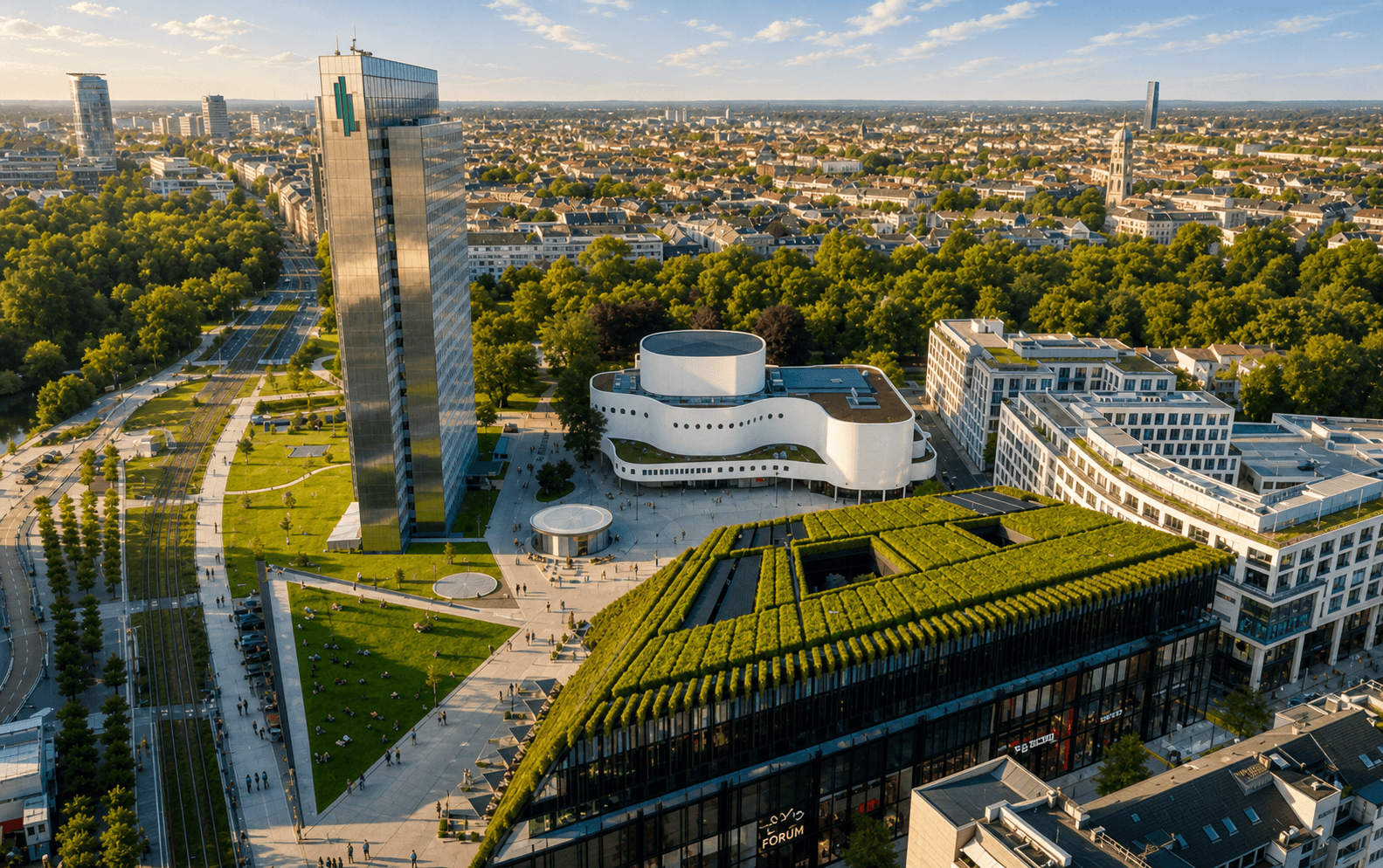
In February 2026, Düsseldorf focused on numerous financial decisions aimed at urban investments, construction projects, and the funding of cultural and educational initiatives. The 2026 budget planning reflects both the city's priorities and the challenges posed by rising construction costs, external loans, and changing funding guidelines.
Düsseldorf's 2026 Budget Plan: Between Investments, Settling Accounts, and Funding Gaps
In February 2026, the state capital of Düsseldorf made a number of financial decisions with far-reaching effects on the city's infrastructure, education, culture, and administration. The 2026 budget planning is characterized by investments in new schools and museum construction, but also by rising costs, changed funding models, and the necessity to take on external loans. In the following, we analyze the key trends, backgrounds, and challenges.
Investments in Education: New Childcare Facilities and Schools
A central focus in Düsseldorf's 2026 budget plan is the expansion of educational infrastructure. The new childcare facility at Vennhauser Allee 160-162 was approved with a total cost of 6.37 million euros. The costs consist of 6.119 million euros for construction, 250,882 euros for equipment and inventory, and 1.5 million euros in annual net follow-up costs.
In the field of schools as well, significant investments were made. The expansion of the Lebniz-Montessori-Gymnasium and the replacement construction of the Catholic Primary School Rather Kreuzweg, including a dual-sport hall, were approved. The latter project alone costs 26.86 million euros. The cost development is strongly influenced by external factors such as material price increases and planning costs. Part of the funding is covered by the general budget, while other parts must be financed through external investment loans.
Museum Construction Projects: Kunstpalast and Theodor-Heuss Bridge
Another key topic was the renovation and expansion of the Kunstpalast Museum. The total costs for the measures are now over 53 million euros, which represents a 45% deviation from the initial budget of 36.76 million euros. The reasons for the cost increase lie in the historical building structure, material and labor shortages, and supply chain disruptions caused by the pandemic. The city covers part of the costs with its own funds and reallocations, but here too, the taking out of investment loans is necessary.
The safety measures at the Theodor-Heuss Bridge also cost a considerable 36.892 million euros. The cost development compared to the original budget decision of 2016 (11.583 million euros) is also dramatic. Reasons for this include construction price indexing, expanded expert activities, and risk management costs.
Funding Gaps and External Loans
A recurring element in the budget decisions is the necessity to take on external investment and liquidity loans. For example, an additional 1.224 million euros had to be provided for the replacement of axial fans in the Rheinufertunnel. The funding is covered by the city budget, supplemented by external loans.
The childcare facility at Vennhauser Allee and the Kunstpalast also require the taking on of investment loans. In addition, it is to be noted that state subsidies for certain projects, such as the funding of childcare facilities, are no longer available due to changed funding guidelines. This directly affects financial planning and forces the city to find alternative funding sources.
Cultural and Community Projects: Grant Awards and Fee Adjustments
In addition to the major investments, there were also smaller, but important projects for the local community. For example, in Ward Committee 6, grants were approved for educational projects such as "My Body Belongs to Me" (GGS Krahnenburgstraße), memorial trips to Auschwitz (Friedrich-Rückert-Gymnasium), and sports events (Trixitt School Sports Event). The funding comes from the disposable funds 2026, with the funds coming from the object account 54990600.
The fee schedule of the Department of Gardens, Cemeteries, and Forests was also adjusted. For example, fees for commercial sports and leisure activities increased by 15%, while the minimum fee for commercial activities decreased by 66.67%. These changes show how the city is trying to optimize its revenue structure to finance investments.
Challenges and Outlook
The 2026 budget planning for Düsseldorf shows that the city is facing rising construction costs, funding gaps, and changed funding guidelines. At the same time, Düsseldorf is investing in education and culture to improve quality of life in the long term. However, the dependency on external loans raises questions about how the city will deal with budget deficits and management risks in the future.
The coming years will show whether the cost control mechanisms are sufficient to stay within the budgets and whether Düsseldorf is able to advance investments without excessive burdening of the municipal budgets.
Conclusion
Düsseldorf's 2026 budget plan is a reflection of the current challenges in municipal financial planning: rising construction costs, external loans, and changed funding conditions. At the same time, the city also shows determination to invest in education, culture, and infrastructure. However, the realization of the planned projects strongly depends on cost development and budget stability.
NeoSearch analyses public council documents, committee minutes and municipal announcements. Source references appear automatically once verified meeting data is available.
What does this mean for businesses?
Municipal council decisions are early indicators: following the council agenda surfaces projects and tenders months before the official award — before they ever reach the procurement portals.
Track similar decisions in your region
Set up monitoring for Finance and Budget in Nordrhein-Westfalen — prefilled from this article.
Set up monitoring →More signals from Duesseldorf
Educational Policy in Düsseldorf: Safety, Capacity, and Innovation in Focus
In April 2026, educational policy in Düsseldorf focused on safety issues, capacity expansion at special needs schools, and innovative projects to prevent school avoidance. The School Committee addressed central challenges and reform approaches that will shape the future of the educational system in the state capital.
Read more → Youth Policy in Düsseldorf: Focus on Psychosocial Support, Democracy, and Poverty Reduction in April 2026
In April 2026, Düsseldorf has taken several key steps in youth policy. From psychosocial support for young people to the implementation of democracy projects and the fight against child poverty: The Youth Welfare Committee is setting impulses for a resilient and livable city for young people.
Read more → Düsseldorf's Integration and Housing Policy in April 2026: Focus on Participation, Antiracism, and Legal Security
In an intense April 2026, Düsseldorf took decisive steps in integration and social policy. The focus was on issues such as antiracism, linguistic and social integration, legal security in homeless shelters, and the strengthening of migrant organizations. The Committee for Equal Opportunities and Integration made key decisions that will shape future policy.
Read more →