Düsseldorf in March 2026: Urban Development, Mobility, and Culture in Focus
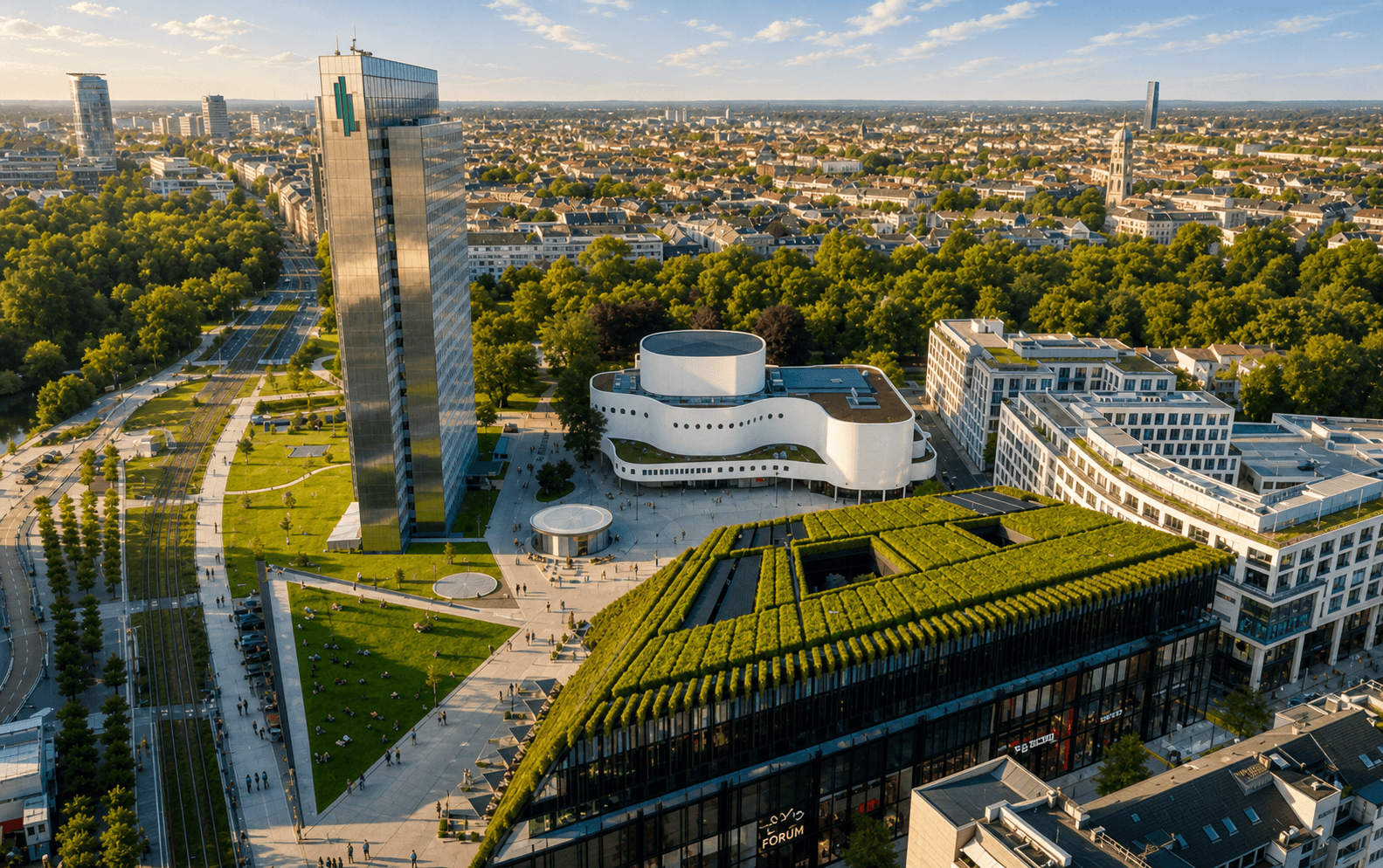
In March 2026, Düsseldorf made key decisions in the areas of urban development, mobility, culture, finance, and the environment. Here is an overview of the central topics and projects that influence the quality of life for citizens.
Urban Development and Mobility in a Steady Rhythm
What Was Important This Month
- West Side of Königsallee: Barrier-free sidewalk design with tactile guidance systems and three zones.
- Expanded Cycling Network: Ludwigshafener Straße becomes a bicycle street, several street sections requested.
- Sports Funding Plan: Millions invested in Dirtpark, multisport facility, and inclusion projects.
- Increased Cultural Budget: More funds for events and support of the independent cultural scene.
- Accelerated Construction Projects: Bauturbo procedure and clarification of responsibilities for a faster building process.
- Inclusion and Security: New funds for inclusive sports, renovations, and security measures in the districts.
Urban Development: Accessibility and Construction in Focus
In March, barrier-free urban design and the use of construction land were central. The west side of Königsallee is being redesigned—with tactile guidance systems and three sidewalk zones, which is especially beneficial for people with mobility impairments and parents with strollers. This is financially supported 50% by investors, setting a good model for future projects.
In addition, plots of land on the Pastor-Dörr-Ring were sold to the highest bidders. In District Committee 8, an application was submitted to use the U-Bahn tunnel as a shelter for 34,000 residents of Eller. This could become an important resource in disaster scenarios—and at the same time integrate federal funds.
Mobility: Cycling, 30 km/h Zones, and Parking Design
In March, the city decided to develop Ludwigshafener Straße into a bicycle street—a step toward more cycling and less car traffic. In several districts, streets such as Benrodestraße and Schöne Aussicht were declared bicycle streets, using signage modeled after the Hilden example.
30 km/h zones were also discussed. In Unterdorfstraße, a special decision on traffic calming was made, and on the street "An der Piwipp," speed will be reduced to 30 km/h—mainly for noise protection reasons.
Parking lots were also redesigned: the parking lot in front of Tim’s Brauereiausschank will be converted into a pocket park, and new recycling containers will be installed in Tußmannstraße. Such measures contribute to better use of urban space.
Culture and Events: Support and Inclusion
Düsseldorf has shown in March that culture is not just a decorative element, but also part of the social infrastructure. The cultural budget was increased by over 600,000 euros—a clear signal of support for creative initiatives. Events such as the "Concert for Humanity" benefit from reduced rents, and a funding fund for district culture has been introduced.
In District 9, cultural projects such as "Tanz in den Mai" or "50 Years of Spectrum 76 Exhibitions" were supported with subsidies. In District 2, St. Martin’s processions and sports facilities were also financially supported. These measures promote social participation and strengthen cultural diversity in Düsseldorf.
Public Institutions and Security: Investments and Structure
In the area of public institutions, important decisions were made in March. The double budget for fire services, emergency services, environmental office, and cemetery office was approved. In addition, the uniform staffing of the Small Commissions was decided—with one member and one deputy per party, ensuring transparency and fair representation.
Security issues were also on the agenda. In District Committee 8, a proposal for the introduction of "waste detectives" was acknowledged—an indication of awareness for clean urban areas and order.
Finances and Budget: Investments in the Future
Düsseldorf has also financially prepared for the future. Millions of investments in sports facilities, such as the Heerdt Dirtpark or the multisport facility on Redinghovenstraße, show that inclusion and mobility are in focus. The 2026 staffing plan was approved, and the public transport flat rate will also be used to fund its own projects.
With the energy-saving concept for culture and the digitization of "Sport im Park," the city is focusing on sustainability and modern technology. These measures contribute to making Düsseldorf livable and future-ready.
Inclusion and Citizen Participation: More Equality
In March, inclusive projects were also promoted. The new funding fund for "Inclusive and Queer-Friendly Sports" is a sign of greater equality. In addition, renovation applications for school toilets and sports facilities were processed—an important signal for school children and clubs.
Citizen participation remained a topic. In several districts, walks and discussions about memorials and commemorative sites were planned. These measures strengthen historical awareness and the city’s identity.
Outlook
Düsseldorf is moving toward a barrier-free, culturally vibrant, and sustainably planned city. The decisions from March 2026 show that the municipality is responding to both the needs of its citizens and the challenges of the future. The coming months will show how these projects are implemented and what impact they have on urban life.
NeoSearch analyses public council documents, committee minutes and municipal announcements. Source references appear automatically once verified meeting data is available.
What does this mean for businesses?
Urban development, zoning plans and commercial settlements create early construction and supply opportunities. Following council decisions reveals projects before they go to tender.
Track similar decisions in your region
Set up monitoring for economic development in Nordrhein-Westfalen — prefilled from this article.
Set up monitoring →More signals from Duesseldorf
Educational Policy in Düsseldorf: Safety, Capacity, and Innovation in Focus
In April 2026, educational policy in Düsseldorf focused on safety issues, capacity expansion at special needs schools, and innovative projects to prevent school avoidance. The School Committee addressed central challenges and reform approaches that will shape the future of the educational system in the state capital.
Read more → Youth Policy in Düsseldorf: Focus on Psychosocial Support, Democracy, and Poverty Reduction in April 2026
In April 2026, Düsseldorf has taken several key steps in youth policy. From psychosocial support for young people to the implementation of democracy projects and the fight against child poverty: The Youth Welfare Committee is setting impulses for a resilient and livable city for young people.
Read more → Düsseldorf's Integration and Housing Policy in April 2026: Focus on Participation, Antiracism, and Legal Security
In an intense April 2026, Düsseldorf took decisive steps in integration and social policy. The focus was on issues such as antiracism, linguistic and social integration, legal security in homeless shelters, and the strengthening of migrant organizations. The Committee for Equal Opportunities and Integration made key decisions that will shape future policy.
Read more →