Youth Policy in Bonn: Focus on Support, Cost Control, and Future Prospects in March 2026
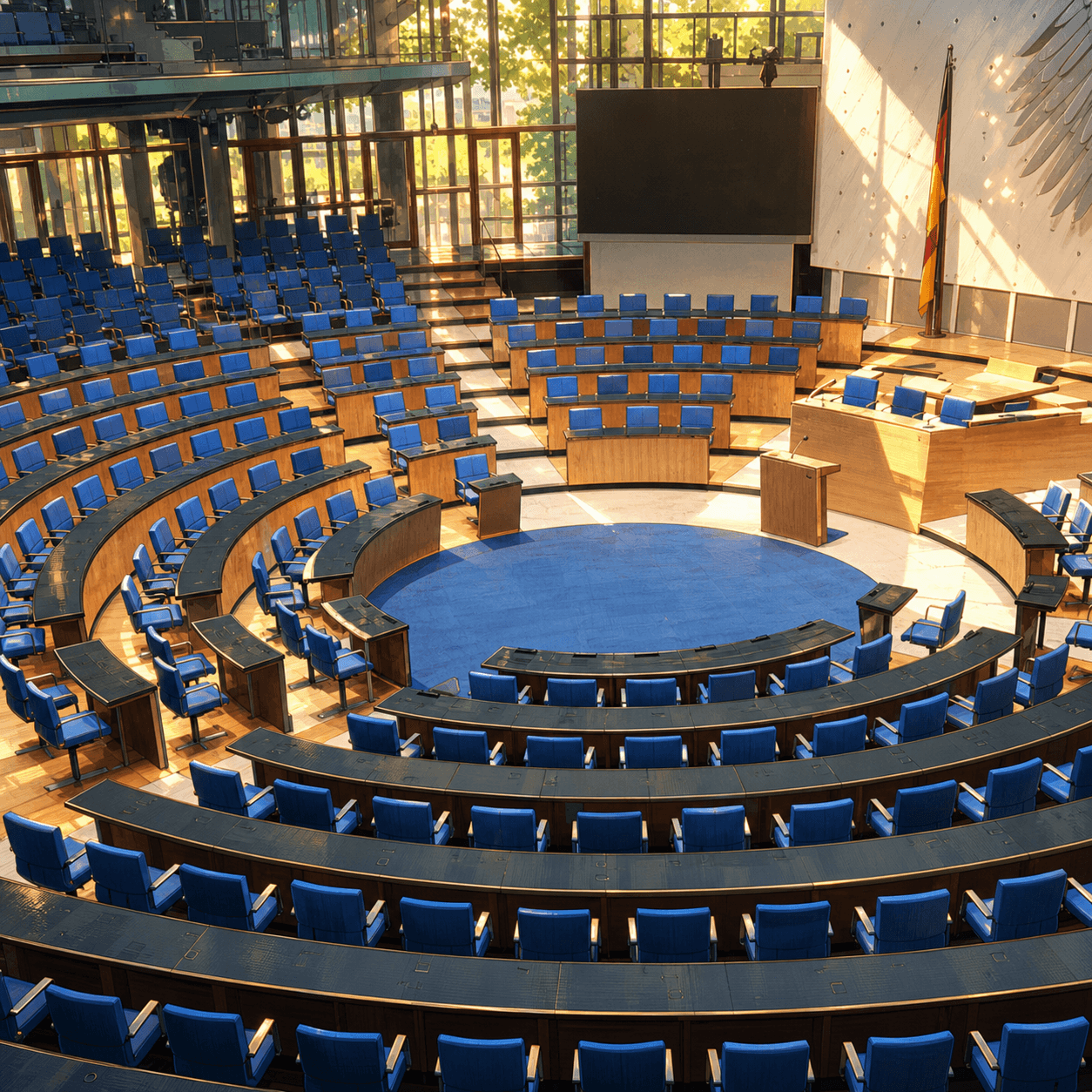
In March 2026, numerous decisions and discussions on youth policy took center stage in Bonn. The Committee for Children, Youth, and Family addressed topics such as the support of youth projects, the flexibility of childcare, and the increasing costs in youth welfare. This deep dive provides an overview of the most important developments and their implications.
Youth Policy in Bonn: A Summary from March 2026
In March 2026, the Committee for Children, Youth, and Family in Bonn was deeply engaged with current challenges and opportunities for young people. The meeting on March 25 provided the opportunity to approve specific support measures and to discuss long-term strategies for cost control in youth welfare.
Support for Youth Projects and Education
A central topic was the support of projects that directly reach young people in Bonn. The application for funding of the project "100pro Youth – The Festival" was unanimously approved. This festival is designed as a platform for cultural and social integration and provides young people, especially those from disadvantaged backgrounds, with a space for self-expression and networking. Additionally, the continuation of the support for the offer "Neustart – Education from the First Minute" by the association "AsA – Education instead of Deportation" was decided. This project supports refugee youth in their integration through education and training, which is particularly relevant in the current context.
Another focus was on the support of the "Coolness Training" at the Freiherr-Vom-Stein Comprehensive School. This is a preventive offer for violence reduction, carried out by Krämer Trainings. The support was granted in accordance with the guidelines for the promotion of violence prevention, showing that prevention plays a central role in youth policy in Bonn.
Flexibilization of Childcare and Care Gaps
In the context of flexibilizing childcare hours for the period 2026/2027, a grant was approved. This is part of the measures to mitigate childcare gaps, particularly during the summer holidays. An amendment proposal by the Parent Council of the Youth Welfare Office emphasized the urgency of using flexibilization funds under § 48 KiBiz specifically for the gaps in holiday childcare. The discussion about holiday childcare is a recurring topic in youth policy and shows the need to find flexible solutions for childcare that meet the needs of families.
Cost Development in Youth Welfare: Challenges and Strategies
Another central topic was the increasing cost development in youth welfare. In Department 5, unplanned expenditures of 23 million euros were recorded in 2025, mainly due to increased case numbers and rising costs per case in custody and foster care. The administration expects further cost increases for the year 2026. Main causes are general price developments, tariff-related adjustments, and higher service intensity.
To control the cost development, the administration plans to strengthen professional and financial control with quarterly evaluations. The goal is to reduce costs through wage control and a close examination of the duration of stays. In addition, low-threshold group offers are being given more focus to avoid more costly measures. Strengthening family-preserving support settings and further developing inclusion assistance are further measures to stabilize costs in the long term.
Structural Changes and Staff Development
Within the framework of the meeting, Georg Goetz (CDU) was unanimously elected as Chair of the Committee for Children, Youth, and Family. His deputies are Anja Lamodke (Alliance 90/The Greens) and Max Bieniek (SPD). The appointment of Mrs. Claudia Schinnen and Mrs. Vera Erken as secretaries and deputy secretaries underlines the importance of structural stability and transparency in committee work.
Outlook: Youth Policy in Bonn in Transition
The decisions and discussions in March 2026 show that Bonn is actively working on the future of youth policy on various levels. On the one hand, specific projects are being supported that directly address and support young people. On the other hand, long-term strategies are being pursued to stabilize the cost development in youth welfare while at the same time ensuring the quality of services.
The planned external organizational audit and the transition to modern professional software also indicate that Bonn is ready to make comprehensive structural changes. The results of the audit, which will be presented in the summer/fall, could shape future decisions in youth policy.
Overall, it becomes clear that youth policy in Bonn is both practical and strategically oriented. With a focus on prevention, flexibility, and cost control, the city is pursuing a sustainable and inclusive policy for young people.
NeoSearch analyses public council documents, committee minutes and municipal announcements. Source references appear automatically once verified meeting data is available.
What does this mean for businesses?
Schools, daycare centres and public buildings create early planning and construction opportunities. Following council agendas surfaces tenders for refurbishment, new builds and fit-out months before the official award — from shell construction to specialist planning to furnishing.
Track similar decisions in your region
Set up monitoring for education & public facilities in Nordrhein-Westfalen — prefilled from this article.
Set up monitoring →More signals from Bonn
Bonn Sport Policy 2026: Expansion, Modernization and Inclusion in Focus
In May and June 2026, the federal city of Bonn made numerous decisions in the area of sport that strengthen both sports infrastructure and social inclusion. The Sports Committee approved investments in new sports facilities, renovation measures and support for events – all milestones for the future of sports development in Bonn.
Read more → Economic and Urban Development in Bonn: Decisions and Debates in the Second Quarter of 2026
In May and June 2026, the Committee for Economy, Properties, and Labour in Bonn made several key decisions concerning economic development and public space safety. Discussions around initiatives such as "Safe Cities" and the implementation of the ISEK Bad Godesberg Downtown project illustrate the complexity of urban development challenges.
Read more → Security in Crisis: Bonn Moving Toward Resilience
In May and June 2026, Bonn focused on security, disaster protection, and the impact of infrastructure bottlenecks on emergency services. The Committee for Safety, Order, and Civil Protection discussed multiple times on preventive measures, investments, and cooperation strategies to make the city future-ready.
Read more →