Governance and Administration in Bonn: Transparency, Decision-Making, and Political Debates in March 2026
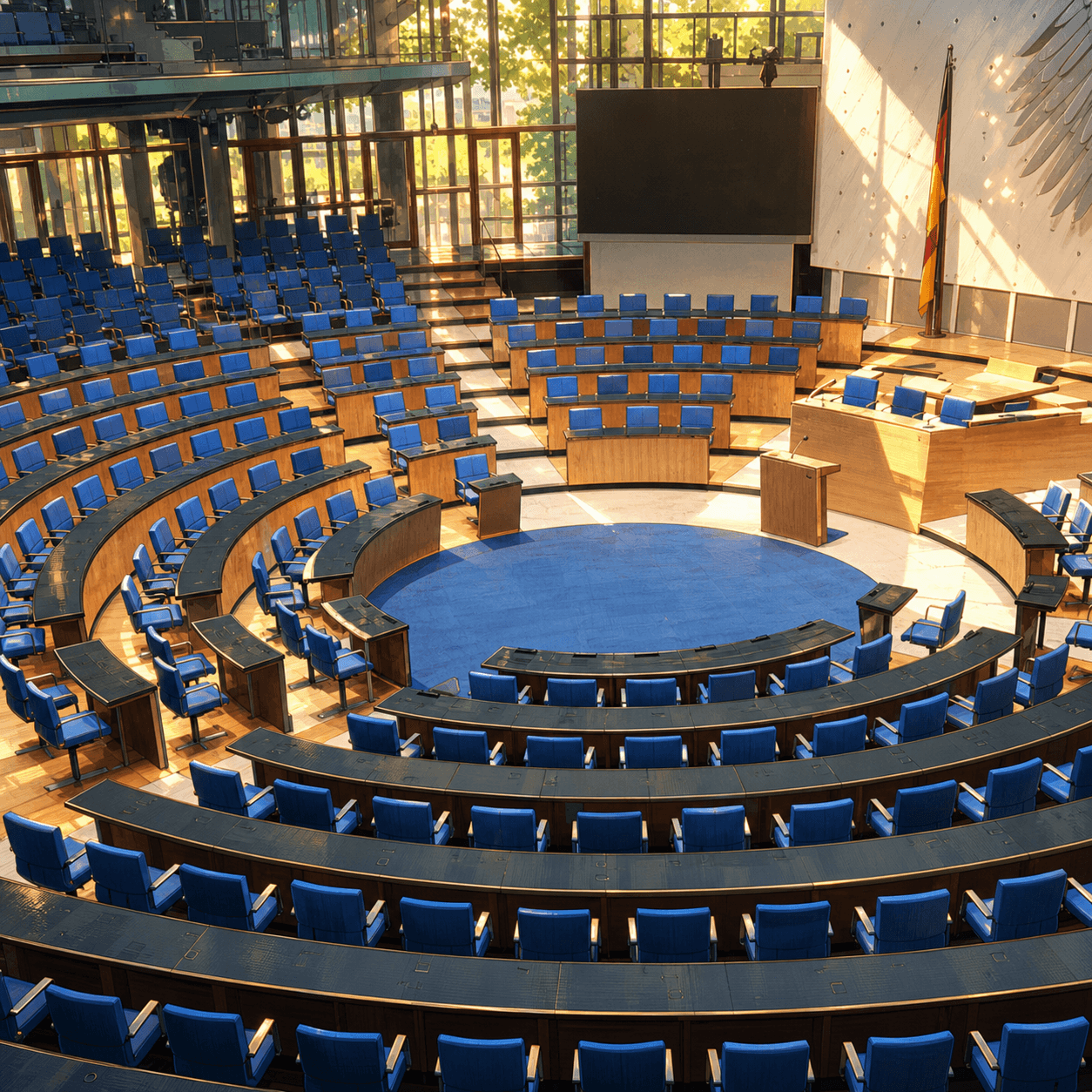
In March 2026, numerous topics in the area of governance and administration were in the focus in Bonn: session organization, transparency debates, citizen initiatives, and political conflicts. This analysis examines how decisions are made in the district of Hardtberg and in the city of Bonn, which tensions arose, and what impact the debates have had on administrative practice.
Governance and Administration in Bonn: An Analysis of the Political Structures and Decision-Making Mechanisms
The city of Bonn is a model for a modern, transparent, and participatory administration. In March 2026, decisions were repeatedly made in the district council of Hardtberg and other districts that reflect both the structure of the administration and the political conflicts. The analysis shows that governance in Bonn is not only a management instrument but also a political process in which interests, transparency, and participation are central topics.
Decision-Making Processes and Political Tensions
In March 2026, several meetings of the district council of Hardtberg took place in which the political currents and party-political differences became clearly visible. One of the central topics was the transparency of decision-making mechanisms.
For example, a proposal by the Greens/Left to improve road safety on Villemombler Straße was unanimously adopted. This proposal was not only a technical project but also a statement about safety in public space. At the same time, several proposals for tree planting were postponed because the administration saw a need for coordination. The CDU asked about the transparency of planning in a major inquiry, showing that political tensions also exist in the context of green topics.
Another example is the discussion about the Hardtberg Medal, where a CDU/SPD proposal to modernize the procedure was unanimously adopted with amendments, while the AfD abstained. This decision underlines the complexity of the political dynamics in Bonn: even in symbolic topics such as the awarding of honors, there are party-political differences.
Citizen Participation and Party Pluralism
Political debates in Bonn are strongly shaped by citizen proposals. For instance, a proposal for the installation of a covered bicycle parking area on Fritz-Erler-Straße was unanimously adopted in the district council of Hardtberg. This decision was not only a technical project but also a reflection of the political prioritization of cycling and climate protection.
In addition, several inquiries and control mechanisms were addressed, including topics such as speed controls, bus stops, bollards, and off-leash dog areas. In many cases, the administration responded with statements, showing that political debates often take place in dialogue between the administration and politics. This dialogue is a central component of governance in Bonn.
Transparency Debates and Digital Transformation
Another central topic was the transparency of decision-making processes. In several meetings, it was discussed how to strengthen the participation of citizens. For example, in the district council of Bad Godesberg, a proposal to eliminate dark spots in the city was adopted with amendments. This proposal was not only a technical project but also a statement about safety and transparency in public space.
Bonn also showed itself to be a pioneer in digital transformation. It was decided to integrate streaming and digital voting tools into committee work in order to increase transparency and accessibility. These measures are part of a comprehensive strategy to strengthen digital participation.
Outlook: Governance as a Political Process
The debates in March 2026 show that governance in Bonn is a dynamic process in which political interests, citizen participation, and administrative strategies collide. The political conflicts are not only an expression of party-political differences but also a reflection of social debates.
In the coming months, it will be important to further strengthen the transparency of decision-making processes and to promote the participation of citizens. The experiences from March 2026 show that Bonn is on the right track, but also that there is still room for improvement.
NeoSearch analyses public council documents, committee minutes and municipal announcements. Source references appear automatically once verified meeting data is available.
What does this mean for businesses?
Town halls, fire stations, depots and administrative buildings create early construction and refurbishment opportunities. Following council agendas reveals projects before they go to tender.
Track similar decisions in your region
Set up monitoring for public buildings & administration in Nordrhein-Westfalen — prefilled from this article.
Set up monitoring →More signals from Bonn
Bonn Sport Policy 2026: Expansion, Modernization and Inclusion in Focus
In May and June 2026, the federal city of Bonn made numerous decisions in the area of sport that strengthen both sports infrastructure and social inclusion. The Sports Committee approved investments in new sports facilities, renovation measures and support for events – all milestones for the future of sports development in Bonn.
Read more → Economic and Urban Development in Bonn: Decisions and Debates in the Second Quarter of 2026
In May and June 2026, the Committee for Economy, Properties, and Labour in Bonn made several key decisions concerning economic development and public space safety. Discussions around initiatives such as "Safe Cities" and the implementation of the ISEK Bad Godesberg Downtown project illustrate the complexity of urban development challenges.
Read more → Security in Crisis: Bonn Moving Toward Resilience
In May and June 2026, Bonn focused on security, disaster protection, and the impact of infrastructure bottlenecks on emergency services. The Committee for Safety, Order, and Civil Protection discussed multiple times on preventive measures, investments, and cooperation strategies to make the city future-ready.
Read more →