Sport Policy in Bocholt: Expansion, Support, and Future Visions
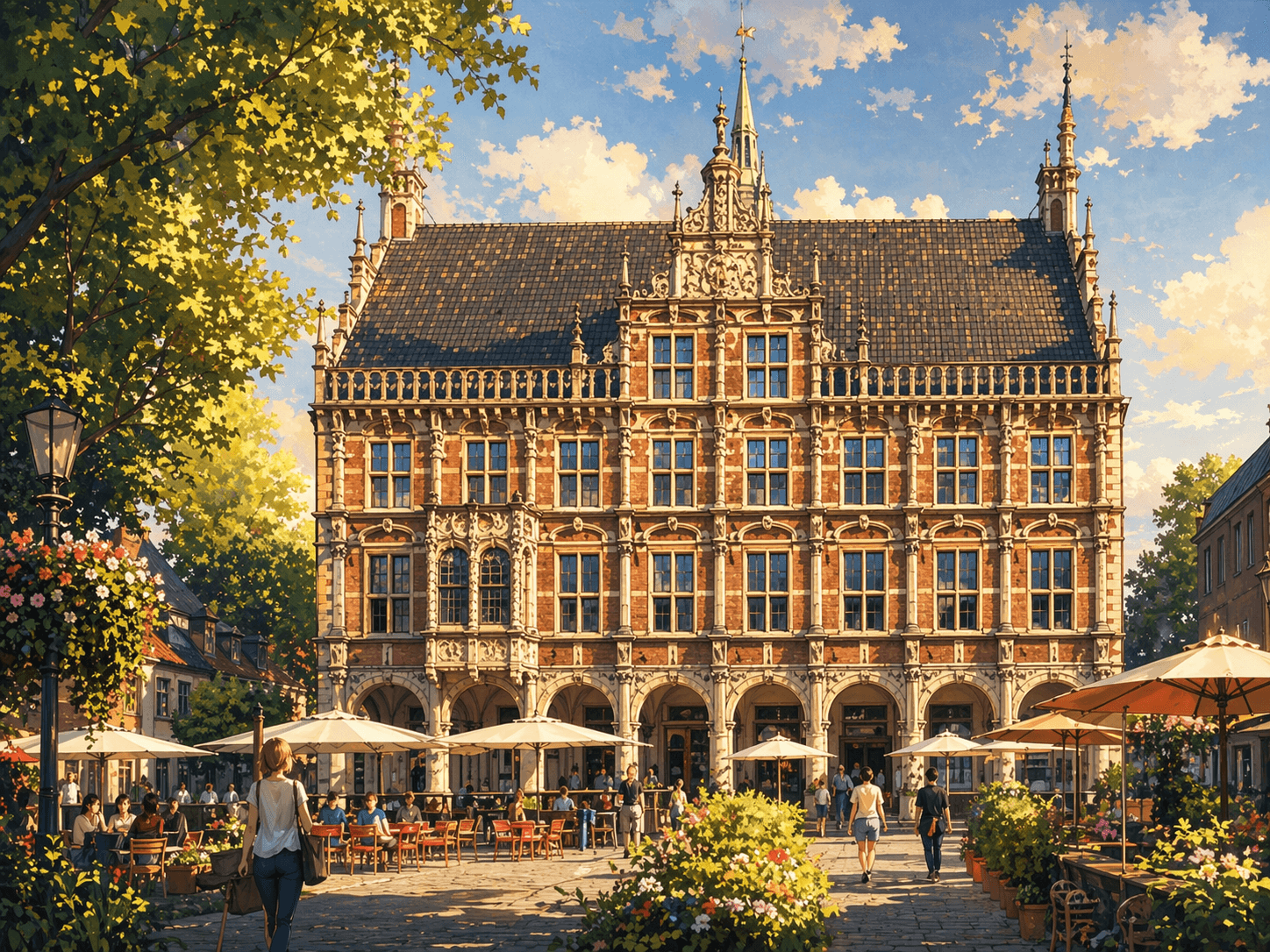
In March 2026, Bocholt focused on key sports policy decisions. The Sports Committee approved funding, discussed investments, and prepared forward-looking projects. An overview of the most important developments and their significance for the city.
Sport Policy in Bocholt: Expansion, Support, and Future Visions
Sport is not only a leisure activity in Bocholt, but a central part of the city's identity and development. With over 50 registered sports clubs and an organizational rate of 40 percent, the city is an active player in promoting mass sports. March 2026 was marked by sports policy meetings, investment decisions, and the presentation of forward-looking projects. Below is an overview of the most important developments.
Investments and Funding: Support for Clubs and Infrastructure
The Bocholt Sports Committee met on March 4, 2026, and made several significant decisions in the field of sports promotion. The city is combining investment cost subsidies with long-term funding programs. In 2026, a total of 13,855.24 EUR from the sports funding corridor was approved for two clubs:
- Bocholter Wassersportverein 1920 e.V. received 11,000 EUR for the renewal of a section of the fence.
- SF 97/30 Lowick e.V. received 2,855.24 EUR for the conversion of the door system to an accessible disabled toilet.
These measures are part of the city's strategic goals to promote inclusion and better accessibility in sports. Bocholt also benefits from a comprehensive funding program under the North Rhine-Westphalia Infrastructure Act 2025–2036, which provides a total of 29.7 million EUR for capital investments. For 2026, around 14,500 EUR is still available in the sports funding corridor.
Infrastructure: Renovations, Digital Administration, and Expansion
The city of Bocholt is not only investing in clubs but also in sports infrastructure. A current challenge is the closure of the Werther Straße sports hall, which has been closed since February 11, 2026, due to safety deficiencies. Replacement capacities are to be made available within three months until the reopening. The renovation of the artificial turf fields in Lowick, TuB Bocholt, and Hünting is planned for 2027, although not all fields will be renovated at the same time. Additionally, concerns were raised about the utilization of the only artificial turf field at Hünting.
The city has also introduced digital solutions for the administration of sports facilities: the Sports Field Traffic Light system has been digitized and provides real-time updates on closures. Since the end of February 2026, closure certificates can be generated automatically and retrieved for up to ten days in the past. These measures increase transparency and efficiency in administration.
Future Visions: Framework Planning and New Sports Formats
Another important topic was the framework planning for the future spatial development of the sports and leisure areas in Hünting and Bahia, scheduled for May 2026. This planning will play a central role in the long-term development of sports and social life in Bocholt.
In addition, the Sports Committee discussed the planning of Padel locations. The Department of Schools and Sports will develop a sustainable overall concept for this sport and present it at the next meeting. Padel, a mix of tennis and squash, is gaining popularity in Germany and could help Bocholt move into the future of mass sports.
Structure and Personnel: Department of Schools and Sports in Focus
The structure of Department 25, Schools and Sports, was presented thematically in March 2026. The head of the department is Dirk Lueg, who is responsible for coordinating sports and educational measures. Julia Wolters was appointed as secretary of the Sports Committee, Sandra Bengfort as deputy secretary. The appointment of expert citizens – including Janina Tebrügge, Herr Schepers, Herr Schorch, and Herr Volmering – underlines the importance of participation in sports policy.
The Sports Committee is the central decision-maker in sports policy matters and regularly meets to discuss funding, investments, and developments. The collaboration with the City Sports Association Bocholt, represented by Norbert Beckeuyte, is crucial.
Conclusion: Bocholt as a Sports-Friendly City with a Future
The sports policy decisions in March 2026 show that Bocholt is pursuing a sustainable expansion of the sports infrastructure and an active promotion of clubs. The city is relying on investments, digital innovations, and forward-looking planning. With the renovation of sports facilities, the promotion of inclusion, and the introduction of new sports formats such as Padel, Bocholt is positioning itself as a modern, sports-friendly city in the heart of North Rhine-Westphalia.
NeoSearch analyses public council documents, committee minutes and municipal announcements. Source references appear automatically once verified meeting data is available.
What does this mean for businesses?
Municipal council decisions are early indicators: following the council agenda surfaces projects and tenders months before the official award — before they ever reach the procurement portals.
Track similar decisions in your region
Set up monitoring for Culture and Community in Nordrhein-Westfalen — prefilled from this article.
Set up monitoring →More signals from Bocholt
Bocholt's Economic Development: Between Structural Change and Local Stabilization
In April 2026, key meetings of the Committee for Economy, Trade, and Tourism were in focus in Bocholt. Discussions surrounding the company Rent.Group/Partyrent Bocholt, the development of the city center, and Germany's economic situation reveal how the city is addressing the challenges of structural change and the decline in retail.
Read more → Legal Disputes in Bocholt: From the Cycling Expressway to the Aasee Festival
In April 2026, Bocholt faced several legal challenges. The discussion surrounding the planned cycling expressway RS2 and the security measures at the Aasee Festival highlight the need for complex and transparent decision-making in local governance.
Read more → Bocholt in April 2026: Climate and Environment in the Spotlight
In April 2026, several central topics from the fields of environment and climate were in focus in Bocholt. The Committee for Climate, Environment and Energy addressed photovoltaic projects, tree felling, and ecological measures at the Aasee. An overview of the decisions, background, and implications.
Read more →