Social Justice in Bocholt: An In-Depth Look at Social Policy and Housing Policy in March 2026
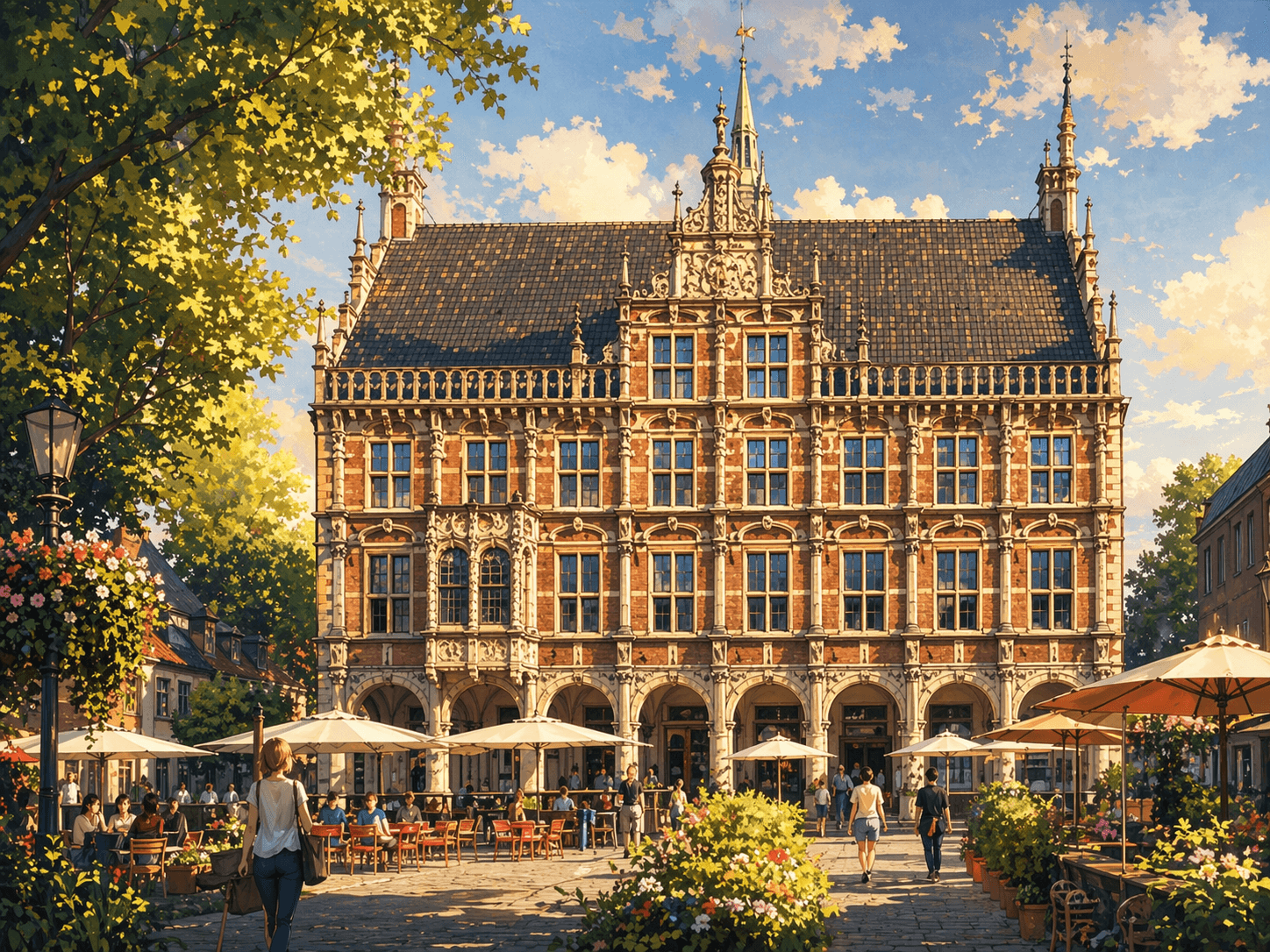
In March 2026, Bocholt focused on social justice, integration, and housing policy. The Committee on Work, Health, Social Affairs, Inclusion, and Equality set important impulses toward more inclusive structures and better housing for all. This blog article analyzes the decisions, backgrounds, and implications.
Social Participation and Equality: Bocholt is Committed to Inclusive Policy
In March 2026, Bocholt intensely addressed issues of equality, social participation, and housing policy. The Committee on Work, Health, Social Affairs, Inclusion, and Equality not only discussed current challenges, but also forward-looking solutions to reduce social disadvantages and actively promote equality.
Equality Work: From the Constitution to Practice
Equality officer Astrid Schupp presented her work and the structure of equality work in Bocholt in March 2026. The legal basis for equality lies in Article 3 of the German Constitution (GG) and is supported by federal and state laws. In practice, this means that the equality officer participates in personnel, organizational, and social measures within the administration, promotes women in leadership positions, and serves as a point of contact for discrimination issues.
A key focus is the development of strategies for the integration of women into the labor market as well as the organization of events such as the "Orange Days" in autumn 2026. At the same time, the city supports projects like "Be the Change. Women for Democracy" to strengthen political participation. Equality work is not only a local initiative but also part of a cross-party women's network established in the previous legislative period.
Housing Policy and Social Participation: The Family Pass as a Tool
Another central topic was the discussion on the so-called Family Pass. The Die Linke faction submitted proposals for the expansion of the pass, which currently offers a 50% discount on entrance fees, courses, events, and library services. A renaming to "Bocholtpass" was proposed to use gender-neutral and inclusive terms. In addition, the pass should be extended to recipients of citizen's allowance, old-age and disability pensions, and basic security.
The proposal to expand the discount area to include museum entries, music schools, Young University, and sports clubs shows how Bocholt is trying to improve social participation through financial accessibility. The city is also interested in inter-municipal coordination with the neighboring municipalities of Rhede and Isselburg to enable a district-wide family pass.
Neighborhood Development and Social Integration: The City-Wide Approach
The Office for Social Planning, Neighborhood Development, and Integration, led by Bruno Wansing and Lukas Kwiatkowski, plays a crucial role in developing social structures in Bocholt. In areas with a negative social index, neighborhood centers are established, offering individual counseling and group activities. The goal is to reduce social disadvantages and strengthen social cohesion.
Bocholt follows a city-wide approach to social space development, supported by an integrated social space management. Cooperation with the job center, health projects, and insolvency counseling is crucial. The city funds approximately 800,000 EUR annually for neighborhood work – a clear signal of the prioritization of social and integrative offerings.
Outlook: Bocholt as a Model City for Social Innovation
The political and administrative measures adopted or discussed by Bocholt in March 2026 show a clear trend: The city wants not only to promote social justice, but also to serve as a model city for innovative social policy. With projects such as the model community program "Take the Demographic Change Seriously – Strengthen Care" and work on the Integrated Social Space Management, Bocholt is setting impulses that can have an impact beyond the regional level.
The challenge now is to implement the planned measures efficiently and use tax funds optimally. At the same time, the city must proceed carefully in inter-municipal coordination within the Borken district to find a uniform solution for a district-wide pass.
Bocholt proves that social policy is not only limited to financial support, but must also include inclusive structures, early intervention, and participatory processes. The coming months will show whether the plans and visions can be turned into action – and how Bocholt is perceived as a citizen-friendly welfare state in North Rhine-Westphalia.
NeoSearch analyses public council documents, committee minutes and municipal announcements. Source references appear automatically once verified meeting data is available.
What does this mean for businesses?
Municipal council decisions are early indicators: following the council agenda surfaces projects and tenders months before the official award — before they ever reach the procurement portals.
Track similar decisions in your region
Set up monitoring for kommunale Projekte in Nordrhein-Westfalen — prefilled from this article.
Set up monitoring →More signals from Bocholt
Bocholt's Economic Development: Between Structural Change and Local Stabilization
In April 2026, key meetings of the Committee for Economy, Trade, and Tourism were in focus in Bocholt. Discussions surrounding the company Rent.Group/Partyrent Bocholt, the development of the city center, and Germany's economic situation reveal how the city is addressing the challenges of structural change and the decline in retail.
Read more → Legal Disputes in Bocholt: From the Cycling Expressway to the Aasee Festival
In April 2026, Bocholt faced several legal challenges. The discussion surrounding the planned cycling expressway RS2 and the security measures at the Aasee Festival highlight the need for complex and transparent decision-making in local governance.
Read more → Bocholt in April 2026: Climate and Environment in the Spotlight
In April 2026, several central topics from the fields of environment and climate were in focus in Bocholt. The Committee for Climate, Environment and Energy addressed photovoltaic projects, tree felling, and ecological measures at the Aasee. An overview of the decisions, background, and implications.
Read more →