Bocholt's Economic Development: Between Structural Change and Local Stabilization
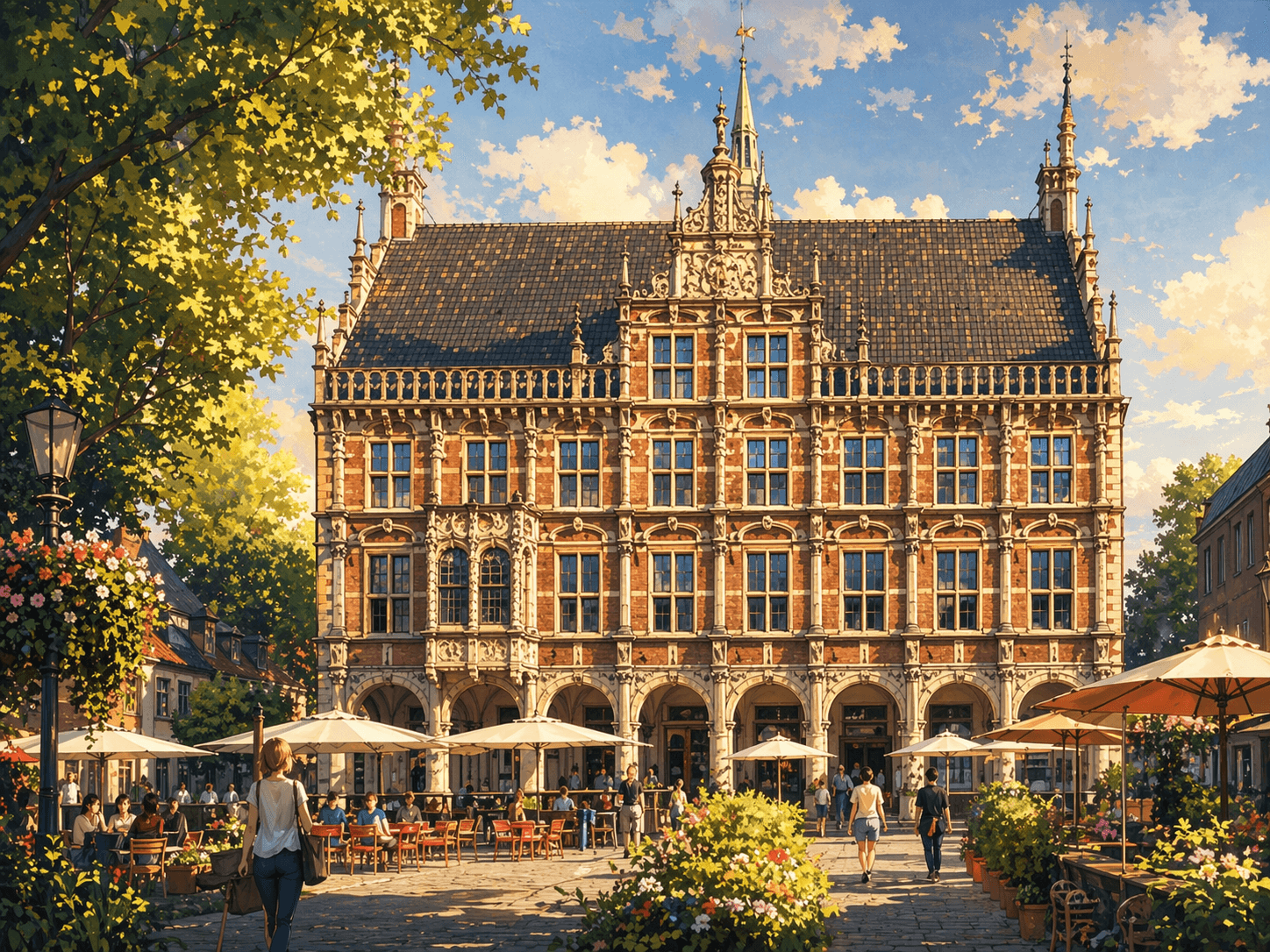
In April 2026, key meetings of the Committee for Economy, Trade, and Tourism were in focus in Bocholt. Discussions surrounding the company Rent.Group/Partyrent Bocholt, the development of the city center, and Germany's economic situation reveal how the city is addressing the challenges of structural change and the decline in retail.
Economic Challenges and Opportunities in Bocholt
In April 2026, Bocholt set important impulses for the local economy in the Committee for Economy, Trade, and Tourism. The debates on Rent.Group/Partyrent Bocholt, the development of the industrial park, and the future of the city center reflect the diverse demands on modern economic promotion.
Rent.Group/Partyrent Bocholt: A Local Company in Transition
The management of Rent.Group/Partyrent Bocholt presented the company in person during the meeting on April 14, 2026. Founded in 1992, the company employs approximately 120 people and is part of a franchise network based in Frankfurt. Bocholt is a central location that covers a wide catchment area—up to the Nürburgring, Siegen, the Ruhr region, the Netherlands, and parts of Belgium.
Rent.Group/Partyrent Bocholt provides event and office equipment and closely cooperates with partner locations. The city of Bocholt is of strategic importance to the company, particularly in terms of space requirements and skilled labor. The collaboration with Bocholt University of Applied Sciences shows how the city can actively integrate its educational institutions into the economy.
The management emphasized that the economic situation in Bocholt is considered difficult. The vacancy rate in owner-operated stores and the conversion into creative sectors such as gastronomy and crafts are central issues that must also be considered in urban development.
Structural Change and Economic Promotion in Bocholt
Current economic policy in Germany and Bocholt is facing fundamental challenges. Export industries such as the automotive industry, machinery, and chemicals are losing market shares, which also has an impact on smaller cities like Bocholt. Local economic promotion agencies have been in a kind of crisis mode since the Corona pandemic, primarily aiming to stabilize existing companies.
Bocholt sees a high need for reform, particularly in the areas of energy, raw materials, supply chains, and small and medium-sized enterprises (SMEs). Economic promotion offers a range of support measures—from financial mediation to industrial site development—but often lacks the resources and financial support needed to implement them effectively.
Discussions in Bocholt show that a transformation of traditional industries into technology and security sectors is being pursued. At the same time, there is criticism that support funds are often used in an unstructured and insufficient manner. This needs to be improved in the future to ensure that Bocholt remains competitive in a changing economic landscape.
Future of City Centers: Bocholt in a Tension Field
Retail in Germany is in a deep crisis. According to HDE forecasts, a further 4,900 stores will close by the end of 2026. In Bocholt, this trend is noticeable—the number of stores is decreasing, and vacancy rates are increasing. The city must ask itself how it can keep its city center vibrant.
In this context, HDE calls for better framework conditions: a reduction in the electricity tax, a cap on wage-related costs at 40%, and turnover-oriented rents. In addition, the retail association calls on the Federal Ministry of Transport and local authorities to make greater efforts to create vibrant city centers.
In Bocholt, discussions are taking place on how private investors can be won for revitalization and what depreciation options need to be created for investments in a clean and attractive environment. The conversion of empty retail space into creative areas such as gastronomy or crafts could be a first response to the decline in retail.
Outlook: Bocholt as a Model City of Transformation?
The debates in Bocholt show that the city is actively addressing the challenges of economic policy. The collaboration with companies like Rent.Group/Partyrent Bocholt, the revitalization of the city center, and the strengthening of economic promotion are decisive turning points.
In a time when many cities are struggling with structural losses, Bocholt could become a model for sustainable economic and urban development—provided the right decisions are made and implemented in the long term.
NeoSearch analyses public council documents, committee minutes and municipal announcements. Source references appear automatically once verified meeting data is available.
What does this mean for businesses?
Urban development, zoning plans and commercial settlements create early construction and supply opportunities. Following council decisions reveals projects before they go to tender.
Track similar decisions in your region
Set up monitoring for economic development in Nordrhein-Westfalen — prefilled from this article.
Set up monitoring →More signals from Bocholt
Legal Disputes in Bocholt: From the Cycling Expressway to the Aasee Festival
In April 2026, Bocholt faced several legal challenges. The discussion surrounding the planned cycling expressway RS2 and the security measures at the Aasee Festival highlight the need for complex and transparent decision-making in local governance.
Read more → Bocholt in April 2026: Climate and Environment in the Spotlight
In April 2026, several central topics from the fields of environment and climate were in focus in Bocholt. The Committee for Climate, Environment and Energy addressed photovoltaic projects, tree felling, and ecological measures at the Aasee. An overview of the decisions, background, and implications.
Read more → April 2026 – A Look Back at Decisions, Climate, and Partnerships in Bocholt
In April 2026, Bocholt focused on key decisions regarding the renovation of the town hall, climate protection measures, and cross-border cooperation. We summarize the most important developments for you.
Read more →