Bocholt in March 2026: Focus on Sport, Renovations, and Digitalization
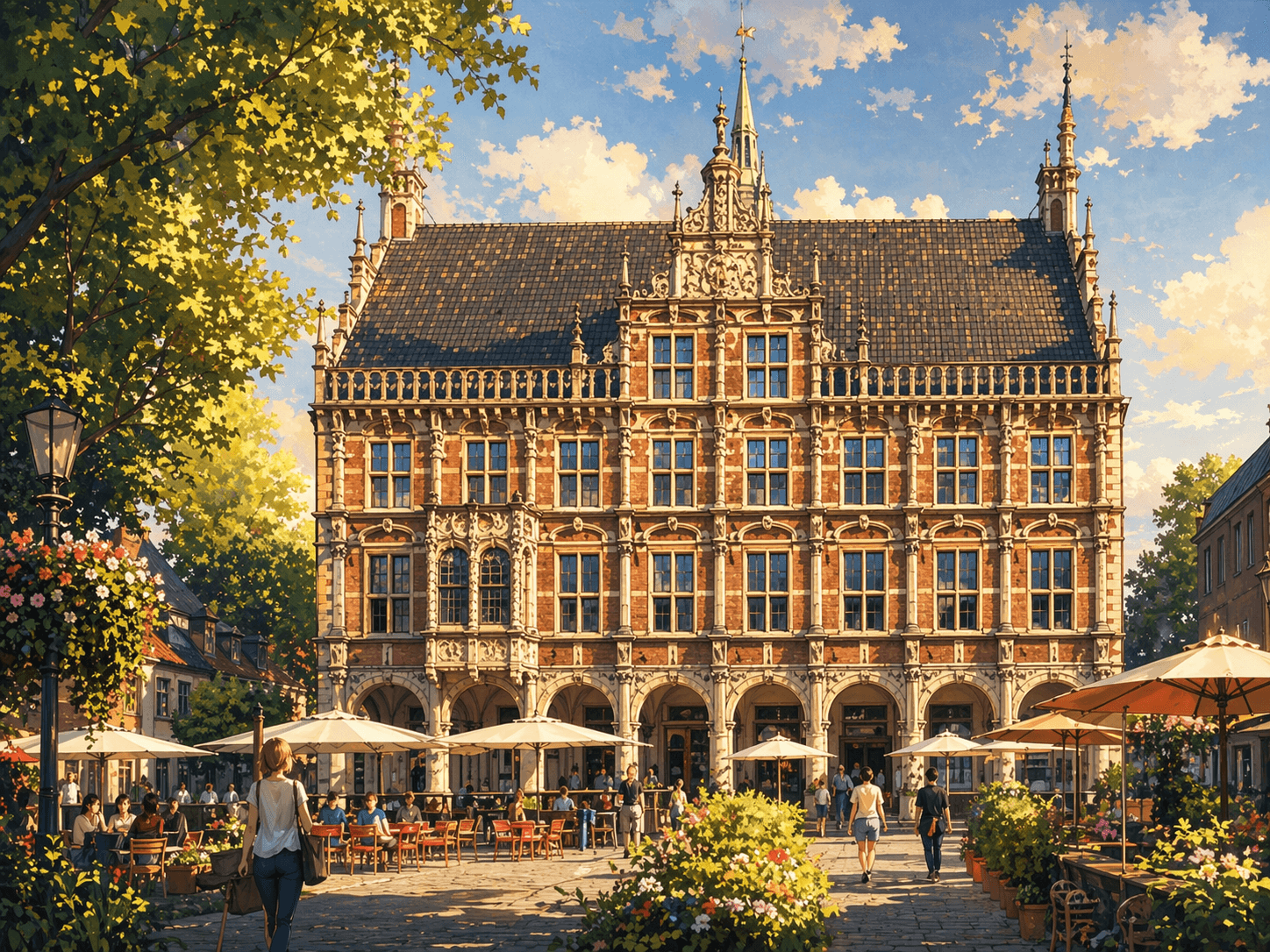
In March 2026, important decisions regarding sports promotion, town hall renovation, digital strategy, and youth support were central in Bocholt. An overview of the key topics and developments.
Sports Promotion and Infrastructure
What was important this month
- The Sports Committee allocated funding to the Bocholt Water Sports Association and the SF 97/30 Lowick.
- The Sports Field Traffic Light system is fully digitized – closure certificates can now be accessed online.
- The Werther Straße Sports Hall remains closed until March 2026, while the renovation of artificial turf fields will begin in 2027.
- The city receives 29.7 million euros from the North Rhine-Westphalia Infrastructure Act, including 2.5 million euros annually.
Sports Promotion and Investments
In March 2026, the city of Bocholt made significant progress in sports promotion. The Sports Committee approved investment cost subsidies of 11,000 euros for the Bocholt Water Sports Association and 2,855.24 euros for the SF 97/30 Lowick. The funds will be used to renew a fence and to upgrade a door system for barrier-free access to restrooms.
In addition, the Sports Field Traffic Light system has been fully digitized, increasing transparency. Citizens can now view closure certificates for the past ten days on the city’s homepage. The decision to close a field is typically made by the ESB (Emscher-Lippe Sports Federation) by 14:00.
The Werther Straße Sports Hall remains closed, with the renovation of artificial turf fields in Bocholt planned to take place gradually over the next few years and not simultaneously. The city also benefits from infrastructure funding from the state of North Rhine-Westphalia, receiving a total of 29.7 million euros between 2025 and 2036. For 2026, 14,500 euros are allocated within the sports promotion corridor.
Town Hall Renovation and School Construction
What was important this month
- The Town Hall renovation is in an advanced stage – the second geothermal energy line will be completed by the end of March.
- The gymnasiums at Josefschule and Ludgerus-Schule will be renovated by summer 2028.
- At the Liebfrauen Primary School Cluster, 10 classroom modules are now in operation, with further projects to follow.
Town Hall and School Construction: Progress and Planning
The Town Hall renovation is a milestone in municipal construction planning. With the completion of the second geothermal line by the end of March 2026, a key step has been achieved. Of the total 58 trades involved, 27 have been submitted by the end of February, and the main completion of the Town Hall is targeted for mid-2027.
In the area of school buildings, several projects have been completed or are now in the planning phase. The gymnasiums at Josefschule and Ludgerus-Schule will be renovated by summer 2028, with 45% of the costs covered by the SKS program and 80% by the EFRE. At the Liebfrauen Primary School Cluster, 10 classroom modules (180 m²) are already in operation. For the Hohen Giethorst School, a two-story building (228 m²) is ready for use until the new Euregio Gymnasium is built. At the Israhel-van-Meckenem Realschule, an elevator has been installed and will be put into operation after the summer holidays of 2026.
The funding from the SKS program is heavily oversubscribed – 333 million euros are available for 7.5 billion euros in applications. A decision on funding will be made in April 2026.
Digitalization and Youth Support
What was important this month
- The Digital Committee discussed progress on Digital Strategy 2.0 and projects in the field of Artificial Intelligence.
- The Youth Support Committee approved funding for kindergartens, mini-golf facilities, and equipment replacement.
- The digitization of protocol recording in committees has begun.
Digital Strategy and Youth Promotion
The Committee for Digitalization, IT, and Innovation discussed current developments in Digital Strategy 2.0 in March 2026. The focus was on the Digital Pact 2.0 and municipal initiatives in the field of Artificial Intelligence. The documents MB/48/2026, MB/49/2026, and MB/50/2026 were submitted for discussion. A special feature: from now on, protocol recording is supported by artificial intelligence, which should increase the efficiency and transparency of committee activities.
In the Youth Support Committee, key decisions were made regarding childcare. For the kindergarten year 2026/27, the city applied for state subsidies for 290 childcare places, requiring 76 childcare providers. The difference amount after KiBiz was approved for the Kita St. Ludger, Carlo, and Waldschlösschen. In addition, a one-time investment grant of 83,126.33 euros was approved for the mini-golf facility at the St. Helena playground.
Cross-Cutting Themes: Funding, Financing, and the Future
In several committees, it became clear that the funding landscape is becoming increasingly tight. The SKS program is heavily oversubscribed, and in the field of sports promotion, priorities must also be set. At the same time, the city of Bocholt is well-positioned through its infrastructure and digitalization plans, which aim to improve quality of life in the long term.
Another trend is the increase in transparency, whether through digital protocol recording, public tender procedures, or digital sports field management. These measures strengthen citizens’ trust in municipal work.
Conclusion and Outlook
March 2026 was a month of progress and planning in Bocholt. The city is investing in sports, school construction, and digitalization, while also setting clear priorities in funding and financial planning. In the coming weeks, further decisions on sports field renovation, digital strategy, and youth support will follow. In addition, the Mayor will report on the staffing of his office in April, which could also lead to discussions.
The city of Bocholt is moving toward a future-ready, digital, and livable city that responds to the needs of its citizens and remains long-term planable.
NeoSearch analyses public council documents, committee minutes and municipal announcements. Source references appear automatically once verified meeting data is available.
What does this mean for businesses?
Schools, daycare centres and public buildings create early planning and construction opportunities. Following council agendas surfaces tenders for refurbishment, new builds and fit-out months before the official award — from shell construction to specialist planning to furnishing.
Track similar decisions in your region
Set up monitoring for education & public facilities in Nordrhein-Westfalen — prefilled from this article.
Set up monitoring →More signals from Bocholt
Bocholt's Economic Development: Between Structural Change and Local Stabilization
In April 2026, key meetings of the Committee for Economy, Trade, and Tourism were in focus in Bocholt. Discussions surrounding the company Rent.Group/Partyrent Bocholt, the development of the city center, and Germany's economic situation reveal how the city is addressing the challenges of structural change and the decline in retail.
Read more → Legal Disputes in Bocholt: From the Cycling Expressway to the Aasee Festival
In April 2026, Bocholt faced several legal challenges. The discussion surrounding the planned cycling expressway RS2 and the security measures at the Aasee Festival highlight the need for complex and transparent decision-making in local governance.
Read more → Bocholt in April 2026: Climate and Environment in the Spotlight
In April 2026, several central topics from the fields of environment and climate were in focus in Bocholt. The Committee for Climate, Environment and Energy addressed photovoltaic projects, tree felling, and ecological measures at the Aasee. An overview of the decisions, background, and implications.
Read more →