Oldenburg's Municipal Politics in March 2026: Urban Development, Climate Adaptation and Infrastructure
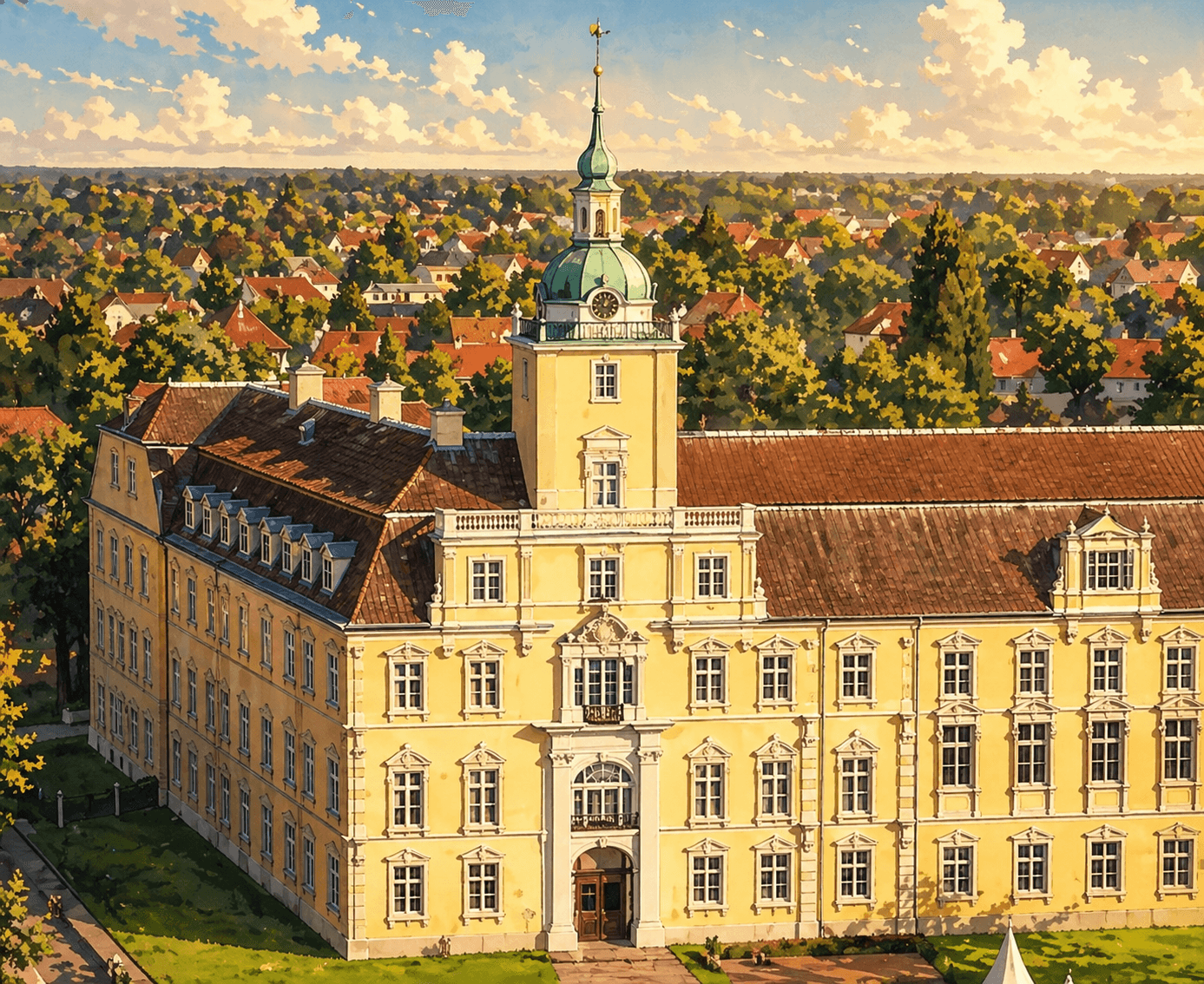
In March 2026, Oldenburg focused on decisions regarding urban development. The emphasis was on zoning plans, traffic planning and climate protection measures. In this blog article, we examine the backgrounds, decisions and implications of the current planning initiatives.
Oldenburg's Municipal Politics in March 2026: Urban Development, Climate Adaptation and Infrastructure
Urban development in Oldenburg is a central building block for the future of the region. In March 2026, decisive turning points were set that will shape the city's infrastructure, environmental planning and housing development in the coming years. At the center were zoning plans, the planning of the relief road and comprehensive measures for climate adaptation.
Zoning Plan N-777 G: Industrial Development at the Airfield
The zoning plan N-777 G was finally adopted as a regulation in March 2026. It covers an area of about 20 hectares and lays the foundation for industrial development in the areas of Airfield, Hallensichel-Ost and the relief road. Within the area, 7 hectares are designated for industry, 6 hectares for road surfaces as well as wooded and stormwater retention areas.
The planning was complex: Following a ruling by the Higher Administrative Court of Lüneburg in 2024, which declared the plan invalid, comprehensive revisions were made. During two public consultation periods (April–June 2025 and November–December 2025), there were numerous objections from citizens and associations, primarily criticizing traffic safety, costs and environmental impacts.
Despite these concerns, variant 5 of the relief road was selected as the most suitable option. The zoning plan also includes special permits for the removal of certain biotopes, with comprehensive compensation measures planned.
Housing Construction and Environmental Planning: Zoning Plan 837 and Land Use Plan Amendment 84
Alongside industrial development, housing planning was also in focus. Zoning Plan 837 and Land Use Plan Amendment 84 affect the area north of Eßkampstraße and east of Südbäke. The goal is to develop a new residential area with up to 110 housing units and a nature-friendly stormwater retention basin with a storage capacity of 11,000 m³.
The planning is part of the "Master Plan Weißenmoor and Südbäkeniederung." Particular emphasis is placed on climate protection measures, such as stormwater retention systems, green roofs and the promotion of renewable energies. Access is exclusively via the southern parcel of Eßkampstraße, which drew criticism from residents and environmental associations concerned about additional traffic and environmental burdens.
Climate Adaptation and Nature Conservation: Challenges and Measures
The planning in Oldenburg reflects a strong focus on climate adaptation. Following a Council decision in 2022, nature-friendly stormwater retention systems are mandatory. In several projects, measures such as terrain elevations, cisterns and green roofs are planned to combat climate change.
At the same time, nature conservation is given special consideration. For example, the zoning plan N-777 G provides for the removal of two biotopes, for which a special permit under § 30 BNatSchG was granted. Compensation measures are part of the planning. In other projects, public green spaces are preserved, and access is designed to be environmentally friendly.
Infrastructure and Traffic Planning: The Relief Road
The relief road remains a central point of municipal planning. Intensive discussions continue with ten route options and two favorites (variant 2 and 5). The goal is to relieve the Alexanderstraße and the Ammerländer Heerstraße. At the same time, access to industrial and residential areas is to be improved.
The planning is supported by the Lower Saxony Road Funding Act (GVFG), which can cover up to 60% of the costs. However, there are strong concerns from the district of Ammerland, environmental associations and residents, who express worries about noise pollution, amphibian and fauna protection and traffic congestion.
Conclusion: Oldenburg's Urban Development in Transition
Oldenburg's urban development in March 2026 shows a complex picture of economic interests, environmental concerns and climate policy requirements. The adopted zoning plans and the planning of the relief road mark decisive turning points that will shape the city's landscape and infrastructure in the coming years.
The challenge for the city is to maintain the balance between economic viability, sustainability and social well-being. The current debate about the relief road and the comprehensive climate protection measures show that Oldenburg not only wants to be an economic location, but also a model for sustainable urban development.
NeoSearch analyses public council documents, committee minutes and municipal announcements. Source references appear automatically once verified meeting data is available.
What does this mean for businesses?
Municipal council decisions are early indicators: following the council agenda surfaces projects and tenders months before the official award — before they ever reach the procurement portals.
Track similar decisions in your region
Set up monitoring for kommunale Projekte in Niedersachsen — prefilled from this article.
Set up monitoring →More signals from Oldenburg
Oldenburg's Urban Development: Construction Plans, Traffic, and Stadium Reconstruction in April 2026 in Focus
In April 2026, central topics of urban development were in focus in Oldenburg: Staff shortages in building cleaning, planning for the relief road, the zoning plan N-777 G, and the future of the stadium. The blog offers an in-depth look into decisions, backgrounds, and conflicts in the urban space.
Read more → Mobility Debate in Oldenburg: From School Streets to the SUMP 2040
In April 2026, Oldenburg was at the center of several key decisions and discussions on the topic of mobility – from the introduction of school streets and the future of cycling to the development of the Sustainable Urban Mobility Plan (SUMP). We take a look at the most important developments and background.
Read more → Oldenburg's Childcare in April 2026: Transitions, Expansion, and Future Perspectives
In April 2026, the city of Oldenburg will set new milestones in childcare. With the introduction of a unified transition form from daycare to primary school, the conversion of a nursery group, and the revision of the Children and Youth Support Plan, the city demonstrates a broad commitment to high-quality, inclusive childcare. In this deep-dive blog, we explore the background, decisions, and implications.
Read more →