Development Plan 203: Urban Development at the "Alter Viehmarkt" in Lingen
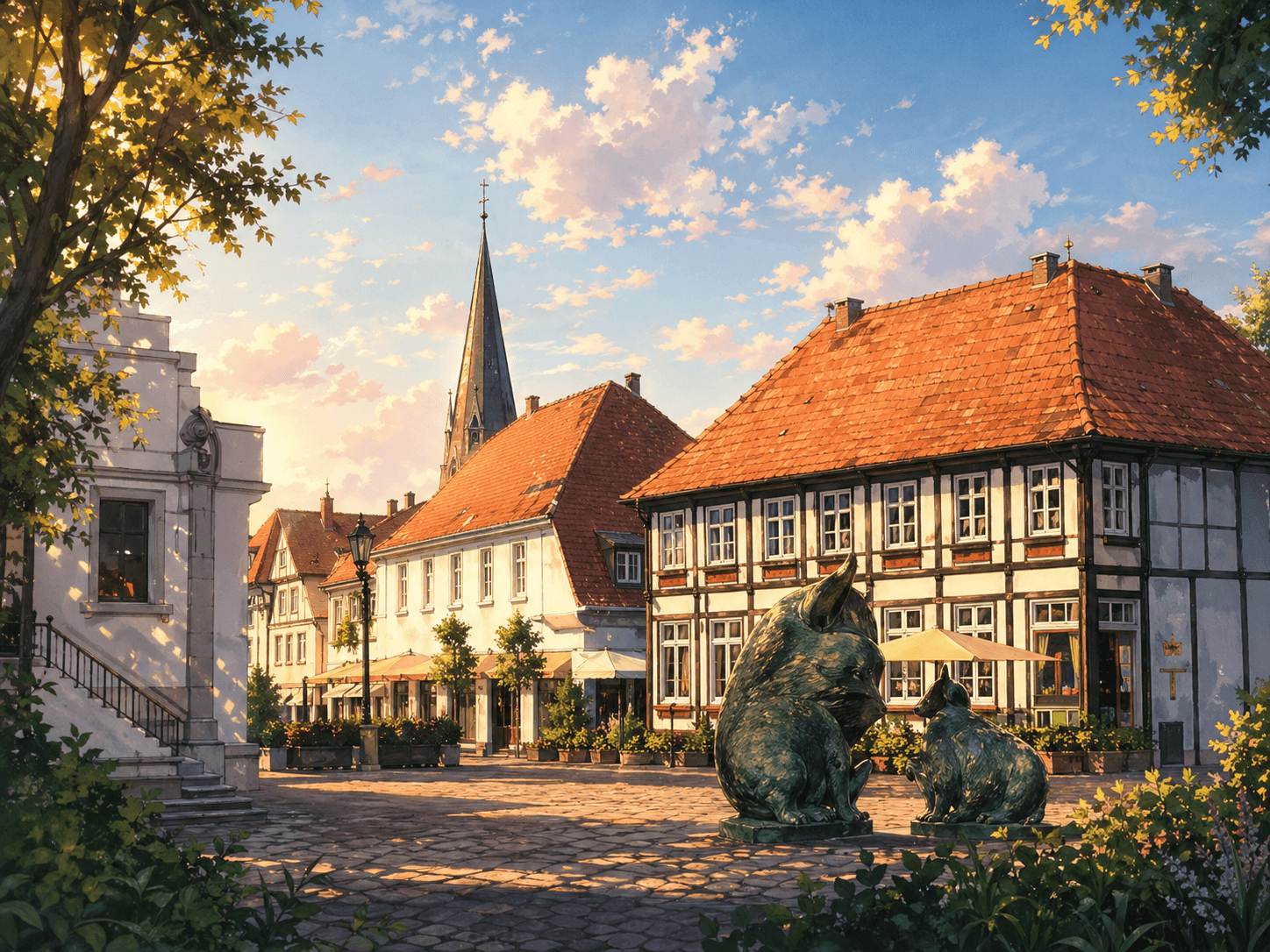
In March 2026, the city of Lingen adopted Development Plan 203 for the "Alter Viehmarkt" area. The plan aims for sustainable inner-city development that strengthens the academic location, creates housing, and simultaneously considers ecological and urban planning requirements. We analyze the background, decision-making processes, and implications of the planning.
The "Alter Viehmarkt" – an urban development project for Lingen
The Development Plan 203 for the construction area "Alter Viehmarkt" marks a milestone in the urban development of Lingen. With an area of approximately 24,000 m² between Bernd-Rosemeyer-Straße, Alte Rheiner Straße, and the railway tracks, a sensitive area is being redeveloped. The goal is to secure the academic location, create housing, and advance the development of the city center – all in harmony with environmental and transportation planning.
Urban planning objectives and usage profile
The planning follows the principle of inner-city development. Construction is to take place within already built-up areas and not in new green spaces or urban void zones. Residential use is permitted in the urban zones (MU 1–5), but with clear height restrictions and urban planning guidelines.
A central element is the creation of areas for educational institutions in the An der Kokenmühle area. These are strictly separated from residential use to ensure concentrated use in the spirit of educational facilities.
Large-scale retail, brothels, discos, arcades, and similar facilities are excluded – instead, a mixed-use development of housing, services, and non-disruptive industry is enabled.
Environmental and brownfield management
The site has historical brownfield issues due to its previous use as a gas station, gasworks, and chemical dry cleaners. Groundwater contamination by chlorinated hydrocarbons and PAHs has been confirmed. The plan therefore includes remediation measures, such as soil replacement, separation systems, and reports on decontamination.
In addition, the area is classified as a suspected unexploded ordnance site. A demining survey must be carried out before construction begins, and a release certificate from the responsible authority is required.
In terms of the environment, the creation of green spaces and the preservation of trees is a central aspect. If trees are removed, replacement planting is required, and for new construction projects, two trees must be planted for every tree removed.
Mobility and traffic safety
Access is via existing streets; no new entries or exits are planned. Parking spaces must be located in underground garages to relieve the street space.
In the area of Alte Rheiner Straße and Jakob-Wolff-Platz, ground-floor residential use is excluded to strengthen retail. In addition, visibility triangles at critical intersections with a 5 m distance and 70 m leg lengths are required to ensure traffic safety.
A public pedestrian and bicycle path between Alte Rheiner Straße and An der Kokenmühle is specified in the plan. The pedestrian path to the train station is extended by 550–600 meters, which has sparked discussions about the quality of mobility and raised criticism.
Public participation and political debates
The planning was the subject of a public consultation that lasted from November 11, 2025, to December 1, 2025. Although there were two private comments, including one with concerns, no fundamental objections were raised by authorities.
In the political debate, points of criticism were highlighted, particularly the sealing of green spaces through construction. Furthermore, it was suggested to involve the university more strongly in the planning. In the end, the Council decided on a regulation to combat the misuse of residential space in accordance with § 1 NZwEWG.
Conclusion: A step towards sustainable urban development
Development Plan 203 is an ambitious urban planning project that addresses the challenges of city center development in Lingen. With clear guidelines on use, environmental compatibility, and traffic safety, a sustainable district is planned that accommodates housing as well as education and commerce.
The planning is part of a broader trend focusing on inner-city development, densification, and urban compactness – moving away from expansion into the landscape and toward a smarter use of existing urban space. Whether and in what form the project will be implemented in practice remains to be seen. However, the decision in March 2026 is a clear step toward future-oriented urban development in Lingen.
NeoSearch analyses public council documents, committee minutes and municipal announcements. Source references appear automatically once verified meeting data is available.
What does this mean for businesses?
Municipal council decisions are early indicators: following the council agenda surfaces projects and tenders months before the official award — before they ever reach the procurement portals.
Track similar decisions in your region
Set up monitoring for kommunale Projekte in Niedersachsen — prefilled from this article.
Set up monitoring →More signals from Lingen
Climate Neutrality in Lingen: How the City is Transforming the Heating Sector
Lingen is consistently committed to achieving climate-neutral heating by 2040. In April 2026, key measures and plans were presented that will shape the region’s energy future.
Read more → Economic Development in Lingen (Ems): Focus on Job Fair, Rental Price Index, and Investor Lots in April 2026
In April 2026, Lingen (Ems) prioritized key decisions and discussions in the areas of economy and housing. The Emsland 2026 job fair, the current rental situation, and the marketing of investor lots for affordable housing sparked lively debates in the Economic and Real Estate Committee.
Read more → April 2026: Urban Development, Climate, and Housing in Lingen
April 2026 brought significant decisions regarding the rental price index, urban development, and climate-friendly heat planning in Lingen (Ems). We provide an overview of the key topics of the month.
Read more →