Langenhagen is investing in climate-friendly urban development and sustainable housing
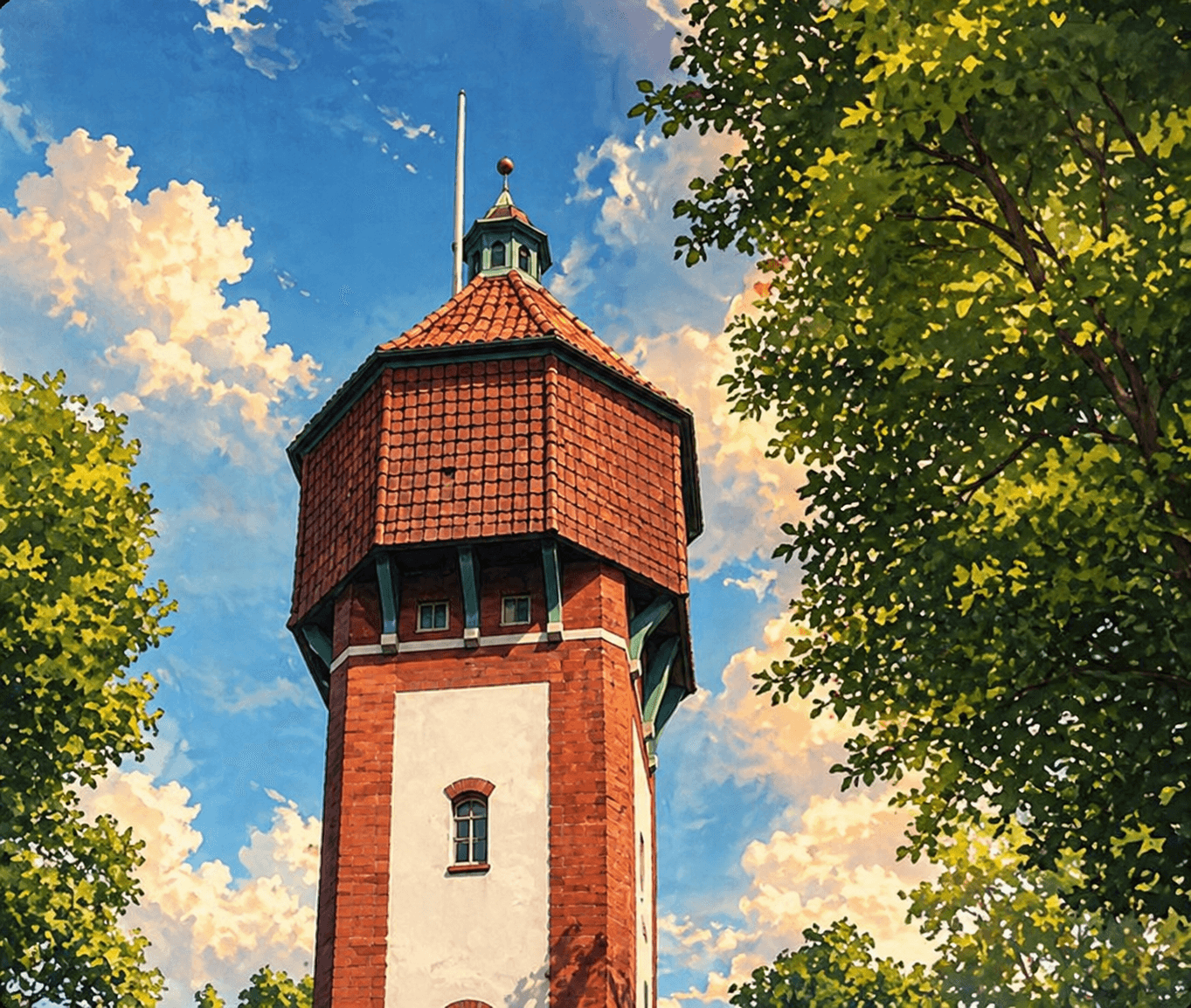
In Langenhagen, urban development is closely linked with climate protection, e-mobility, and social housing promotion. In February 2026, significant steps were taken towards climate neutrality by 2035 and sustainable construction concepts.
Climate Neutrality by 2035: Langenhagen is focusing on photovoltaics, the energy transition, and climate protection concepts
The city of Langenhagen has set ambitious climate protection goals: by 2035, it wants to be climate neutral. To achieve this, concrete interim targets have been defined, such as reducing CO2 emissions by 50% by 2028 (compared to 2020) and an annual reduction of 6.95%. Energy policy plays a central role in this effort.
A milestone is the municipal heating concept, adopted on November 3, 2025. It provides for the implementation of at least three district energy concepts by 2028. At the same time, municipal energy consumption has been reduced by 5% per year since 2020, with electricity consumption and heating demand under constant monitoring.
Another focus is photovoltaics. Langenhagen aims to install at least 25 MW of PV capacity annually. As of January 2023, 10.7 MW has already been installed – a significant increase compared to 2020 (6.22 MW). Companies with more than 100 kWp are included in the concept to accelerate expansion.
In addition, the city promotes energy-saving projects at schools and plans to launch energy-saving competitions from 2025. The "Energy Caravan" – an outreach energy advisory service – will support citizens directly on site, for example through thermography walks or ClimateStrongDays.
Housing Promotion: 250 units by 2028 – with a focus on social housing
Langenhagen has set itself the goal of creating a total of 250 additional housing units by 2028. At least 75 of these should be social housing units. In the city center area, 80 housing units are planned, 30% of which should be subsidized with occupancy rights.
To date, 273 housing units have already been approved – 72 of them in the social housing sector. It is not only the quantity that is important, but also the quality: brownfield sites in industrial areas are to be used for housing development, and social mixing is to be strengthened through targeted housing creation.
Another project is the planned two-field sports hall in the western area. It combines school and club sports needs and will be primarily financed through federal investment funds. Planning is already underway in the phases 0 to 3.
Biodiversity and green spaces: 500 m² annually for more biodiversity
Langenhagen is also focusing on the sustainable development of green spaces and biodiversity. The goal is to create 500 m² of biodiversity areas annually by 2028. This area was already achieved in 2024, and 194 m² had already been implemented by 2025.
In addition, plant-rich perennial planting and climate-resilient tree planting are to be strengthened. 80% of tree planting since 2024 has been climate-resilient – a target that was already achieved in 2024 with 89%. The city promotes native shrubs and sets clear guidelines for planting material to ensure ecological value.
Development Plan 713B: Residential development in Schulenburg with compensation areas
A central topic in the city's planning is Development Plan 713B, which provides for the northeastern expansion of the residential area "Dorfstraße" to the street Krummer Kamp. The planning area covers 28,811 m² and provides space for approximately 75 housing units. The goal is climate-friendly residential construction with access and green space concepts.
The CDU faction requested a change to the development plan to exclude building classes 3 and 4 and instead prioritize single-family homes, semi-detached houses, and terraced houses. In addition, the city acquired a compensation area in the municipality of Schulenburg (38,730 m²) as a compensatory measure.
The geotechnical investigation confirmed that the site's suitability for infiltration is conditionally appropriate. The groundwater level is at a depth of 2.2–2.8 meters, which requires a water-tight construction method. Access and infrastructure, including fire-fighting water supply, are included in the planning.
Conclusion: Langenhagen as a model city for sustainable urban development
Langenhagen is taking a holistic approach to urban development. With climate protection goals, social housing promotion, biodiversity development, and planned infrastructure, the city is focusing on sustainability, climate resilience, and social mixing. The planned measures by 2028 show that the city is ready to implement ambitious goals in practice.
The challenge now is to monitor implementation and adjust it if necessary. The coming months will show whether Langenhagen can maintain the same momentum in implementation as in planning – and whether it can actually achieve climate neutrality by 2035.
NeoSearch analyses public council documents, committee minutes and municipal announcements. Source references appear automatically once verified meeting data is available.
What does this mean for businesses?
Municipal heat planning, photovoltaics and climate measures create early project indicators. Following council decisions surfaces sites and tenders before they are publicly advertised.
Track similar decisions in your region
Set up monitoring for environment & climate in Niedersachsen — prefilled from this article.
Set up monitoring →More signals from Langenhagen
Youth Parliament Langenhagen: Updates and Participation in April 2026
In April 2026, the Youth Parliament of the city of Langenhagen set new priorities through personnel changes and increased citizen participation.
Read more → Langenhagen Financial Policy in April 2026: Budget Security and Investments in Focus
In April 2026, several key financial decisions shaped Langenhagen's budget planning and investment strategy. The Finance, Economy, and Personnel Committee reviewed unplanned expenditures, lease terminations, and grant applications – with far-reaching implications for municipal financial planning.
Read more → Langenhagen: Urban Development 2026 – Renovation, Climate Protection, and Housing in Focus
In April 2026, key topics of urban development were at the center of attention in Langenhagen. With the renovation of the city park, climate protection goals, and the securing of housing, the city is pursuing a sustainable and socially oriented expansion of infrastructure.
Read more →