Housing, Neighborhood Development, and Climate Protection: Braunschweig in April 2026
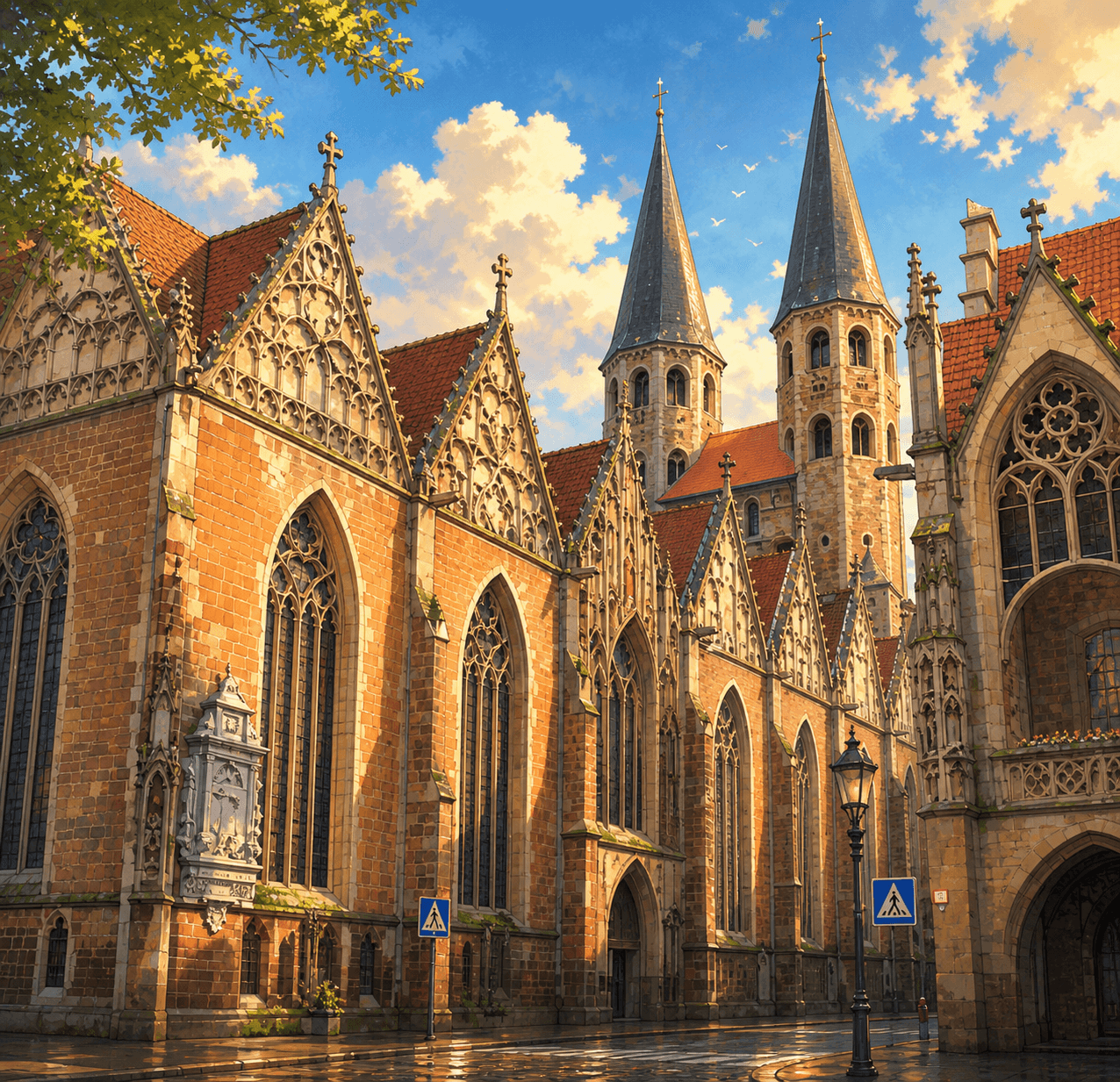
In April 2026, Braunschweig focused on housing construction, neighborhood development, climate protection, and administrative modernization. The Committee for Planning and Construction presented several landmark decisions and projects that will shape the city's development in a sustainable way.
Housing Construction is Accelerated: The "Housing Turbo" Law in Braunschweig
The housing shortage in German cities is a central problem – and Braunschweig is responding with a clear signal. In April 2026, a fundamental decision was made regarding the "Housing Turbo" law, which aims to significantly accelerate the construction of housing. According to § 36a of the Building Code (BauGB), projects involving at least 50 residential units or 5,000 m² of gross floor area (BGF) will now be decided by the city council, while smaller projects of recurring nature can be decided by the Mayor.
This clear distinction accelerates decision-making and reduces bureaucratic hurdles. Within the building administration, a set of criteria is being developed to ensure uniform and transparent evaluation of projects. Moreover, an evaluation of the new regulation is planned within a maximum of two years – a step that emphasizes transparency and sustainability in urban development.
Neighborhood Development in Focus: Großer Hof and Emsviertel
Another focal point was neighborhood development, particularly in the districts of Großer Hof and Emsviertel. Both projects are part of urban development funding and aim at social and spatial integration. The Großer Hof project covers 9 hectares and envisions the creation of a car-free creative district with housing, cultural and social infrastructure.
Funding is planned with total costs of 38.1 million €, of which up to 21.2 million € will come from federal and state funds. The municipal share is 7.9 million €. With an integrated development concept (IEK) and active citizen participation – including workshops with 28 and 53 participants – the planning process is designed to be transparent and participatory.
Climate Protection and Green Urban Development
Climate protection also played a central role. The final report on the municipal heat plan (KWP) was presented, and energy-efficient district concepts – particularly in the Bahnstadt – were further developed. The city is focusing on energy efficiency, renewable energy sources, and sustainable infrastructure planning.
Another project that combines climate protection and social integration is the establishment of pop-up playgrounds in Braunschweig. With support from the state program "Resilient City Centers (RIS)" and a grant of 100,000 € from the state budget, transportable play containers, swings, and fitness facilities are being set up in urban spaces. The project is set to begin in the second quarter of 2026.
Mobility and Accessibility: Focus on Bicycle and Bus Stops
In the field of mobility, the Veloroute Wallring and its connection to the Löwenwall were further developed. At the same time, the quality standard for bicycle streets – especially on the Campestraße – was defined. Accessibility of bus stops also came into focus. Measures for the Herzogin-Elisabeth-Straße and Beethovenstraße were planned, with funding covering up to 87.5%.
These measures demonstrate how Braunschweig is actively working toward a barrier-free, climate-friendly, and mobile city – a process that takes both infrastructural and social aspects into account.
Outlook: Urban Development in Transition
April 2026 brought numerous impulses for the future urban development of Braunschweig. From accelerating housing construction to developing social neighborhoods and addressing climate protection and mobility – the city is committed to sustainable, citizen-oriented, and future-focused planning. The coming months will show how these decisions can be implemented in practice and what new challenges may arise.
NeoSearch analyses public council documents, committee minutes and municipal announcements. Source references appear automatically once verified meeting data is available.
What does this mean for businesses?
Urban development, zoning plans and commercial settlements create early construction and supply opportunities. Following council decisions reveals projects before they go to tender.
Track similar decisions in your region
Set up monitoring for economic development in Niedersachsen — prefilled from this article.
Set up monitoring →More signals from Braunschweig
Education Policy in Braunschweig: Digitalization, Full-Day Schools, and Energy Efficiency in April 2026
In April 2026, Braunschweig focused on a range of educational policy topics. The School Committee discussed the implementation of the legal entitlement to full-day school care, the digitalization of schools through state-wide available devices, and the development of energy efficiency in school buildings. An overview.
Read more → Health Policy in Braunschweig: Challenges in April 2026
In April 2026, Braunschweig saw decisive discussions in the health sector, focusing on demographic change, recruitment of care staff, and the future of day care services. This deep dive analyzes the background, decisions, and impacts of these political measures.
Read more → Daycare Centers in Braunschweig: Staff Shortages and Care Gaps in Focus
In April 2026, the dramatic care gaps in Braunschweig’s daycare centers became the focus. Parents report significant undercoverage, severely impacting daily routines. How is the city responding, and what solutions are on the horizon?
Read more →