Urban Development in Braunschweig: Key Projects and Challenges in January 2026
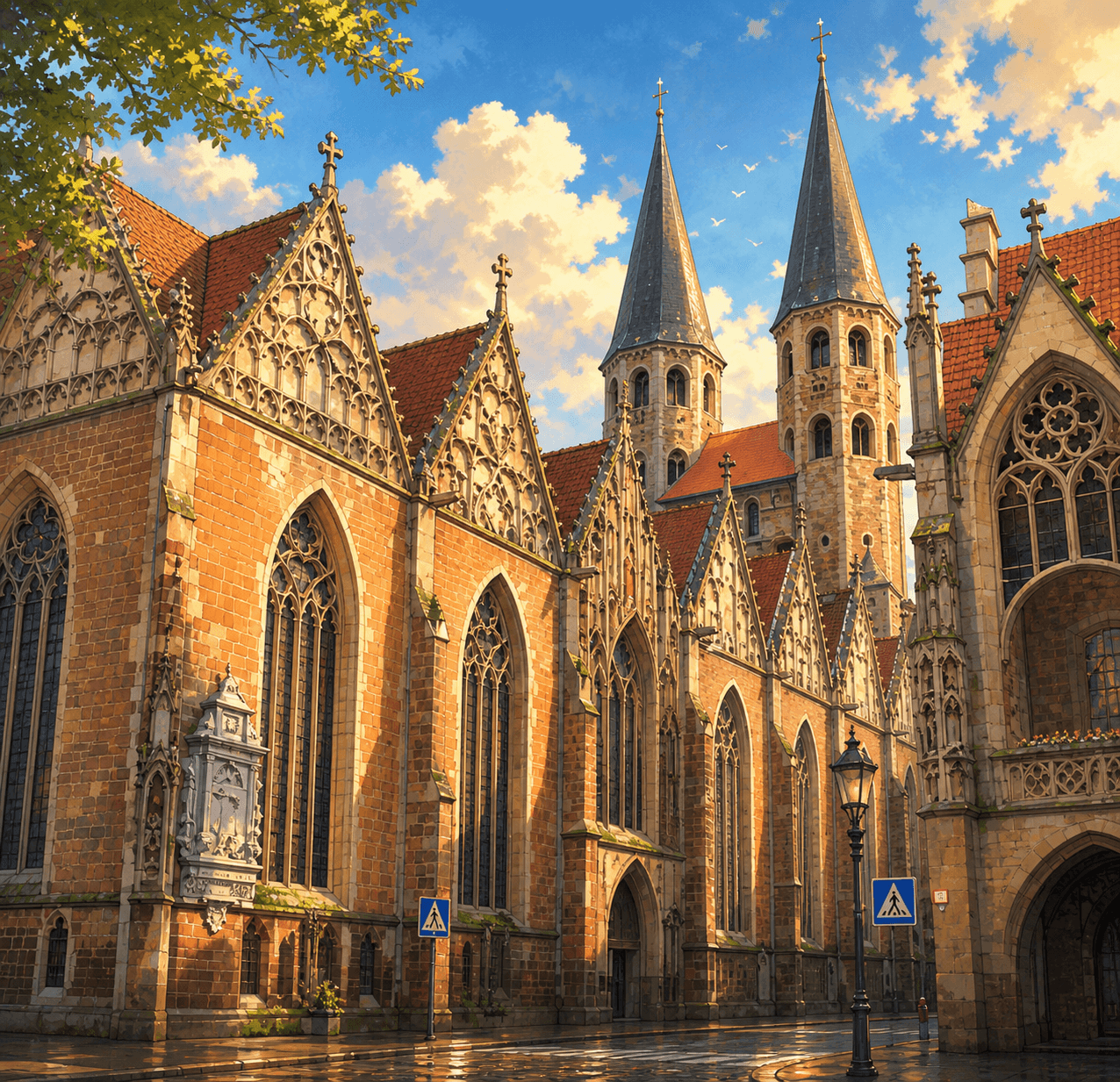
In January 2026, Braunschweig has placed a strong focus on urban development. By revoking outdated building plans, planning tramway solutions, and promoting photovoltaic projects, the city demonstrates how it actively shapes urban development—taking into account climate, mobility, and social infrastructure.
Urban Development in Braunschweig: From Revoking Outdated Plans to the Future of Mobility
In January 2026, Braunschweig took a clear step toward forward-looking urban development. Numerous decisions not only contributed to the physical shaping of the city but also addressed the challenges in the areas of climate protection, mobility, and infrastructure. Particular focus was placed on the revocation of outdated building plans, the planning of tramway solutions, and the development of photovoltaic projects in peripheral areas.
Revocation of the Building Plan "Baublock 10/3" – A Path to a Creative Quarter
The revocation of the building plan "Baublock 10/3," which had been adopted on May 15, 1972, marks a milestone in Braunschweig’s urban development. Covering the area north of the Hagenbrücke, the plan was revoked in an accelerated procedure under § 13a Building Code. The goal is to further develop the area under § 34 Building Code without a building plan, using the winning concept of the urban design and open space competition "Wohn- und Kreativquartier Großer Hof" as a basis.
Public participation is an integral part of the process, and an integrated development concept will be created by 2026. The city aims to include the area in the urban development support program to secure funding for implementation. This is a clear signal of a participatory and sustainable approach to urban development.
Tramway Development: From Friedrich-Wilhelm-Platz to Bohlweg
Another focus was the planning of the tram line between the Friedrich-Wilhelm-Platz and the Bohlweg. The track infrastructure in this section is outdated and requires renovation. The Braunschweiger Verkehrs GmbH (BSVG) plans to renew the tracks using a more solid track surface made of lighter steel fiber concrete to store less heat in the summer. This measure is part of the climate impact assessment and reflects the approach to making public transport more climate-friendly.
In addition, the stop in front of the Hauptpost will be modernized with barrier-free waiting areas, new lighting, and weather protection. In the Friedrich-Wilhelm-Straße/Münzstraße area, traffic guidance will be adjusted to reduce conflicts with cyclists. Funding is mainly provided by the BSVG, supplemented by grants from the Landesnahverkehrsgesellschaft (LNVG).
Photovoltaics in the Periphery: Solar Areas Völkenrode and Thuner Heide
Braunschweig is increasingly relying on renewable energies, especially in peripheral areas. Agri-photovoltaic systems and open land photovoltaic systems are being built in Völkenrode West and North, as well as in Meinholz and Thuner Heide. Changes to the land use plan and the creation of building plans are required because these are commercial uses in the peripheral area.
The projects cover a total of approximately 94 hectares of agricultural land. The goal is to create the foundation for the implementation of the systems while ensuring the land is used in an ecologically and economically sensible way. The planning is carried out in close cooperation with the responsible committees and under consideration of environmental law.
Challenges in Urban Development: Climate Change, Vacant Buildings, and Gravel Gardens
In addition to specific construction measures, general challenges were also in focus. The city addressed the implementation of the fast-track construction regulation under § 246e Building Code, intended to accelerate housing construction. At the same time, solutions for long-term vacancies and gravel gardens were discussed.
Vacant buildings such as the site of the Stiftung Großes Waisenhaus on Salzdahlumer Straße remain a problem. The city supports projects like "Sleeping Beauties" by TU Braunschweig, which develop revitalization plans. Regarding gravel gardens, Braunschweig is taking preventive measures such as distributing flyers and sensitizing multipliers to prevent illegal sealing of land.
Outlook: Braunschweig as a Model for Sustainable Urban Development
The developments in January 2026 show that Braunschweig is actively responding to future challenges. The city combines traditional urban planning tasks with innovative solutions in the areas of climate protection, mobility, and energy. The revocation of outdated plans, the planning of modern tramway solutions, and the promotion of photovoltaic projects are steps toward a sustainable and livable city.
In the coming months, it will be particularly interesting to see how funding for the Großer Hof and the solar areas is realized. At the same time, the question of how the city will deal with vacancies and gravel gardens remains a central topic that must be discussed beyond 2026.
NeoSearch analyses public council documents, committee minutes and municipal announcements. Source references appear automatically once verified meeting data is available.
What does this mean for businesses?
Municipal council decisions are early indicators: following the council agenda surfaces projects and tenders months before the official award — before they ever reach the procurement portals.
Track similar decisions in your region
Set up monitoring for kommunale Projekte in Niedersachsen — prefilled from this article.
Set up monitoring →More signals from Braunschweig
Education Policy in Braunschweig: Digitalization, Full-Day Schools, and Energy Efficiency in April 2026
In April 2026, Braunschweig focused on a range of educational policy topics. The School Committee discussed the implementation of the legal entitlement to full-day school care, the digitalization of schools through state-wide available devices, and the development of energy efficiency in school buildings. An overview.
Read more → Health Policy in Braunschweig: Challenges in April 2026
In April 2026, Braunschweig saw decisive discussions in the health sector, focusing on demographic change, recruitment of care staff, and the future of day care services. This deep dive analyzes the background, decisions, and impacts of these political measures.
Read more → Daycare Centers in Braunschweig: Staff Shortages and Care Gaps in Focus
In April 2026, the dramatic care gaps in Braunschweig’s daycare centers became the focus. Parents report significant undercoverage, severely impacting daily routines. How is the city responding, and what solutions are on the horizon?
Read more →