Braunschweig in Focus: Mobility and Traffic in the January Week of 2026
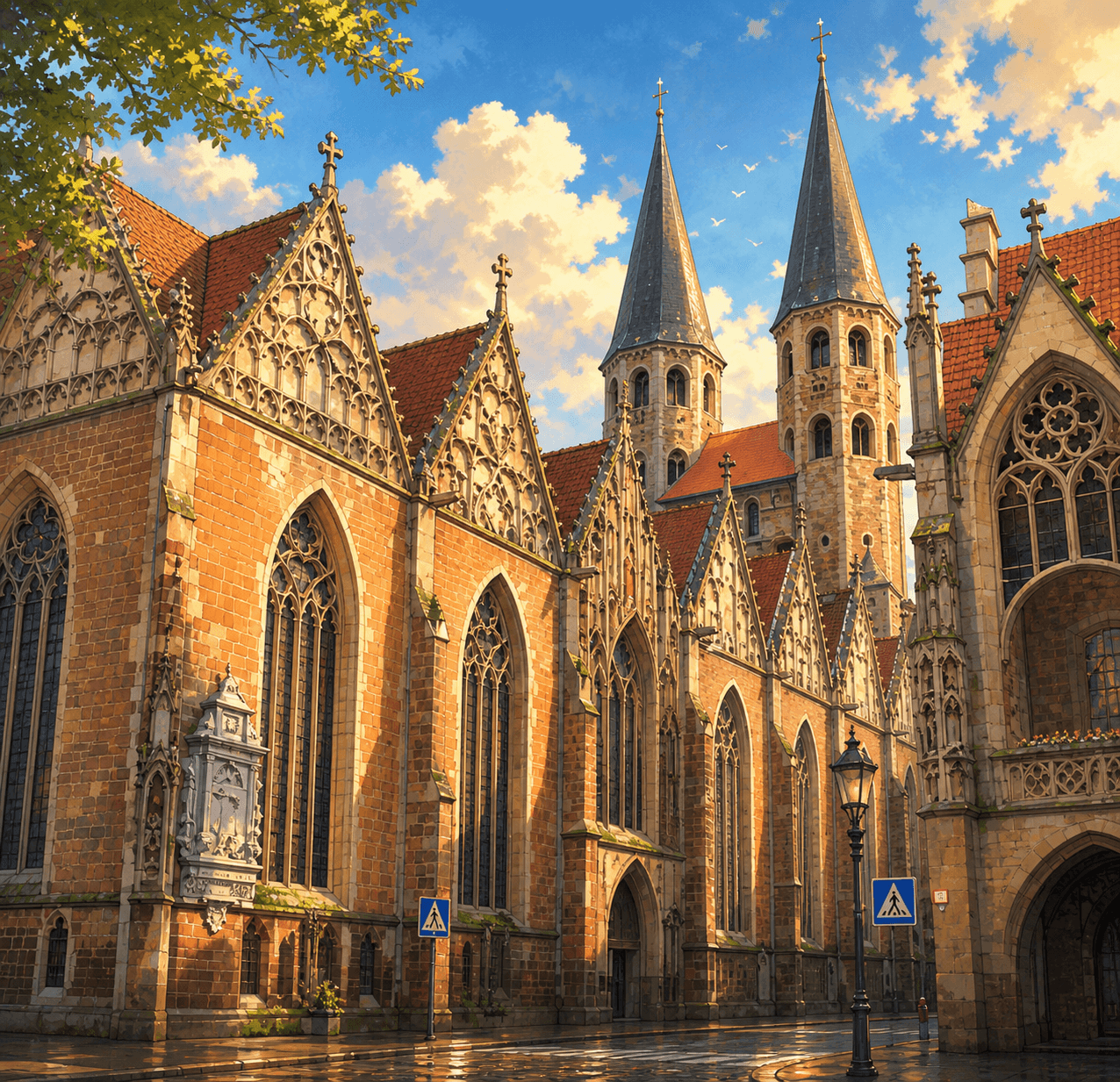
In a city like Braunschweig, where traffic safety, infrastructure, and sustainability are closely interlinked, a number of topics were in the spotlight in January 2026. From bridge maintenance and bicycle traffic to parking space management – we analyze the most important decisions.
Mobility in Braunschweig: Challenges and Approaches in January 2026
Mobility in Braunschweig is not just a transportation issue, but a central factor for quality of life, environmental and social justice. In January 2026, several mobility-related topics were in focus during City Council meetings. Particularly noticeable were discussions on bridge construction, bicycle infrastructure, traffic safety, and winter road maintenance. The city is striving to strike a balance among different road users – pedestrians, cyclists, motorists, and public transport users – while keeping sustainability and safety at the forefront.
Bridge Construction and Traffic Management: Conflicts and Plans
The Am Hohen Tore bridge emerged as a problematic case during the January session. Here, clear conflicts between cyclists and pedestrians are due to unclear traffic guidance. The SPD faction specifically asked about safety measures and clear traffic goals. In addition, the Ferdinandbrücke was the subject of a renovation, necessitating detours for cyclists. The diversion routes via the Wilhelmitorbrücke and Hohetorbrücke were considered sufficient – yet challenges remain in coordinating among different road users.
Traffic counting at the Ferdinandbrücke revealed that up to 5,000 cyclists use this bridge daily. This underlines the need to make the infrastructure for cyclists safer and clearer – especially at a time when cycling is on the rise in Braunschweig.
Bicycle Infrastructure: Improvements and Questions
Another focus was bicycle infrastructure. In Celler Straße, bicycle racks were installed, a topic raised by the SPD faction. Installing such facilities is crucial for the city's attractiveness as a cycling-friendly city. In addition, the bike-sharing stations at Heidbergpark were in focus. The SPD proposed moving the location to a parking lot in order to optimize space. This shows how sensitively the city handles the use of public space – particularly in urban areas with high traffic volume.
Even with bridge construction projects, alternative routes for cyclists were reviewed. These measures are necessary to avoid disrupting the cycling traffic, but they also highlight the limitations of the existing infrastructure. It remains to be seen whether the city will be able to integrate more bicycle paths into its urban planning strategy in the future.
Traffic Safety: From School Streets to Bus Stops
Traffic safety was another central theme. Particularly in areas with high child activity, such as near the Grundschule Stöckheim, temporary traffic lights were installed. The SPD called for a permanent solution. In the Schapenstraße, near a kindergarten, a traffic mirror was requested to improve visibility. In the Hordorfer Straße, a lighting request was made, as the path is heavily used but lacks sufficient lighting.
The Buchhorstblick bus stop was also critically examined. The stop is narrower than planned and lacks a waiting bay. According to the CDU faction, this leads to dangerous situations when buses arrive. This illustrates a classic problem: the design of bus stops must not only be barrier-free but also safe – especially at a time when public transport is increasingly seen as a solution to traffic problems.
Winter Road Maintenance and Roadway Maintenance: Challenges in the Cold Season
In January 2026, the issue of winter road maintenance also came more into focus. Particularly on cycle paths and sidewalks, the winter road maintenance is criticized as insufficient. ALBA BS, the responsible winter road maintenance provider, only performs a “black clearance,” which is ineffective in cases of black ice or icy rain. In addition, the prioritization of clearing is such that cycle streets are only cleared after main roads. The SPD faction called for a re-evaluation of priorities to increase safety in winter.
In addition, potholes on several streets were discussed – for example, on the Berliner Heerstraße and the parking lot of the Sporthalle Schapen. The city has already submitted applications for repairs, showing that the maintenance of road surfaces remains an ongoing topic. This is especially important in a city like Braunschweig, where traffic safety and infrastructure are closely linked.
Outlook: Mobility in Braunschweig – Challenges and Opportunities
The January sessions in Braunschweig show that mobility is a complex topic. It is not only about road safety, but also about the integration of cycling, public transport, and pedestrians. The city faces the challenge of investing more resources in the development of sustainable mobility in the future – not least in view of climate change.
Yet political debates also show that it is often the details that matter – the right width of a bus stop, the prioritization in winter road maintenance, or the safety around schools. These details are, however, the ones that influence the quality of life in Braunschweig. If the city makes progress in these issues in the coming years, it will not only be seen as a traffic hub, but also as a liveable city.
NeoSearch analyses public council documents, committee minutes and municipal announcements. Source references appear automatically once verified meeting data is available.
What does this mean for businesses?
Municipal council decisions are early indicators: following the council agenda surfaces projects and tenders months before the official award — before they ever reach the procurement portals.
Track similar decisions in your region
Set up monitoring for kommunale Projekte in Niedersachsen — prefilled from this article.
Set up monitoring →More signals from Braunschweig
Education Policy in Braunschweig: Digitalization, Full-Day Schools, and Energy Efficiency in April 2026
In April 2026, Braunschweig focused on a range of educational policy topics. The School Committee discussed the implementation of the legal entitlement to full-day school care, the digitalization of schools through state-wide available devices, and the development of energy efficiency in school buildings. An overview.
Read more → Health Policy in Braunschweig: Challenges in April 2026
In April 2026, Braunschweig saw decisive discussions in the health sector, focusing on demographic change, recruitment of care staff, and the future of day care services. This deep dive analyzes the background, decisions, and impacts of these political measures.
Read more → Daycare Centers in Braunschweig: Staff Shortages and Care Gaps in Focus
In April 2026, the dramatic care gaps in Braunschweig’s daycare centers became the focus. Parents report significant undercoverage, severely impacting daily routines. How is the city responding, and what solutions are on the horizon?
Read more →