Urban Development in Cottbus: Between Acceleration, Preservation and Sustainability
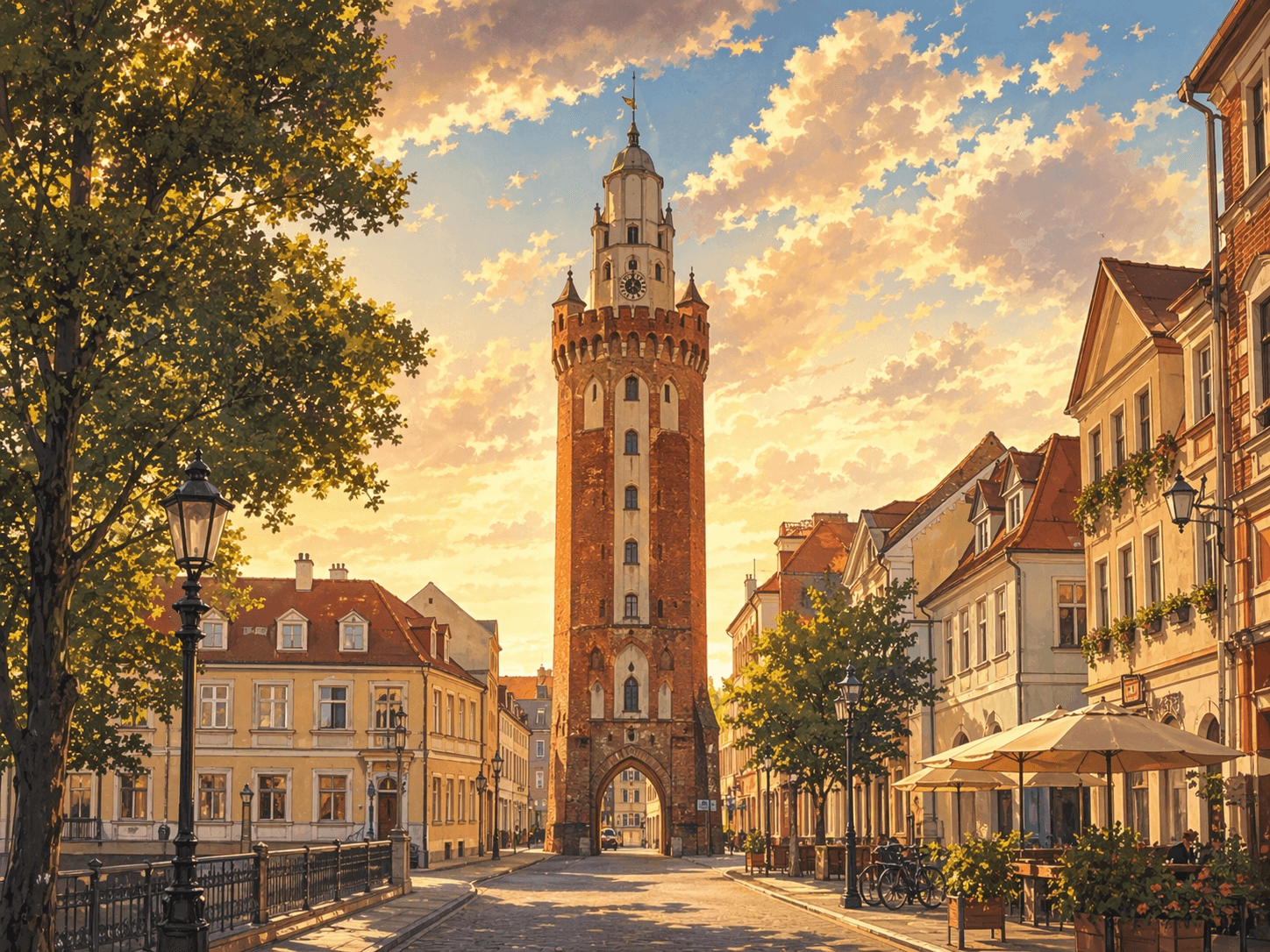
In February 2026, important decisions in the field of urban development were in focus in Cottbus. The zoning plan for the residential area in Ströbitz, the renovation of the city center, and new approaches to green space maintenance show how the city is responding to challenges such as housing shortages, urban design, and climate protection.
Housing Construction and Acceleration: The Zoning Plan Carl-von-Ossietzky-Straße
In February 2026, a decisive step for housing construction in Cottbus was taken: the zoning plan No. W/44/134 for the residential area in Ströbitz was adopted. Covering an area of approximately 0.7 hectares, the project is part of the city's strategy to relieve the housing market while promoting sustainable construction methods.
The goal is to create up to 36 residential units in multi-family homes. The planning was carried out using the accelerated procedure under § 13a Building Code, an instrument of the newly introduced "BauTurbo" law, which aims to shorten approval processes for housing construction projects. The residential areas are classified as General Residential Zones (WA) under § 4 of the Building Ordinance. The building height is limited to a maximum of five full storeys, with a stepped arrangement in the block edge area.
Another focus lies on traffic management: a private traffic area as a north-south connection will be established to optimize access. In addition, flat roofs will be used for extensive greening or photovoltaic systems, and gravel gardens are excluded.
Public participation and the involvement of public interest stakeholders (TÖBs) are planned for the first half of 2026. The ordinance decision is scheduled for the third quarter. The Bürgerverein Ströbitz/Strobice was already involved in the preparation and submitted a statement.
Urban Planning and Preservation: Updating the Design Ordinance and Preservation Ordinances
Cottbus continues to invest in the preservation and design of its urban identity. The design ordinance for the old town, originally adopted in 1998, is being revised. The aim is to preserve the urban character while making the ordinance adaptable to today's requirements.
At the same time, two new preservation ordinances for the "Inner Northern Suburb" and "Inner Southern Suburb" are planned. These ordinances are based on § 87 Brandenburg Building Ordinance and § 172 Building Code and aim to protect the historically developed structure of these districts.
The city has already invested around 85 million euros in the renovation of the city center from 1992 to 2021. This work will continue with the funding program "Future-Proof Town Centers" (ZIZ).
In 2026, an ordinance decision is aimed for, accompanied by an information campaign, a guideline, and the inclusion of the population. The ordinances should not only consider constructional aspects, but also cultural and social aspects of urban development.
Green Spaces and Climate Protection: From Wildflower Meadows to "Mow-Free May"
The city of Cottbus is also relying on sustainable solutions in the maintenance of its green spaces. With a total of 202 hectares of green space, green space maintenance is a central aspect of the city's environmental policy.
In recent years, the share of extensively used areas has been increased from 593,496 m² to 600,704 m². Projects such as the wildflower meadow on Rodelberg Schlichower Höhe or the wild herb meadow in the Stadtring show how the city promotes biodiversity.
A special project is the "Mow-Free May," carried out in cooperation with the BTU Cottbus-Senftenberg. The aim is to create insect habitats and at the same time raise awareness for nature-friendly maintenance.
In addition, the Cottbus Building Management GmbH is adapting the mowing cycle to create flowering areas. At the same time, the maintenance of living environments and traffic areas remains in the foreground to meet the needs of the population.
Digitalization of green spaces is another goal: a digital green space register is to increase transparency and facilitate planning.
Parking Management: Why a Unified Parking Ticket Does Not Lead to Success
Another discussion point in February 2026 was the request to extend the validity of paid parking tickets to the entire city area. The argument was in favor of simplification and the reduction of confusion.
However, from a professional point of view, the disadvantages prevail: the control function of parking spaces would be lost, parking pressure in sensitive residential areas could increase, and the order function would no longer be guaranteed.
Instead, the city of Cottbus decided to adjust the enforcement practice: tolerance for valid tickets within the same tariff zone, no warnings for valid tickets, but strict compliance with maximum parking times.
Outlook: Urban Planning for the Future
The decisions of February 2026 show how Cottbus is preparing for the challenges of the future. Housing construction, preservation, green space management, and traffic policy are central issues that are closely interlinked.
With the BauTurbo law, the preservation ordinance, and the nature-friendly green space maintenance, the city is relying on a mix of innovation and tradition. The participation of the population remains a central point – because ultimately, the city is only as good as the people living in it.
NeoSearch analyses public council documents, committee minutes and municipal announcements. Source references appear automatically once verified meeting data is available.
What does this mean for businesses?
Municipal council decisions are early indicators: following the council agenda surfaces projects and tenders months before the official award — before they ever reach the procurement portals.
Track similar decisions in your region
Set up monitoring for kommunale Projekte in Brandenburg — prefilled from this article.
Set up monitoring →More signals from Cottbus
Cottbus in Transition – April 2026: Economic Developments and Strategies for the Future
In April 2026, the city of Cottbus intensively addresses key topics in economic development. Alongside the transition to CO₂-neutral drive technologies in public transport and municipal heat planning, the current economic situation and the future of business succession are in focus. The following blog article analyses the most important decisions and developments of the month.
Read more → Education Policy in Cottbus: Challenges and Decisions in April 2026
In April 2026, Cottbus focused on important decisions in the areas of education and public institutions. The Committee for Education, Sports, Culture, and Sorbian/Wendish Affairs discussed, among other things, the future of school social work and the urgently needed rehearsal spaces for music groups. This blog analyzes the background, decisions, and their long-term implications.
Read more → Cottbus in April 2026: Urban Development, Climate Protection, and Mobility in Focus
In April 2026, Cottbus focused on the transformation of urban infrastructure, the development of the municipal heat plan, and the planning of future-oriented transport models. This blog analyzes the decisions made, their backgrounds, and their implications for the city’s future.
Read more →