Governance and Administration: How Cottbus Makes Local Political Decisions in April 2026
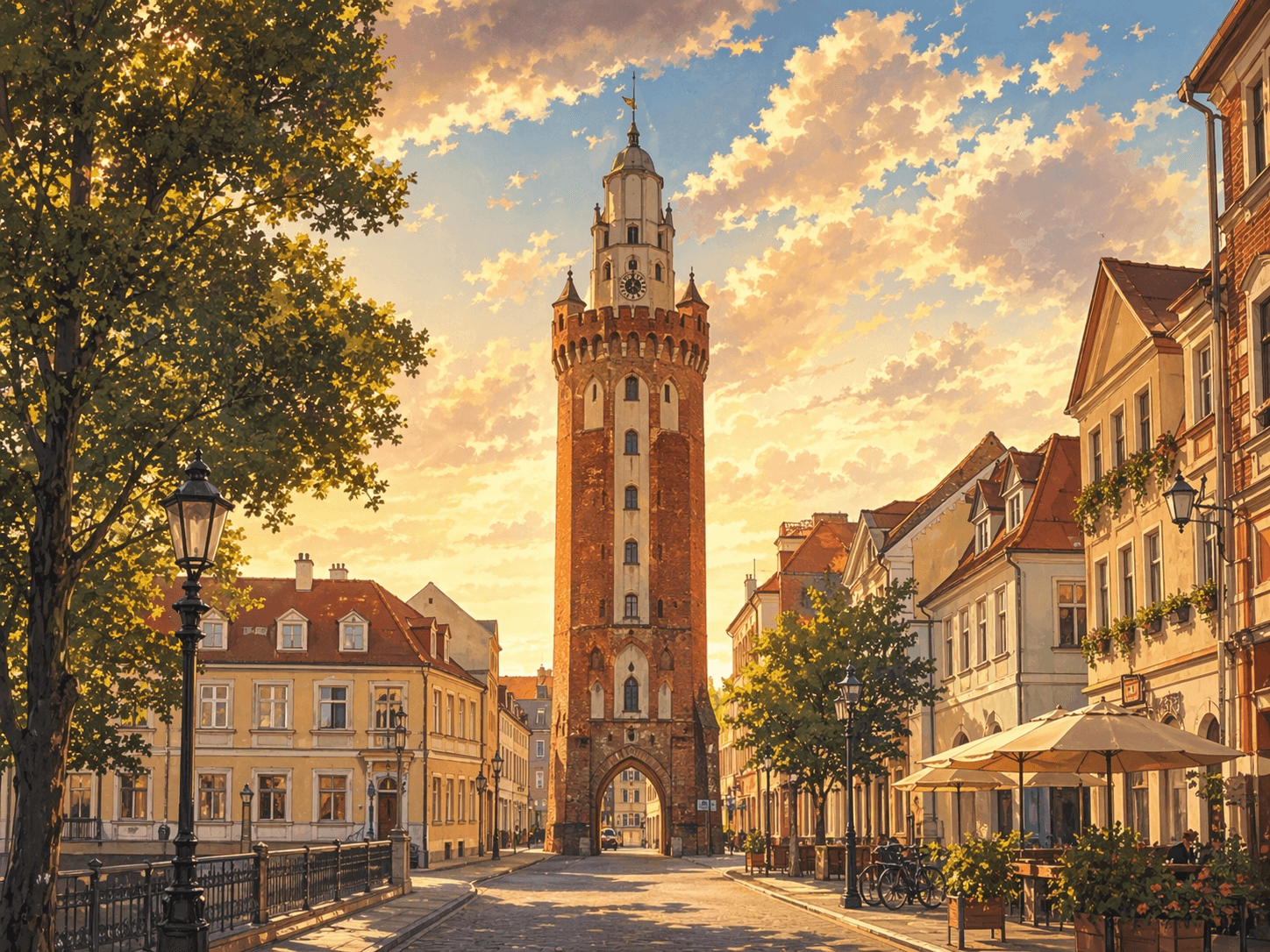
In April 2026, Cottbus saw numerous decisions in the areas of governance and administration. From local council meetings to strategic planning and personnel realignments in committees – the month brought a variety of topics influencing the city’s democratic and administrative structure. This article analyzes the most important developments and their significance for the city.
Governance and Administration: How Cottbus Makes Local Political Decisions in April 2026
Local governance is the nerve center of urban development. It connects the mayor’s office, council factions, local advisory boards, and the population. In April 2026, Cottbus faced several key decisions in the areas of governance and administration, which are both structurally and thematically far-reaching. From personnel changes in committees to strategic planning and the implementation of EU directives – the month brought a wide range of topics shaping the city's daily life.
Personnel Realignment in Committees
One of the most noticeable developments was the reassignment of members in the city council’s specialist committees. In the proposal OB-016/26, several changes were made: For instance, Erik Hofedank was removed from the Committee for Construction and Transportation and replaced by Sebastian Hettchen. Likewise, Jakob Krüger was replaced by Anke Schwarzenberg. These changes reflect the political dynamics in Cottbus and directly affect decision-making in central areas such as urban development and transport policy.
At the same time, the Youth Welfare Committee was also reconstituted. Frau Johanna Krähe and Ron Radlow were removed, while Sarah Ostrowski and Matthias Boddeutsch became new members. These personnel adjustments follow legal requirements and the recommendations of the council factions, while also reflecting the diversity of interest groups in the city.
Strategic Planning: CO₂-Neutral Drive Technologies
Another central topic was the development of a strategy paper for the gradual transition to CO₂-neutral drive technologies in public local transport. In the proposal II-061/25 StVV, a draft was approved that adopts a technology-open approach. This means that hydrogen, battery, and electric drives are all considered in order to find long-term climate-neutral solutions.
The Cottbusverkehr GmbH is tasked with submitting a draft by June 2026, which will then be discussed in political committees. This strategy is not only a step toward compliance with the Clean Vehicle Directive but also a signal for forward-looking mobility policy in the city. At the same time, operational economic sustainability is taken into account, showing that Cottbus remains pragmatic in this area.
Local Council Meetings: Local Decisions on the Ground
In April, local council meetings took place in several districts. Particularly noteworthy was the meeting of the Local Council of Gallinchen on April 28, 2026, which addressed topics such as the status of the Feldweg playground, the marking of fords in the Gaglower Straße, and the renovation of the men’s toilet. These meetings are a central element of local participation and enable local issues to be addressed directly on the ground.
Meetings also took place in Kahren and Saspow, which focused on the district budget, the operation of mowing robots, and the preparation for the Senior Citizens' Week. These topics illustrate how closely local councils are integrated into the daily lives of citizens and how they serve as a link between the administration and the population.
Conclusion: Governance as a Driver of Urban Development
The decisions and discussions in April 2026 show how multifaceted governance is in Cottbus. It ranges from strategic planning at the European level to local decisions in the districts. Personnel realignments in committees, the implementation of climate policy goals, and the work of local councils are examples of how the city structure functions – and where it still has potential for improvement.
In the future, it will be important to further strengthen these structures to keep democracy in Cottbus alive and to respond to challenges such as climate change and social inequality. Governance is not only administration, but also vision – and in Cottbus, this became clear in April 2026.
NeoSearch analyses public council documents, committee minutes and municipal announcements. Source references appear automatically once verified meeting data is available.
What does this mean for businesses?
Town halls, fire stations, depots and administrative buildings create early construction and refurbishment opportunities. Following council agendas reveals projects before they go to tender.
Track similar decisions in your region
Set up monitoring for public buildings & administration in Brandenburg — prefilled from this article.
Set up monitoring →More signals from Cottbus
Cottbus in Transition – April 2026: Economic Developments and Strategies for the Future
In April 2026, the city of Cottbus intensively addresses key topics in economic development. Alongside the transition to CO₂-neutral drive technologies in public transport and municipal heat planning, the current economic situation and the future of business succession are in focus. The following blog article analyses the most important decisions and developments of the month.
Read more → Education Policy in Cottbus: Challenges and Decisions in April 2026
In April 2026, Cottbus focused on important decisions in the areas of education and public institutions. The Committee for Education, Sports, Culture, and Sorbian/Wendish Affairs discussed, among other things, the future of school social work and the urgently needed rehearsal spaces for music groups. This blog analyzes the background, decisions, and their long-term implications.
Read more → Cottbus in April 2026: Urban Development, Climate Protection, and Mobility in Focus
In April 2026, Cottbus focused on the transformation of urban infrastructure, the development of the municipal heat plan, and the planning of future-oriented transport models. This blog analyzes the decisions made, their backgrounds, and their implications for the city’s future.
Read more →