Regensburg's Urban Development: From Construction Planning to Climate Neutrality
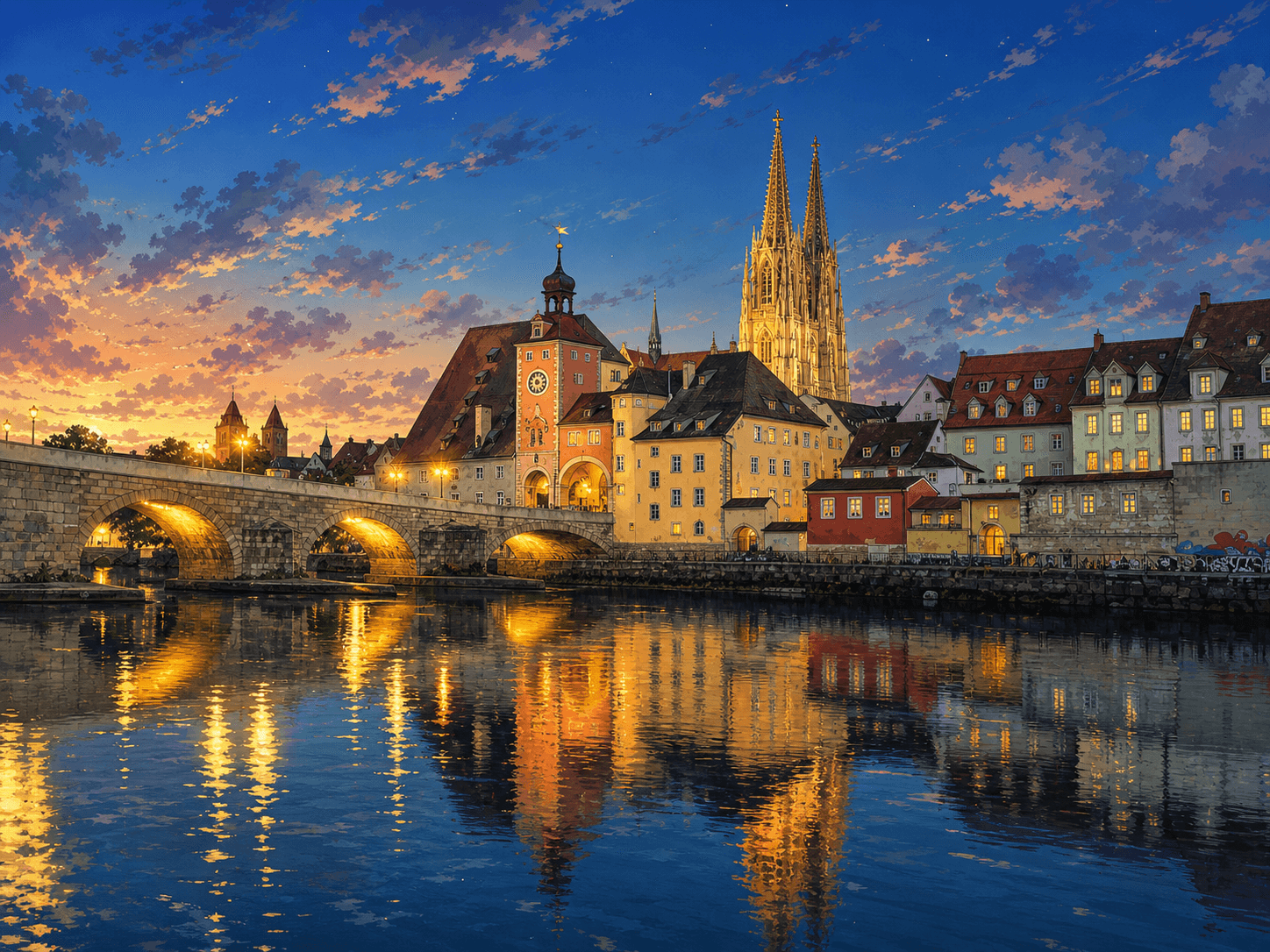
In April 2026, Regensburg intensively addressed future-oriented topics of urban development. The focus was on construction land models, climate protection measures, housing promotion, and transport planning. These decisions bear the hallmark of a city actively pursuing a sustainable, affordable, and livable future.
Urban Development as the Key to Regensburg's Future
Urban development is a central lever for the future viability of cities – and Regensburg proves this in practice. In April 2026, numerous decisions and planning procedures were at the center of attention, which will sustainably change both the physical and social structure of the city. From the renovation of youth centers to the redesign of construction land areas, from climate protection to the promotion of affordable housing – the topics are extensive and show how complex the challenges are for a modern city.
Construction Land Development: Gallingkofen West as a Model Project
One of the central projects of the month was the construction land development in Gallingkofen West. On an area of 5.5 hectares, approximately 1.7 hectares of residential construction land will be created in the future, complemented by retail and a daycare center. Particularly noteworthy is the clear orientation towards sustainability and social housing: At least 40% of the residential area will be subsidized. In addition, comprehensive infrastructure measures are planned – from pedestrian and cycle paths to a bus stop and a heavy rain retention system.
The planning is carried out in accordance with § 35 BauGB, and public participation was completed by April 2026. The project is also ambitious in terms of climate policy: It will align with air corridors, and the future energy supply will be CO₂-neutral through PV and heat pumps. With this project, Regensburg is sending a clear message for sustainable urban development.
Climate Protection and Energy Policy: From Heat Plans to Energy Centers
Another focus was on climate policy. The municipal heat plan, to be implemented by 2045, is a milestone on the way to climate neutrality. With support from the Free State of Bavaria (262,000 €), Regensburg will gradually switch the heating industry to renewable energy sources. The heat plan will be continued in the future within the framework of the "Green Deal Regensburg," showing that the city does not pursue its climate protection goals in isolation, but embeds them in an overarching concept.
In parallel, the basic decision for the Energy Region Regensburg Southeast (ERSO) was made. The aim is to implement climate-friendly heat supply by 2035. Currently, 90% of the heat comes from fossil sources, which emits 490,000 tons of CO₂ annually. With two planned energy centers, Regensburg wants to reduce this dependency while at the same time ensuring basic supply.
Housing Promotion: From Apprentices to Zoning Plans
Housing promotion was another focus area. The modification of the 2026 land development model, initiated by the CSU city council faction, aims to accelerate the creation of affordable housing. Flexibilization of land allocation and support priorities for social housing are central elements here.
A concrete project is the creation of apprentice housing at Guerickestraße 35. This project underlines the fact that Regensburg wants to remain attractive not only for families and the elderly but also for young adults and apprentices. In the context of the 2026 housing promotion action plan, the focus is also on social justice and stable rental prices.
Future-Oriented Transport Planning and Mobility
Transport policy is another central topic. The renovation of Regensburg's land development model is closely linked to transport planning. For instance, the basic decision for the development of the Gallingkofen West quarter was made. The main entrance via the Chamer Straße will be supplemented by two public access points, and bus lines 3, 34, and 35 will strengthen public transport.
Another pilot project was the removal of abandoned bicycles from public space. In a test phase, 265 out of 425 bicycles were removed. Funding was increased, and it is being examined whether third parties could be involved in the implementation through tenders in the future. Proposals for optimization, such as shorter pickup deadlines and a reporting system, show that Regensburg is also thinking solutions-oriented in the area of mobility.
Legal Foundations and Infrastructure Measures
Lastly, legal aspects were also in focus. The street assignments and withdrawal procedures under the Bavarian Road Construction Act (BayStrWG) are crucial for long-term planning security. For example, parts of streets were newly assigned, and a withdrawal procedure was initiated for a traffic area. These measures are less visible but significantly contribute to the stability of urban infrastructure.
Even with infrastructure projects such as the new Stabbogenbrücke bridge in the Edisonstraße or the expansion of the Burgweintinger Straße, it became clear how strongly Regensburg is investing in the future. The costs for railway overpasses and intersection measures amount to over 16 million euros, which underlines that the city is ready to tackle financially significant projects to make the transport infrastructure safe and future-proof.
Conclusion: Regensburg as a Pilot City for Sustainable Urban Development
April 2026 was an intense month for Regensburg's urban development. The decisions show that the city is not only reacting to current challenges but actively shaping the future. With projects such as the construction land development in Gallingkofen West, the implementation of climate-friendly heating supply, and the promotion of affordable housing, Regensburg has set a clear course: Sustainability, social justice, and technical innovation are the cornerstones of future-oriented urban development.
The coming months will show how these plans are implemented in practice – and whether Regensburg remains a pioneer in Bavarian urban development.
NeoSearch analyses public council documents, committee minutes and municipal announcements. Source references appear automatically once verified meeting data is available.
What does this mean for businesses?
Urban development, zoning plans and commercial settlements create early construction and supply opportunities. Following council decisions reveals projects before they go to tender.
Track similar decisions in your region
Set up monitoring for economic development in Bayern — prefilled from this article.
Set up monitoring →More signals from Regensburg
Regensburg's Educational Policy in April 2026: From Remembrance Work to School Closures
In April 2026, Regensburg's Education Committee addressed key topics – from the creation of a place for encounters to the future of the Vocational Upper School for Economics to support for educational projects through the Discretionary Fund. An overview of the most important decisions.
Read more → Regensburg's Sports Development Plan 2040: How the City is Shaping Tomorrow's Sports
In April 2026, Regensburg’s Sports Committee took the first step toward the Sports Development Plan 2040. We analyze the goals and challenges at hand – and the role citizens, associations, and institutions will play.
Read more → Youth Policy in Regensburg: Investments, Inclusion, and Future Visions in April 2026
In April 2026, the city of Regensburg set important impulses in youth policy through several decisions. From the renovation of youth centers and the expansion of playgrounds to new cultural initiatives – the focus was on securing spaces, inclusion, and the participation of young people.
Read more →