Regensburg's Urban Development 2026: Solar Parks, Housing Support, and Climate-Resilient Urban Planning
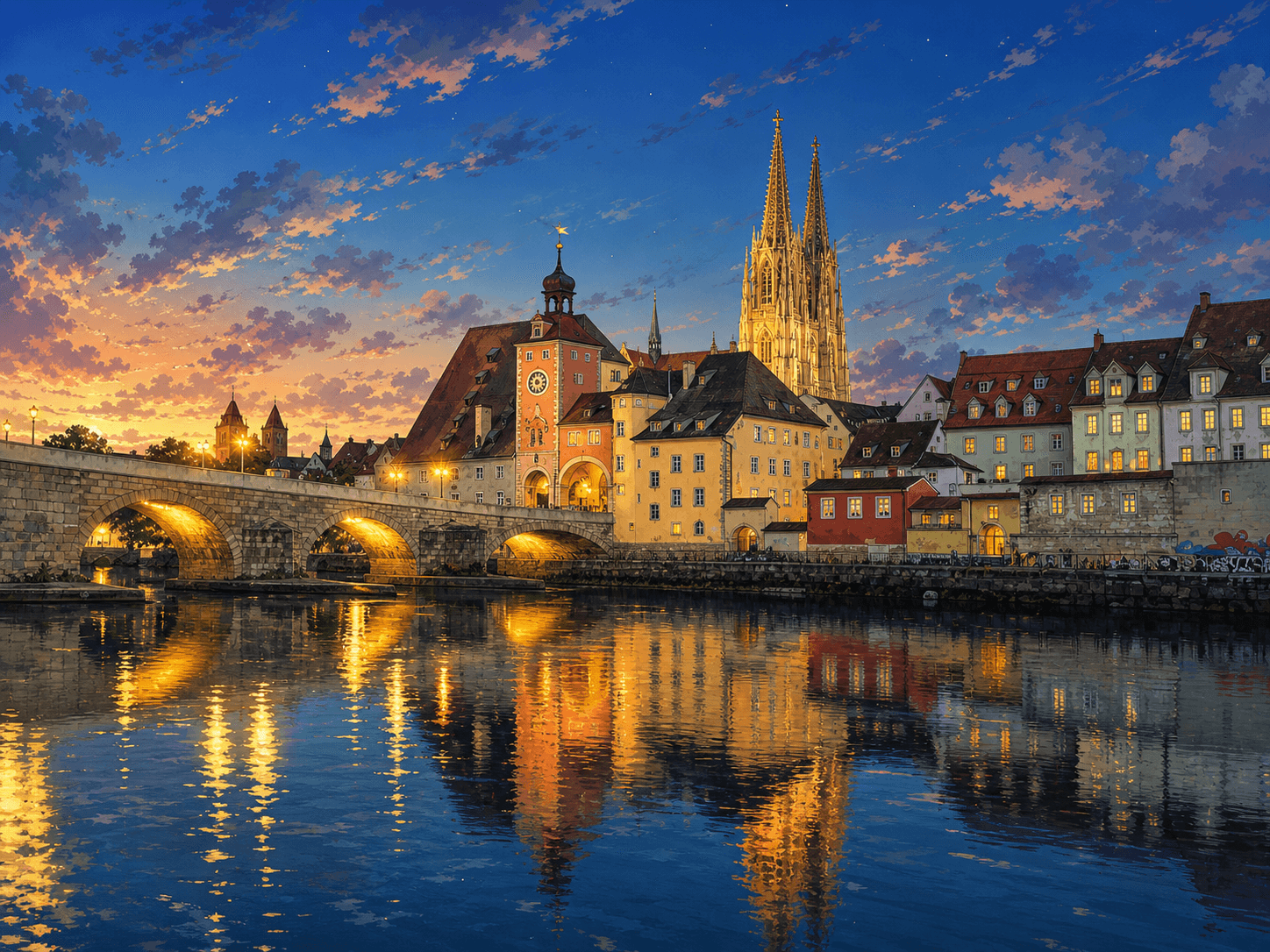
In February 2026, Regensburg focused intensively on urban development topics. Solar parks, housing support, traffic planning, and climate-resilient neighborhood development were at the center. The Committee for Urban Planning, Transport, and Housing Affairs set a clear course for the city's future development.
Regensburg's Urban Development 2026: Solar Parks, Housing Support, and Climate-Resilient Urban Planning
In February 2026, key topics of urban development were at the center in Regensburg. The Committee for Urban Planning, Transport, and Housing Affairs laid the foundation for a sustainable, climate-resilient, and socially acceptable urban development with a multitude of decisions. Solar parks, housing support, neighborhood development, and traffic planning were highlighted – with clear objectives and concrete measures.
Solar Parks as Part of the Climate Protection Strategy
Regensburg is increasingly relying on renewable energies. In the committee, two solar park projects were unanimously approved: the Solar Park Harting (91st Amendment to the Land Use Plan + Development Plan 297) and the Solar Park North (87th Amendment to the Land Use Plan + Development Plan 291). Both projects are part of the city's climate protection strategy and are expected to make a significant contribution to CO₂ reduction by 2030.
The areas west of Walhallastraße and at the border with Wenzenbach have been redesigned accordingly. Ecological measures such as wildflower strips, green areas, and protection measures for native species (e.g., the skylark) have been included. The modules are arranged to minimize glare effects, and soil protection measures such as the ban on fertilizers and plant protection products ensure sustainable use.
Housing Support and the 2026 Land Development Model
Due to the increasing demand and rising construction costs, housing support is a central issue in Regensburg. With the revision of the Regensburg Land Development Model 2026, the city has set clear guidelines for price-bound housing: 20% of the floor area must be built with a maximum net cold rent of 15 €/m². The binding period has been extended to 40 years, and the construction period for subsidized housing has been set at seven years.
The Regensburg Rent Survey 2026 was also unanimously approved. The average net cold rent is 10.92 €/m², an increase of 12.2% compared to the previous year. The city plans to implement an online tool to support tenants in individual rent calculations.
Climate-Resilient Urban Planning and Neighborhood Development
The redesign of Obermünsterstraße and Obermünsterplatz is a milestone in neighborhood development. The preliminary design was unanimously approved and includes an accessible, traffic-calmed layout with a neighborhood park, historical cisterns, LED lighting, and a western section as a pedestrian zone. The goal is to increase the city's climate resilience while emphasizing social and ecological aspects.
In the program area "Inner Southeast," the neighborhood management will continue until 2029, with 3.98 million euros in funding planned for 2025. Events such as "Open House Day," fantasy conventions, and energy projects are planned. At the same time, there is an urgent need for additional spaces for neighborhood management.
Traffic Planning and Mobility
The city is focusing on multimodal mobility. The main bike route through the Guerickestraße workshop area was approved to improve cycling connections within the city. In addition, a comprehensive signage system for main bike routes was approved – a proposal from the Greens. The establishment of a play street at the Youth and Community Center Guerickestraße was also approved with modifications to increase safety for children and families.
The "Radklusion" initiative promotes cycling among low-income groups through measures such as bike repair stations, guided bike tours, and a bike network in the southeast of the city.
Conclusion: Sustainability and Future Viability in Focus
The decisions of the Committee for Urban Planning, Transport, and Housing Affairs show that Regensburg is on a clear course: The city is developing toward sustainability, social justice, and climate resilience. With solar parks, a revised land development model, climate-resilient urban planning, and a modernized traffic plan, Regensburg is setting standards for other municipalities.
The coming months will show how the approved projects are implemented – especially in view of the evaluation of the Building Code 2026 and the assessment of the land development model by 2028. With these measures, Regensburg proves that modern urban development can be both ecological and socially acceptable.
NeoSearch analyses public council documents, committee minutes and municipal announcements. Source references appear automatically once verified meeting data is available.
What does this mean for businesses?
Municipal council decisions are early indicators: following the council agenda surfaces projects and tenders months before the official award — before they ever reach the procurement portals.
Track similar decisions in your region
Set up monitoring for kommunale Projekte in Bayern — prefilled from this article.
Set up monitoring →More signals from Regensburg
Regensburg's Educational Policy in April 2026: From Remembrance Work to School Closures
In April 2026, Regensburg's Education Committee addressed key topics – from the creation of a place for encounters to the future of the Vocational Upper School for Economics to support for educational projects through the Discretionary Fund. An overview of the most important decisions.
Read more → Regensburg's Sports Development Plan 2040: How the City is Shaping Tomorrow's Sports
In April 2026, Regensburg’s Sports Committee took the first step toward the Sports Development Plan 2040. We analyze the goals and challenges at hand – and the role citizens, associations, and institutions will play.
Read more → Youth Policy in Regensburg: Investments, Inclusion, and Future Visions in April 2026
In April 2026, the city of Regensburg set important impulses in youth policy through several decisions. From the renovation of youth centers and the expansion of playgrounds to new cultural initiatives – the focus was on securing spaces, inclusion, and the participation of young people.
Read more →