Urban Development in Bamberg: Infrastructure, Climate Resilience and Neighborhood Development in April 2026
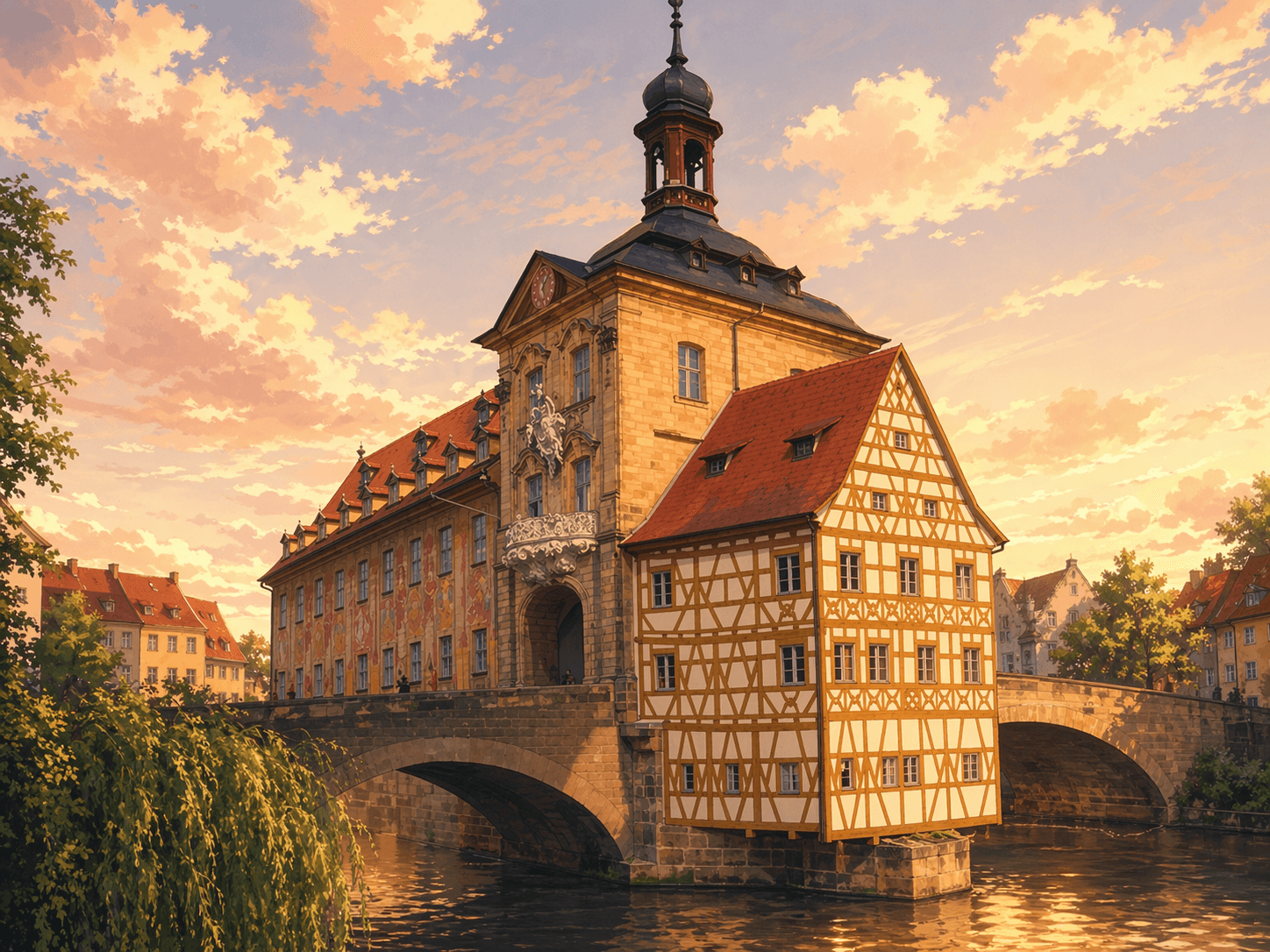
In April 2026, Bamberg sets new impulses in urban development: The East Deep Collector, bicycle parking houses and climate-resilient neighborhoods dominate the agenda. The focus is on sustainable infrastructure and social integration.
Infrastructure and Climate Resilience: The Challenges of Urban Development in Bamberg
The city of Bamberg has established itself in recent years as a model city for sustainable urban development. In April 2026, it is setting impulses through a broad package of measures that aim to ensure the city's future viability. The focus is on modernizing infrastructure, increasing climate resilience and stabilizing social structures in disadvantaged neighborhoods. These measures are not only technically ambitious but also politically sensitive, as they have strong effects on citizens, business owners and the environment.
Deep Collector East: A Hybrid Solution for Drainage
The East Deep Collector in Bamberg is one of the city's largest and most significant infrastructure projects. With a total volume of over 92 million euros (66.7 million euros for the first construction phase and 25.3 million euros for the second), the hydraulic capacity of the drainage system is to be significantly increased. The goal is to better intercept heavy rainfall events, reduce flood risks, and improve water protection.
The planning of the deep collector is based on a hybrid model that includes both central and decentralized measures. Thus, gully-rail systems, new tree quarters and sponge city principles will be used to not only channel but also store rainwater in the city itself. In addition, the administration has set up an interdisciplinary project group that works under the leadership of the drainage company and ensures communication with citizens through neighborhood dialogues, heavy rain risk maps and a mobile "Deep Collector Info Van".
At the same time, the project is also controversial. The Kunni kiosk, located directly on the construction site, will be strongly affected during the four-year construction period. Therefore, the SPD city council faction has requested a reduction in rent and the creation of replacement areas to maintain the quality of stay. Likewise, the pedestrian and cycle path along the Adenauerufer, which will not be usable for four years, has caused criticism. The city must make compromises here in order to modernize the infrastructure without excessively impairing the quality of life of its citizens.
Bicycle Parking Houses: Urban Planning and Mobility in Harmony
Another highlight of urban development in Bamberg is the redevelopment of the building at Ludwigstraße 14–16 into a bicycle parking house. With federal funding of 1.33 million euros, a municipal offer for the secure storage of bicycles is to be created. The building, located in a residential area, will be renovated in accordance with monument protection requirements. Lockers, a bicycle repair station and special parking facilities for cargo bikes and special bikes are planned. In addition, co-working spaces could be integrated in the future.
The redevelopment is a good example of how urban resources can be used sustainably. The building will not be demolished, but converted into a modern, functional facility. At the same time, the mobility of citizens is promoted, which also underlines climate protection. The administration has already recommended a principle decision and plans to commission the Stadtbaugesellschaft Bamberg with the planning in order to secure the funding framework by 2027.
Neighborhood Management: Social Integration and Stability in Gereuth/Hochgericht and Starkenfeld
Another central topic is the application for urban development funds for neighborhood management in Gereuth/Hochgericht and Starkenfeld Street for the years 2027–2031. Neighborhood management is a central instrument of integrated urban development and has proven to be an effective model for stabilizing and promoting disadvantaged neighborhoods.
For example, in Starkenfeld, the neighborhood center "Löwenzahn" reached an average of 180–203 visitors per week in 2024 and 2025. The demand for advisory services, especially for Ukrainian refugees and Russian-speaking residents, was high. At the same time, the neighborhood management has proven itself as a platform for activating residents, whether through neighborhood projects, neighborhood events or the support of associations.
The city of Bamberg plans to keep the share for neighborhood management at 119,000 euros per year, while the federal government and the state will each contribute 71,400 euros. At the same time, it is being discussed whether to link the funding of the BasKIDhall with the neighborhood management in order to use synergies. Therefore, the extension of the neighborhood management until 2031 is not only a financial but also a political decision that secures the future viability of the neighborhoods.
Outlook: Sustainability as a Key Theme
The measures decided on by Bamberg in April 2026 show how complex the challenges of urban development are. The city is moving between technical innovations, social integration efforts and ecological requirements. The East Deep Collector, bicycle parking houses and neighborhood management are not only projects for improving infrastructure, but also an expression of a long-term development plan that combines sustainability, resilience and social justice.
In the coming years, it will depend on whether these projects can be successfully implemented—not only technically, but also in terms of public acceptance. Transparency in planning, the involvement of citizens in decision-making processes and clear communication of the benefits of these measures will be decisive in gaining trust in urban development.
NeoSearch analyses public council documents, committee minutes and municipal announcements. Source references appear automatically once verified meeting data is available.
What does this mean for businesses?
Municipal council decisions are early indicators: following the council agenda surfaces projects and tenders months before the official award — before they ever reach the procurement portals.
Track similar decisions in your region
Set up monitoring for Finance and Budget in Bayern — prefilled from this article.
Set up monitoring →More signals from Bamberg
Social Affairs and Housing Policy in Bamberg – April 2026 in Focus
In April 2026, Bamberg made important decisions in the areas of social affairs and housing policy. The Advisory Board for People with Disabilities held a meeting to present personnel and structural changes and to plan the way forward into the new term of office.
Read more → Bamberg: Focus on Finances – Budget 2025 and Outlook 2026
In April 2026, Bamberg placed its finances and budget planning in the spotlight. With a surplus of over 39 million euros in the 2025 budget and extensive supplementary budget resolutions for 2026, the city is focusing on stability, investments, and the establishment of reserves.
Read more → Bamberger April 2026 – What Has Been Moving in the City
In April 2026, Bamberg addressed several key topics: from the planning of the deep sewer collector to financial planning and social projects. Here is our monthly review.
Read more →