Governance and Administration in Bamberg: Transparency, Democracy Promotion, and Budget Planning in Focus
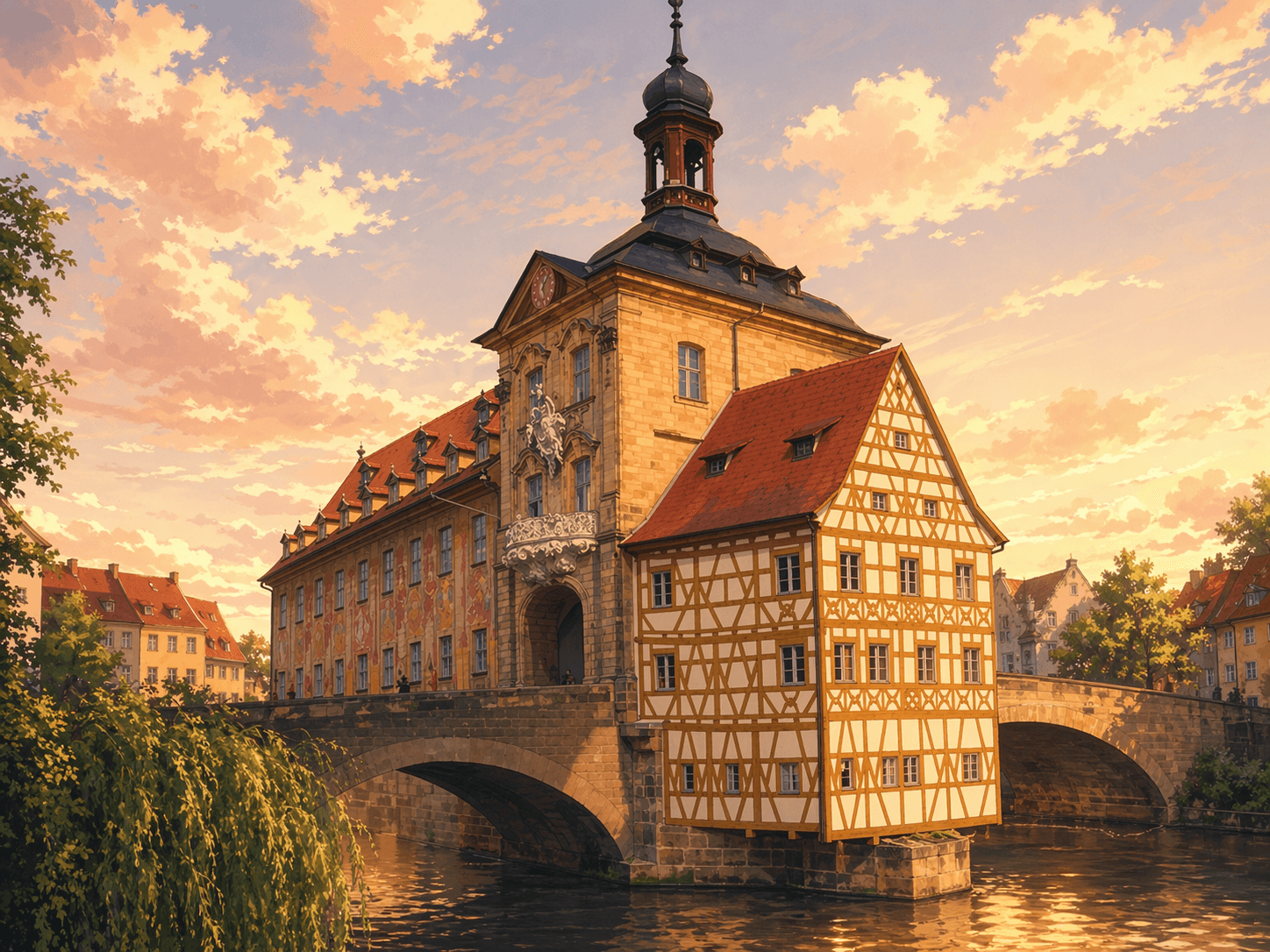
In March 2026, important decisions in the area of governance and administration were at the center of attention in Bamberg. The city focused on modernizing its administrative structures, securing financial resources, and strengthening democratic processes. An overview of the most important topics.
Governance and Administration in Digital and Democratic Urban Development
The city of Bamberg has once again proven itself as a pioneer in modern administration in March 2026. Numerous decisions demonstrated how the municipality is refining its structures to increase transparency, become more citizen-oriented, and act financially responsibly. Particular highlights include the progress made in democracy promotion, budget planning, and the digitalization of municipal processes.
Administrative Reforms and Structural Development
In the area of governance, the city of Bamberg has created a clear structure by appointing Jonas Glüsenkamp as the lead official for inclusion, strengthening integration within the administration. Additionally, Mrs. Hohmann was appointed as a part-time coordinator for democracy promotion, showing that Bamberg is consciously maintaining the balance between citizen-oriented politics and professional administration.
The integration into organizations such as the “Alliance against Right-Wing Extremism in the Nuremberg Metropolitan Region” underlines the city's willingness to actively engage in regional democratic networks. This development is particularly significant in a time of increasing societal polarization.
Budget Planning and Financing
Financial planning is a key aspect of governance. In March 2026, it was decided to rent six classrooms for the Heidelsteigschule using modular construction. The financial burden on the city remains manageable: 8.00 €/m² for cold rent and 3.50 €/m² for a lump sum for ancillary costs. The financing is covered by extraordinary funds, showing that Bamberg can flexibly respond to short-term needs.
In addition, an application for participation in the federal program “Democracy in Action!” for the funding period 2026–2032 was submitted. The city plans to apply for up to 140,000 € annually and will contribute an own share of approximately 15,556 €. This investment in democratic educational projects sends a clear signal about the city's future perspective.
Digitalization and Transparency
Another milestone is the continuation of the live streaming of public meetings on the internet. This step strengthens transparency and allows citizens to gain insight into political decision-making processes even without physical presence. The platform www.bamberg-gestalten.de is also being further developed to structurally improve participation processes.
The administration is also working on a list of planned projects to make the involvement of the population more binding and comprehensible. This is another step towards participatory urban planning that is based on dialogue and co-creation.
Conclusion: A City in Transition
The decisions made in March 2026 show that Bamberg has consciously embarked on a path toward a more transparent, democratic, and financially strong administration. The integration into democratic networks, the investment in educational projects, and the digitalization of municipal processes help to prepare the city for the challenges of the future.
In the future, it will be important to further develop these structures and ensure that citizen-oriented politics are not only an aspiration but an integral part of the city administration's daily operations. Governance in Bamberg serves as an example of how modern municipalities can evolve while maintaining their identity.
NeoSearch analyses public council documents, committee minutes and municipal announcements. Source references appear automatically once verified meeting data is available.
What does this mean for businesses?
Town halls, fire stations, depots and administrative buildings create early construction and refurbishment opportunities. Following council agendas reveals projects before they go to tender.
Track similar decisions in your region
Set up monitoring for public buildings & administration in Bayern — prefilled from this article.
Set up monitoring →More signals from Bamberg
Social Affairs and Housing Policy in Bamberg – April 2026 in Focus
In April 2026, Bamberg made important decisions in the areas of social affairs and housing policy. The Advisory Board for People with Disabilities held a meeting to present personnel and structural changes and to plan the way forward into the new term of office.
Read more → Bamberg: Focus on Finances – Budget 2025 and Outlook 2026
In April 2026, Bamberg placed its finances and budget planning in the spotlight. With a surplus of over 39 million euros in the 2025 budget and extensive supplementary budget resolutions for 2026, the city is focusing on stability, investments, and the establishment of reserves.
Read more → Urban Development in Bamberg: Infrastructure, Climate Resilience and Neighborhood Development in April 2026
In April 2026, Bamberg sets new impulses in urban development: The East Deep Collector, bicycle parking houses and climate-resilient neighborhoods dominate the agenda. The focus is on sustainable infrastructure and social integration.
Read more →