Education and Public Institutions in Karlsruhe: An April Analysis 2026
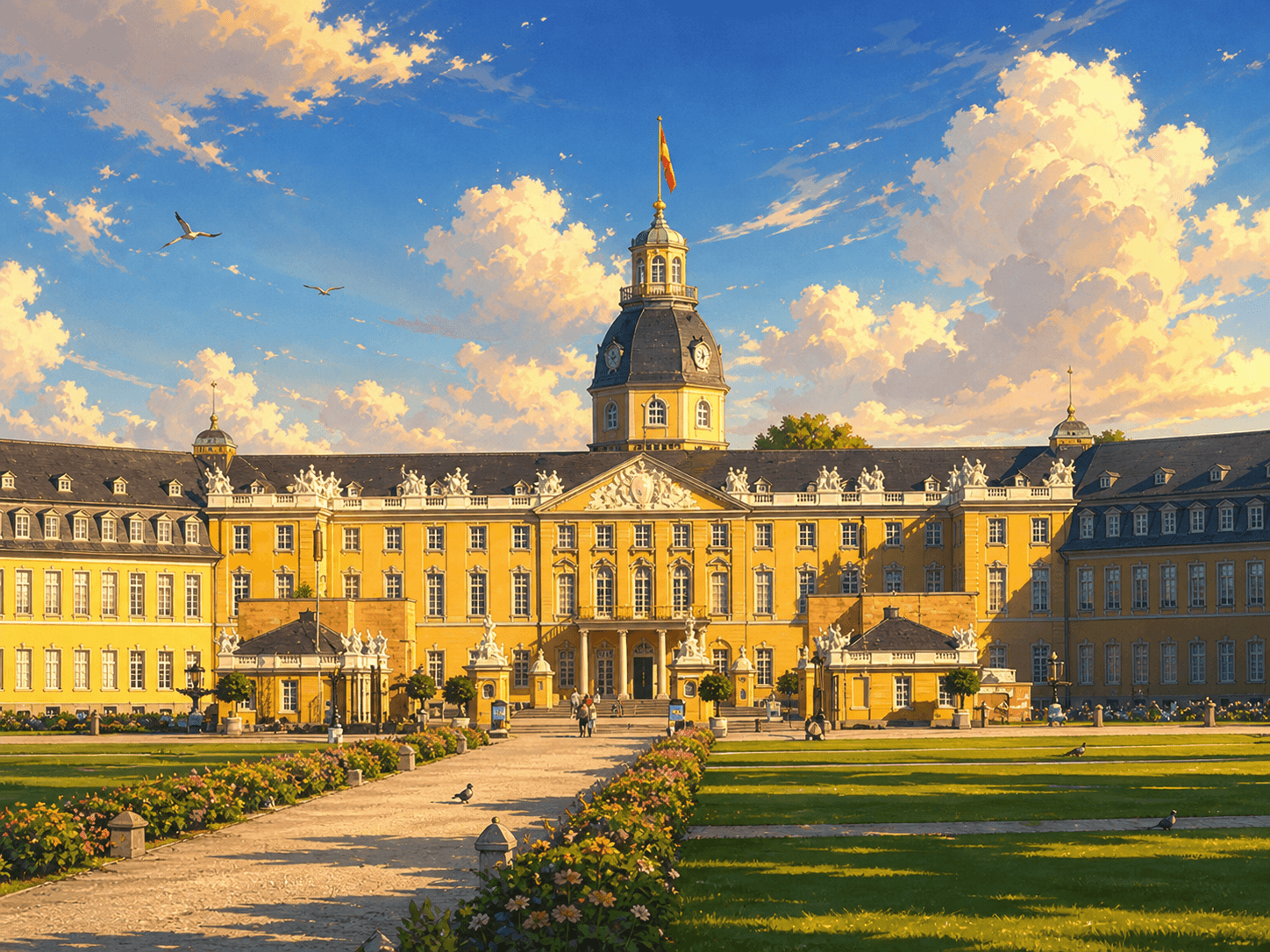
In April 2026, Karlsruhe took decisive steps in the areas of education and public institutions. The restructuring of the city library, the revitalization of the city forest, and the further development of the hospice network demonstrate how the city council integrates education, culture, and sustainability.
Education and Public Institutions: Karlsruhe in April 2026
Education and public institutions are central pillars of urban development in Karlsruhe. In April 2026, decisions and projects were in the spotlight that not only redefine infrastructure but also the social and cultural functions of these sites. From the modernization of the city library to the further development of the city forest – the city made clear statements.
Library of the Future: The New Building in the Ständehaus
The restructuring of the Karlsruhe City Library is one of the outstanding projects of April. With an investment volume of 36 million euros, 27.4 million euros of which are provided through subsidies, the library in the Ständehaus is being transformed into a multifunctional educational and meeting center.
The central goal is the creation of a "Third Place" – a facility that goes beyond the classical lending function and simultaneously promotes education, culture, meeting, and social participation. Particularly the children and youth library will be expanded: with movement stations, creative workshops, and family rooms, it will become a central point of contact for younger users. A cooperation project with the Baden-Württemberg Children's Gymnastics Foundation is already in planning.
The extension with a reading café, event spaces, and modern technology is designed according to energy-efficient "low-tech" principles. The renovation is carried out with sufficiency strategies, which is also beneficial for climate protection. The data infrastructure will be modernized, the WLAN expanded, and the lighting switched to LED. The architectural concept is also flexibly designed to allow for future adaptations.
The City Forest as an Educational and Recreation Area
The Karlsruhe City Forest is not only a green area but also a central pillar of educational policy. With an area of 2,427 hectares and a variety of hiking trails, forest educational paths, and playgrounds, it is a lively place for recreation and learning. In 2025, over 1,000 forest education events took place, with up to 25,700 participants.
In April 2026, the 30-year history of Karlsruhe's forest education was celebrated – a sign of the long-term anchoring of this form of education in the city. Measures for biodiversity, such as amphibian ponds and renaturations, also contribute to the sustainable use of the city forest.
Hospice and Palliative Care: A Network is Growing
Another important project is the development of the hospice and palliative care network "HoPako." With a membership that has grown from 16 to 40 and cooperations with nursing services, hospitals, and SAPV teams, the network has established itself as a central actor in palliative care. Events such as the World Hospice Day 2025 and movie evenings showed the high demand for these offerings.
The city of Karlsruhe supports the project with 10,000 euros annually from earmarked donation proceeds. The coordination is carried out by the Diakonisches Werk and the Arista gGmbH. This development shows how Karlsruhe is also acting proactively in sensitive social areas and strengthening networks.
School Organization: A School is Changing
The Heinz-Barth-School, one of the older educational institutions in Karlsruhe, has taken an important step in its development in April 2026. The branch of the school at the Waldenserschule Palmbach is being dissolved. The school itself will remain under the same name and will exclusively teach at the central location in the future.
The closure of the branch was supported by the full teachers' conference, the school conference, and the parent committee. The administration is now authorized to submit the application to the regional government. This procedure emphasizes the importance of transparency and participation in educational planning.
Outlook and Challenges
The developments in the field of education and public institutions show how Karlsruhe is trying to combine infrastructure, sustainability, and social participation. The library will not only be a place of learning but also of meeting. The city forest remains a lively place of recreation and education. And the hospice network is growing – a sign of a city that is aware of its social responsibility.
Nevertheless, challenges remain: The financing of the library renovation is not fully secured. The personnel structure must adapt to new requirements. And the evaluation of the dog times in the Zoological City Garden shows that sustainability and acceptance must also be in the foreground for seemingly small projects.
Karlsruhe is thus moving towards an educational and cultural policy that does not only rely on infrastructure but also on relationships, cooperation, and future viability.
NeoSearch analyses public council documents, committee minutes and municipal announcements. Source references appear automatically once verified meeting data is available.
What does this mean for businesses?
Schools, daycare centres and public buildings create early planning and construction opportunities. Following council agendas surfaces tenders for refurbishment, new builds and fit-out months before the official award — from shell construction to specialist planning to furnishing.
Track similar decisions in your region
Set up monitoring for education & public facilities in Baden-Württemberg — prefilled from this article.
Set up monitoring →More signals from Karlsruhe
Sports and Safety in Karlsruhe: The Debate on Lighting the Calisthenics Facility
In April 2026, Karlsruhe is intensively discussing the lighting of the Calisthenics facility on Karl-Hubbuch-Weg. The SPD is calling for an evaluation, while the city utility company and experts raise concerns. An overview of the background, costs, and alternatives.
Read more → Mobility in Hohenwettersbach: Challenges and Opportunities in April 2026
In April 2026, several mobility-related decisions were in focus in Hohenwettersbach, a district of Karlsruhe, aiming at climate-friendly alternatives and better school connectivity. The local council discussed proposals for the expansion of car-sharing and bicycle rental stations as well as improvements to the school bus service.
Read more → Financial Policy in Karlsruhe: Budget Decisions and Investments in April 2026
Karlsruhe’s Main and Finance Committee made important decisions regarding the city’s budget in April 2026. In this deep dive, we explore the background, the involved actors, and the long-term implications of these measures.
Read more →