April 2026: Karlsruhe Transforms, Goes Greener, and Invests in Education
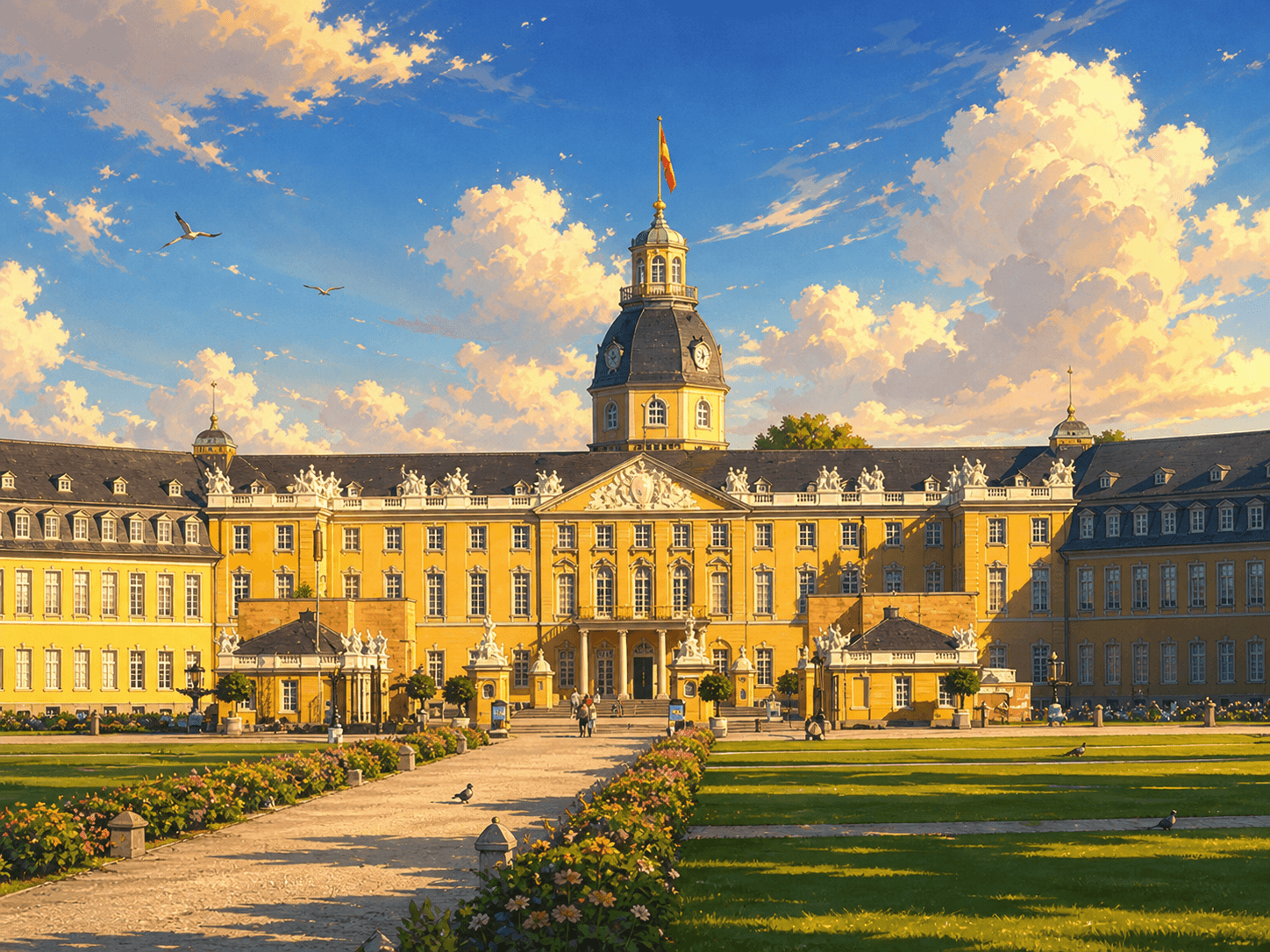
In April 2026, Karlsruhe set impulses in the areas of education, transport, city cleaning, and financing. The city library will be restructured, the school bus service will be adjusted, and waste management will be optimized. Here are the most important developments at a glance.
Karlsruhe in April 2026: Impulses for Education, Mobility, and Cityscape
What was important this month
- Library is being restructured: The city library and the children's and youth library will be redesigned in an expanded Ständehaus – with a budget of 36 million euros.
- New waste strategy: The municipal waste management and city cleaning company aims to improve the cityscape – through better waste disposal, cleaning concepts, and pigeon control.
- Mobility in focus: In Hohenwettersbach, applications for bike rentals and carsharing were submitted, and the school bus service is being reviewed.
- Financing for culture and education: The Karlsruhe Trade Fair and Congress GmbH receives a new structure, and the Zoological City Garden offers dog days.
City Library Gets a New Mandate
The city library and the children's and youth library will be redesigned in an expanded Ständehaus – a project with a budget of 36 million euros. The goal is to create a modern, participatory library with multifunctional spaces that adapt to the needs of young and adult users.
The extension is inspired by the Church of St. Stephan, and will include a reading café, a reading staircase, and barrier-free toilets. The building services will be completely renewed, and circular building principles will be applied – with reuse of building components and photovoltaic surfaces.
The Mayor has been tasked with negotiating financial contributions with the state. The preliminary design planning is already underway. The project will be implemented in close cooperation with the Karlsruher Fächer GmbH, the Catholic parish, and other partners.
City Cleaning and Climate Adaptation – Karlsruhe Gets Cleaner
The municipal waste management and city cleaning company aims to improve the cityscape. In April, a decision was made to cooperate with the city of Freiburg to reduce waste volumes and optimize cleaning intervals. Particularly in pigeon control, the Augsburg model is adopted – moving away from relocations to structural deterrent measures and feeding bans.
After the completion of construction sites, the dismantling of construction site equipment must be carried out within four weeks to ensure a sustainable cityscape. The Karlsruhe Stadtwerke Netzservice GmbH is required to implement this rule.
Mobility and School Bus Traffic in Focus
In Hohenwettersbach, applications were submitted for the expansion of the bike rental system (KVV.nextbike) and for more carsharing vehicles. The current tender for KVV.nextbike is still ongoing until the end of 2027, and additional funds will be needed for an expansion after 2027.
In connection with the school bus service, an application was submitted to review the utilization of existing routes – particularly for the long school journey to Rüppurr. The local administration was instructed to submit site suggestions for additional carsharing vehicles to Stadtmobil.
Financing and Culture – Karlsruhe Invests in the Future
The Main and Finance Committee has approved framework agreements for the supply of hygiene products to the company Kammerer GmbH & Co. KG. The contract runs until 2029 and has a total value of just under 1.3 million euros.
In addition, the articles of association of the Karlsruhe Trade Fair and Congress GmbH were amended. The city of Karlsruhe takes over the share capital of 3.1 million euros and becomes the majority shareholder. The supervisory board will be reappointed, and shares can only be sold with approval.
Overview: Education, Culture, and Finance in a Tension Field
The month of April 2026 shows how much education and culture are in focus in Karlsruhe. The library reorganization is a central step to further develop the city's educational location. At the same time, sustainable structures are being sought in the financing area – whether hygiene products or trade fair companies.
Climate adaptation and city cleaning show that Karlsruhe is also building for the future in everyday life. However, financial constraints and dependence on external funds – for example in pigeon control or the expansion of the bike rental system – remain evident.
Final Conclusion with Outlook
April 2026 was a month in which Karlsruhe set impulses in several areas. The city library will be redesigned, the city cleaning will be optimized, and there are new ideas in the area of mobility. The cultural and educational landscape is being further developed, and the financial security for various projects is being ensured.
In May 2026, the city library proposal 2026/0010 will be presented to the municipal council for final approval. In addition, the school bus service will be further monitored, and new projects in the area of climate adaptation could start. Karlsruhe is continuing to build – sustainably, creatively, and with a citizen-centric approach.
NeoSearch analyses public council documents, committee minutes and municipal announcements. Source references appear automatically once verified meeting data is available.
What does this mean for businesses?
Schools, daycare centres and public buildings create early planning and construction opportunities. Following council agendas surfaces tenders for refurbishment, new builds and fit-out months before the official award — from shell construction to specialist planning to furnishing.
Track similar decisions in your region
Set up monitoring for education & public facilities in Baden-Württemberg — prefilled from this article.
Set up monitoring →More signals from Karlsruhe
Sports and Safety in Karlsruhe: The Debate on Lighting the Calisthenics Facility
In April 2026, Karlsruhe is intensively discussing the lighting of the Calisthenics facility on Karl-Hubbuch-Weg. The SPD is calling for an evaluation, while the city utility company and experts raise concerns. An overview of the background, costs, and alternatives.
Read more → Mobility in Hohenwettersbach: Challenges and Opportunities in April 2026
In April 2026, several mobility-related decisions were in focus in Hohenwettersbach, a district of Karlsruhe, aiming at climate-friendly alternatives and better school connectivity. The local council discussed proposals for the expansion of car-sharing and bicycle rental stations as well as improvements to the school bus service.
Read more → Financial Policy in Karlsruhe: Budget Decisions and Investments in April 2026
Karlsruhe’s Main and Finance Committee made important decisions regarding the city’s budget in April 2026. In this deep dive, we explore the background, the involved actors, and the long-term implications of these measures.
Read more →