Heidelberg in Focus: What Was Decisive in February 2026
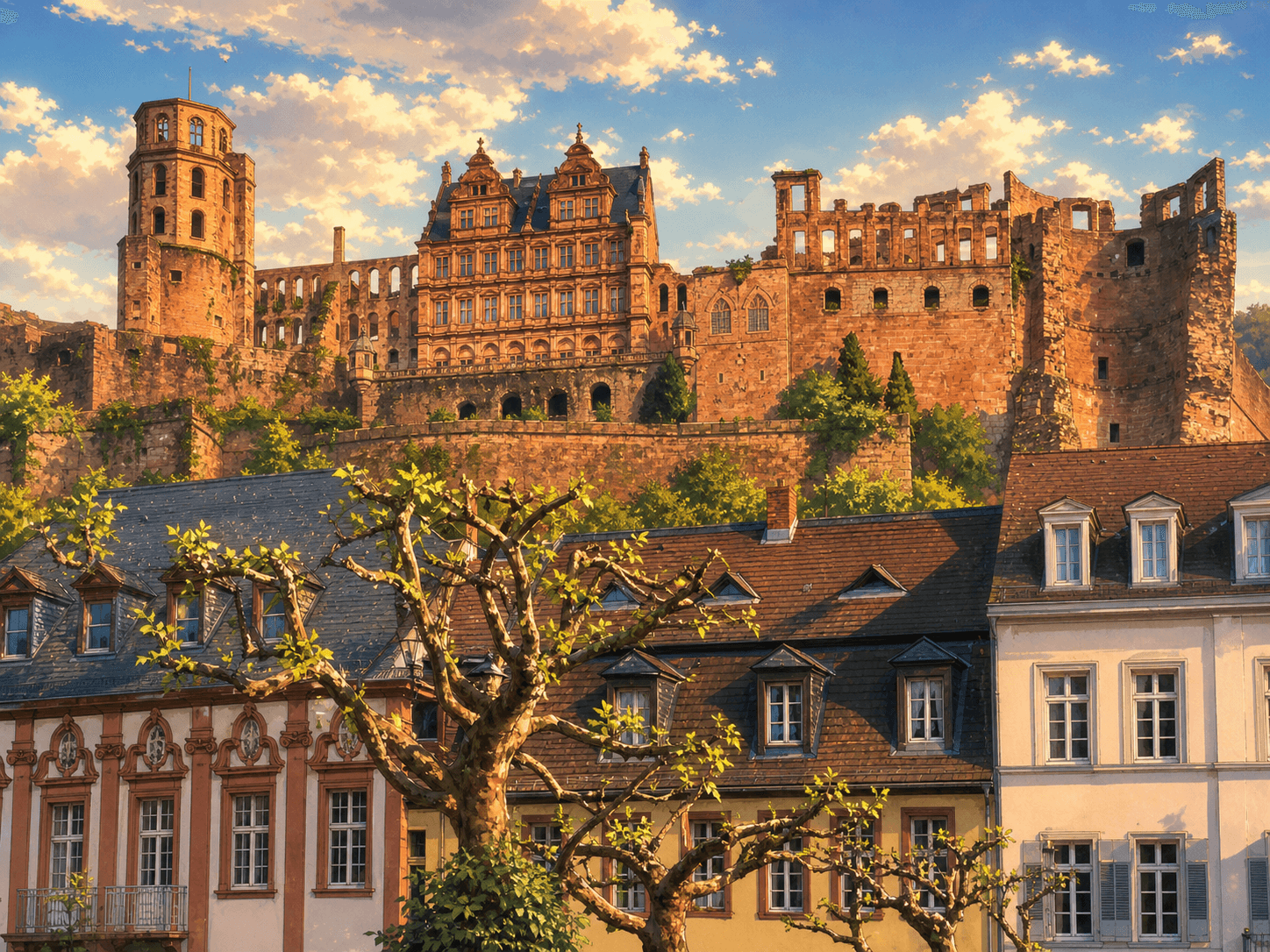
In February 2026, Heidelberg saw important decisions in the areas of urban development, culture, and mobility. We summarize the key developments of the month for you.
Urban Planning, Culture, and Transport in Focus
What Was Important This Month
- Urban Development and Building Committee: In February, several planning initiatives for the university campus and the railway line to Mannheim were approved.
- Culture and Education Committee: The ETO Heidelberg received a grant of 31 million euros for the 2026/2027 fiscal year.
- District Advisory Boards: In Wieblingen and Rohrbach, topics such as photovoltaics on agricultural land and bus stop renovations were in focus.
- Finance Committee: The supplementary budget was approved, and the waste management ordinance was revised.
- Youth Council: The outgoing Youth Council was honored, and the new one was constituted.
- Public Participation: The budget consolidation process is being made more transparent.
Urban Development and Infrastructure: Planning Progress
Heidelberg demonstrated in February 2026 that it is a city with clear planning objectives. The Urban Development and Building Committee made key decisions regarding the university campus, including the allocation of 320,000 euros for planning services for the northern access road. Furthermore, the four-track expansion of the railway line to Mannheim was unanimously supported, promising long-term improvements in local transport and commuting.
Another highlight was the approval of the „Südstadt“ zoning plan, which reorganizes urban space and emphasizes sustainable development. In addition, an access agreement was passed to widen a staircase in the Old Town – a small but meaningful contribution to improving access to historic parts of the city.
However, the funding for the street renewal program was reduced, indicating financial constraints. For instance, the budget for the Stückerweg was cut from 1.2 million to 700,000 euros. This shows that the city must set priorities in this fiscal year.
Culture: Budget Cuts and Festival Changes
The Committee for Culture and Education approved the budget plans for the Theater and Orchestra Heidelberg (ETO) in February. The ETO will receive a grant of 31.3 million euros, with an additional 7.967 million euros from the state. However, the ETO is in a consolidation phase, leading to job cuts and reductions in artistic budgets. A “cost-saving scenario” includes price increases for the Castle Theatre Festival and the elimination of early-bird discounts – a development that may not please culture enthusiasts.
In contrast, the feeLit Festival will remain with unchanged admission prices, but the festival duration will be reduced from nine to four days. This reflects the financial challenges in the cultural sector while maintaining responsibility toward visitors.
Mobility and District Advisory Boards: Public Transport and Public Participation
In the District Advisory Boards, topics such as public transport, photovoltaics, and bus stop renovations were central in February. The Heidelberg Passenger Advisory Board, consisting of 30 volunteer transport advocates, was introduced in several districts. The advisory board works closely with the Rhein-Neckar Transport Company (rnv) and the Rhein-Neckar Transport Association (VRN) and holds four public meetings per year to develop solutions for transport challenges.
In Wieblingen, a proposal was discussed regarding the installation of photovoltaic systems on agricultural land. Critics pointed out that such projects could be existentially threatening for farmers. Instead, rooftops and parking lots were suggested as alternatives.
In the district of Rohrbach, a task was assigned to further examine the renovation of the Freiburger Straße bus stop. In addition, two new deputy child representatives were appointed after the previous office holder stepped down for personal reasons.
Open Space Planning and the Future of the City
The Bergheim District Advisory Board approved an open space plan for the „western Kleeblatt“ and the Alfons-Beil-Platz in February. The restoration of the open space is planned for the year 2030, with estimated costs of 850,000 euros for the „western Kleeblatt“ and 900,000 euros for the Alfons-Beil-Platz. The planning will be implemented over several combined budget periods, demonstrating Heidelberg’s long-term investment in urban development projects.
Public Participation and Budget Planning
The Main and Finance Committee approved the supplementary budget 2026 and simultaneously discussed a proposal for public participation in the budget consolidation process. The goal is to give citizens more influence and to make the budget process more transparent. To this end, the Public Participation Working Group is to be more actively involved.
Outlook: Challenges and Opportunities
In February 2026, Heidelberg faced important decisions with both short-term effects and long-term consequences. The city continues to invest in infrastructure, culture, and mobility, but the financial situation demands prioritization. At the same time, public participation is being increasingly emphasized – a positive signal for democratic and transparent urban development.
NeoSearch analyses public council documents, committee minutes and municipal announcements. Source references appear automatically once verified meeting data is available.
What does this mean for businesses?
Urban development, zoning plans and commercial settlements create early construction and supply opportunities. Following council decisions reveals projects before they go to tender.
Track similar decisions in your region
Set up monitoring for economic development in Baden-Württemberg — prefilled from this article.
Set up monitoring →More signals from Heidelberg
Heidelberg's Childcare in 2026: Funding, Classification, and Future Viability
In March 2026, Heidelberg made several fundamental decisions regarding childcare. In addition to the introduction of a seventh fee level and the redesign of opening hours, the city also decided on the closure of some municipal daycare centers. An overview of the background, implications, and challenges.
Read more → Heidelberg's Social Policy March 2026: Violence Prevention, Equality and Youth Support in Focus
In March 2026, the city of Heidelberg set new priorities in social policy. The focus was on securing violence protection, strengthening gender equality policy, and supporting young people on their path into education and work. The new provider for perpetrator work, the Center for Violence Prevention and Intervention, as well as the Feminist Weeks and the new Youth Vocational Agency shaped the activities.
Read more → Governance and Administration in Heidelberg – March 2026: Structural Adjustments and Financial Security in Focus
In March 2026, structural changes in the administration, financial decisions, and citizen-oriented governance were at the forefront in Heidelberg. The Municipal Council approved new regulations, confirmed personnel appointments, and prepared for future challenges.
Read more →