Erfurt's Urban Development 2026: Affordable Housing, Schools, and Climate Protection in Focus
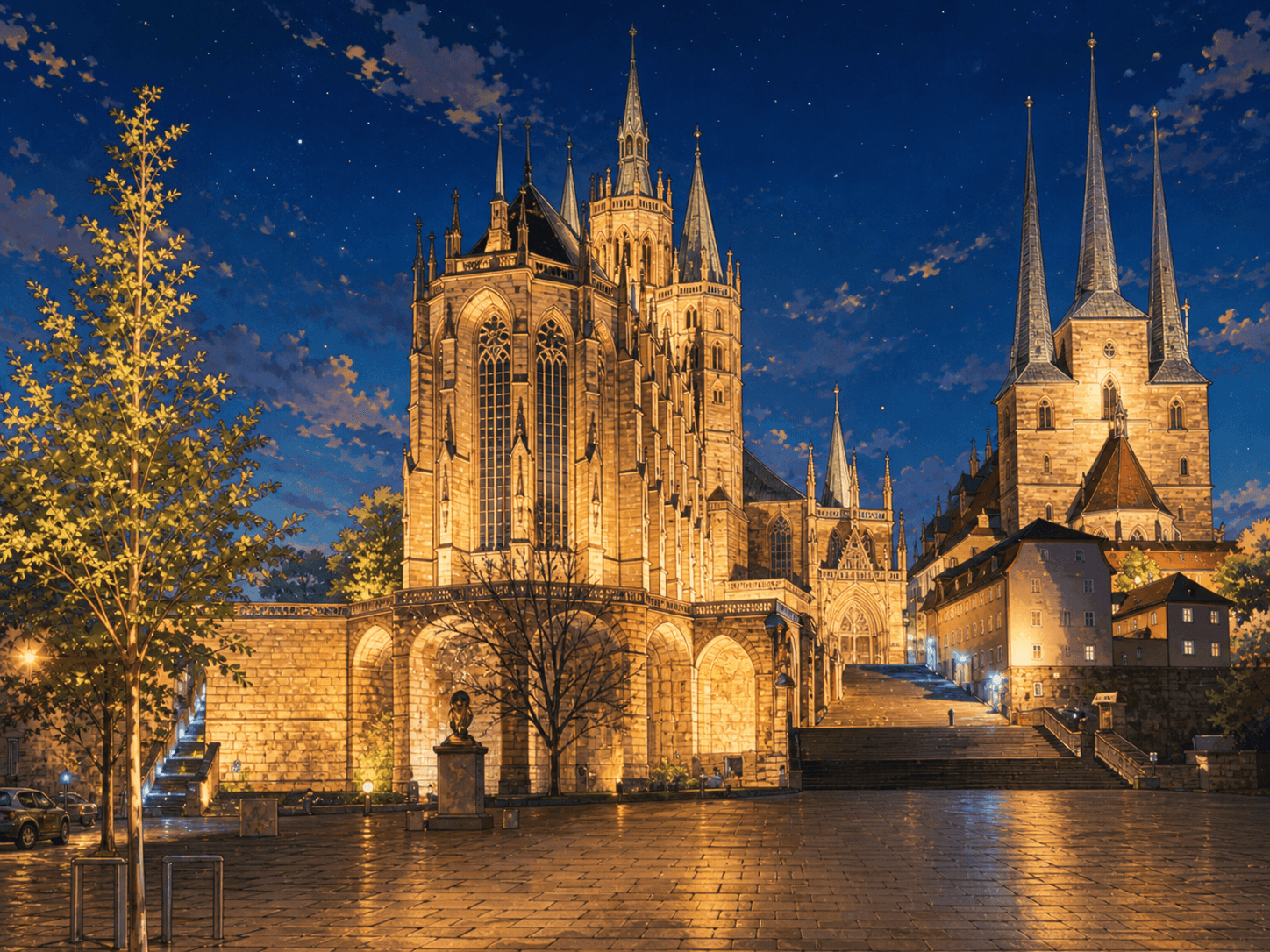
In January 2026, urban development in Erfurt was in the spotlight. Numerous projects in the areas of housing, schools, transportation, and climate protection were decided or further developed. This blog post analyzes the most important decisions, their backgrounds, and their implications in detail.
Housing Supply: Between Sale and Investment
In the January debate, Erfurt intensely addressed the question of how the urgently needed housing in the city can be made available in the future. The "DasJOHANN II" project in Wendenstraße is a central component: on a 4,095 m² plot, up to 165 barrier-free apartments will be built, with a focus on 70 m² units. The project is being implemented by the Erfurter Wohnungsbaugesellschaft (KoWo), which plans to increase its capital by up to 5 million euros annually until 2027.
At the same time, the question of the use of the ega property in Erbaupacht arose. Although affordable family housing was planned there, the city administration rejected the project as it does not fall within the corporate purpose of ega gGmbH. This highlights the challenges of combining social housing and municipal business policy.
School Construction: Restructuring and Inclusion
The educational landscape in Erfurt will fundamentally change in the coming years. The Thomas-Mann-Schule in Halleschen Straße, as well as Grundschule 28 and Regelschule 23 in Bukarester Straße, will be converted into comprehensive schools from 2026/27. This development reflects the trend toward inclusive and interdisciplinary teaching and aims to better prepare students for the challenges of later life.
Another highlight is the new school campus in Greifswalder Straße. On the former slaughterhouse site, a modern educational center is being built with a three-track primary school, a secondary school, and a two-field sports hall. The total cost amounts to 53.4 million euros, and the opening is planned for August 2029. The outdoor planning emphasizes barrier-free play and movement areas, inclusive design, and energy-saving measures.
Climate Protection and Sustainability: From Green Roofs to Photovoltaics
Climate protection is not just lip service in Erfurt – concrete measures are being implemented. For example, during the renovation of the dual-site at Berliner Straße 1+1a, an extensively greened roof area (3,000 m²) is planned, with at least 40% of the roof area used for photovoltaics. In addition, the outdoor planning ensures that at least 50% of the areas remain unpaved to guarantee infiltration capacity.
Even in the new planning for the bridge over the B4 (Schwarzburger Straße), criteria such as energy efficiency and noise protection were considered. The preferred variant is a single-span cantilever frame, 7 meters wide and equipped with a pedestrian and cycle path.
Digital Advertising and Cityscape: A Delicate Balance
The debate about digital advertising panels in the old town shows how sensitive the cityscape and the identity of a city are. Erfurt has decided not to allow any further digital advertising panels in historical areas. The existing City-Light-Posters must be dismantled, as they are considered disruptive to the historical cityscape and energy-intensive. At the same time, RBL Media is requested to offer alternative locations along the traffic axes.
This decision underlines the desire for a balance between modernity and tradition – a topic currently being discussed in many cities in Germany.
Conclusion: Erfurt as a City in Transition
Erfurt is on an exciting path: The city combines social responsibility with modern infrastructure measures and focuses on climate protection and sustainability. The January decisions show that Erfurt is not only reacting but actively shaping the future. Whether in the areas of housing, education, or climate protection – the city is on course to master the challenges of the future.
NeoSearch analyses public council documents, committee minutes and municipal announcements. Source references appear automatically once verified meeting data is available.
What does this mean for businesses?
Schools, daycare centres and public buildings create early planning and construction opportunities. Following council agendas surfaces tenders for refurbishment, new builds and fit-out months before the official award — from shell construction to specialist planning to furnishing.
Track similar decisions in your region
Set up monitoring for education & public facilities in Thüringen — prefilled from this article.
Set up monitoring →More signals from Erfurt
Erfurt is investing in quality management in communal accommodations – How the city is improving living conditions for refugees
In April 2026, topics such as quality management in communal accommodations and the revision of the integration concept were in focus in Erfurt. The Committee for Social Affairs, Labour Market and Equality discussed concrete measures to improve the integration and quality of life for refugees in the city.
Read more → Education and Public Facilities in Erfurt: Focus on April 2026
In the state capital of Erfurt, several important decisions and planning processes related to educational institutions, local transport planning, and barrier-free infrastructure were in focus in April 2026. The district of Roter Berg engaged with theatrical performances in kindergartens, while the local transport plan for 2026–2030 and the city's heat plan continued to develop. An overview.
Read more → Economic Policy in Erfurt: Focus on Investments, Infrastructure, and Social Standards
In April 2026, Erfurt addressed key economic policy topics: from the future of the Zalando site to fiber optic expansion and the adjustment of board remuneration at Flughafen Erfurt GmbH. Central to these discussions were investments in infrastructure and the integration of social criteria in public procurement.
Read more →