Erfurt January 2026: Education, Finance, and Climate in Focus
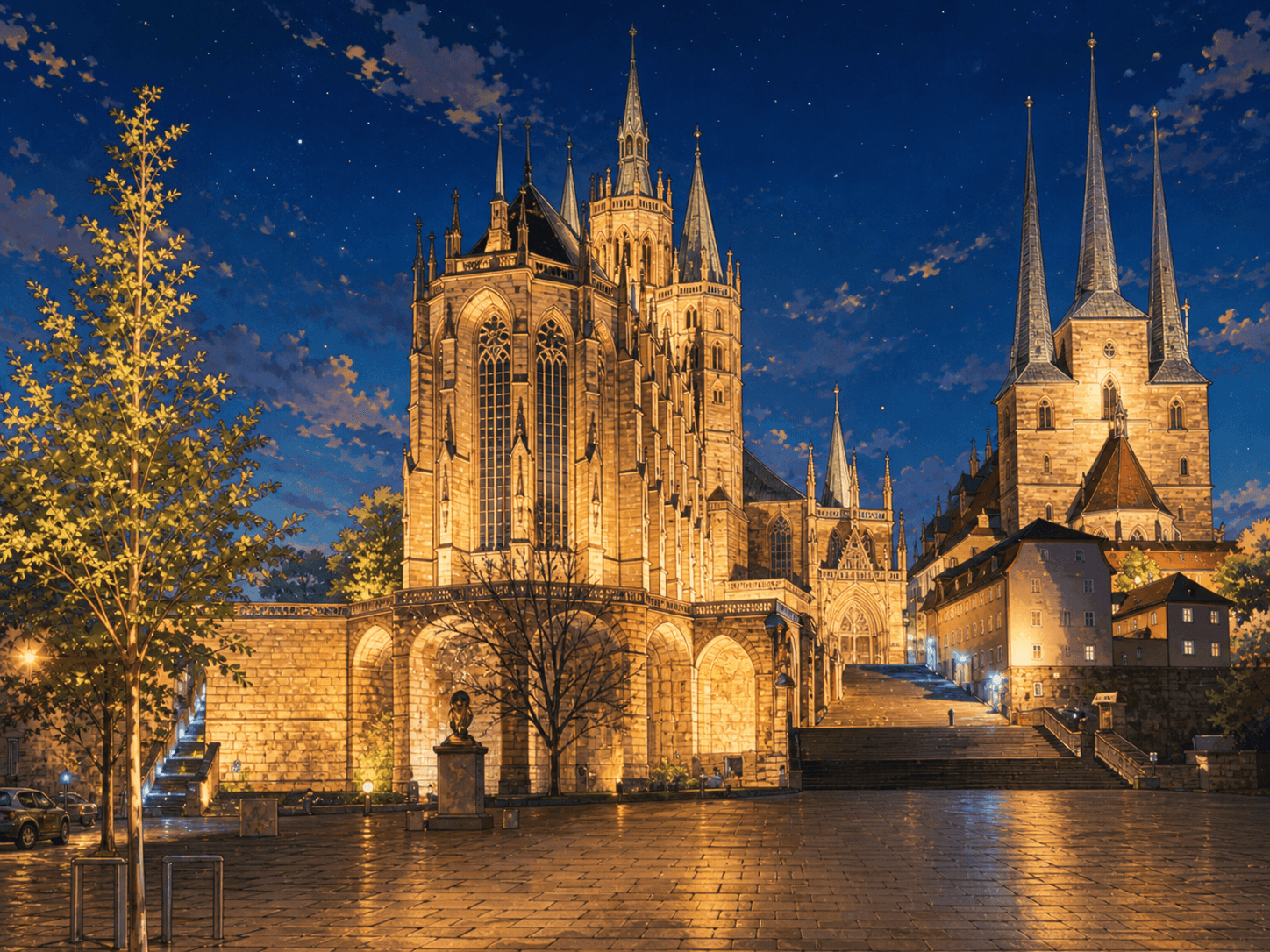
In January 2026, Erfurt made important decisions on education, finance, climate, and infrastructure. Learn what is particularly relevant for the city and its residents.
Reimagining Education – Community Schools from 2026/27
School development is being restructured in several districts: Primary Schools 2 and 28 as well as Secondary Schools 1 and 23 will be converted into three-track community schools starting with the 2026/27 academic year. The new school facilities will cover grades 1–10, including an introductory phase for the academic upper secondary level. However, this phase will be conducted at existing high schools such as Gymnasium 11 on Grünstraße or at the Otto-Lilienthal School.
A clear regulation was established for students: Current 5th-grade students will have a right of conversion, while grades 6–10 will remain at the existing locations. Pedagogical concepts are already in development and have received positive evaluations from the relevant authorities.
Financial Policy Advances – Citizens’ Centers and Representational Funds
Financial decisions in several districts primarily concern the use of representational funds and rental income. In Hochheim, Melchendorf, and other districts, funds of up to 2,500 EUR were approved for the financing of representational tasks. In addition, income from the rental of spaces in the citizens’ centers will be used for structural maintenance measures.
Decisions were also made regarding waste collection: In Marbach and Salomonsborn, it was decided to continue using free waste containers after their replacement by “BigBelly” collection bins in other districts. Due to financial constraints, an expansion of the number of waste containers is not possible.
Climate and Energy – Investments in a Green Future
In the area of climate and energy, measures were planned that go beyond mere infrastructure. In Stotternheim, the renovation of a youth club is underway, which will include heat pumps and photovoltaic systems. These investments reflect the goal of anchoring energy-efficient and climate-friendly building concepts in urban development.
In addition, energy networks such as the 380-kV high-voltage line Vieselbach–Eisenach–Mecklar were discussed in several meetings. The planning takes into account both technical and environmental aspects.
Housing Promotion and Urban Development – Challenges and Opportunities
In the field of housing promotion, the Green Party advocated for an expansion of the city’s housing construction program. The goal is to create 500 additional social housing units—especially for families and seniors.
A concrete project on Wendenstraße / Martin-Niemöller-Straße with up to 165 barrier-free housing units was presented, but the city administration rejected its realization. The necessary financial and personnel requirements, particularly the contribution of 10 million EUR in equity by the housing association, were not met.
Social Debates – Zalando Dispute and Social Responsibility
A special topic was the closure of the Zalando location in Erfurt, which was discussed in a special session of the city council. The city council called on the company management to assume social responsibility and tasked the mayor with measures such as reselling concepts and coordination with the employment office.
Social topics such as the provision of free menstrual products in public facilities and a pilot project “Health Kiosk” in structurally burdened districts were also discussed. The city administration expressed concerns regarding resources and the project duration.
The Future of Culture – Support, Transformation, and Festivals
Cultural policy in Erfurt is moving toward greater participation and support. The AfD advocated for the expansion of the “Erfurt Crowd” support model—with a monthly support amount of 8,000 EUR and a matching principle. The SPD & PIRATEN supported a cooperation agreement for the Magdeburger-Allee Festival to ensure legal and organizational security.
In addition, a master plan for the “New Erfurt Natural History Museum” was commissioned. The architecture firm Hoskins Architects Berlin is to prepare the plan by the end of 2025—regardless of location.
Transport and Mobility – Planning for the Future
In the area of transport and mobility, several projects were initiated. The cycle path planning for the Schwarzburger Straße is in preparation, with funding planned from 2025. In addition, the expansion of the local connecting road Marbach–Salomonsborn is in planning—earliest implementation possible from 2031.
Outlook: What Remains and What is Coming?
January 2026 in Erfurt was marked by important decisions in the education sector, financial policy measures, and investments in climate and energy. At the same time, social debates and cultural initiatives did not fall by the wayside. In the coming months, the focus will be on the implementation of the approved education projects, climate and energy policy, as well as concrete planning for housing promotion.
NeoSearch analyses public council documents, committee minutes and municipal announcements. Source references appear automatically once verified meeting data is available.
What does this mean for businesses?
Schools, daycare centres and public buildings create early planning and construction opportunities. Following council agendas surfaces tenders for refurbishment, new builds and fit-out months before the official award — from shell construction to specialist planning to furnishing.
Track similar decisions in your region
Set up monitoring for education & public facilities in Thüringen — prefilled from this article.
Set up monitoring →More signals from Erfurt
Erfurt is investing in quality management in communal accommodations – How the city is improving living conditions for refugees
In April 2026, topics such as quality management in communal accommodations and the revision of the integration concept were in focus in Erfurt. The Committee for Social Affairs, Labour Market and Equality discussed concrete measures to improve the integration and quality of life for refugees in the city.
Read more → Education and Public Facilities in Erfurt: Focus on April 2026
In the state capital of Erfurt, several important decisions and planning processes related to educational institutions, local transport planning, and barrier-free infrastructure were in focus in April 2026. The district of Roter Berg engaged with theatrical performances in kindergartens, while the local transport plan for 2026–2030 and the city's heat plan continued to develop. An overview.
Read more → Economic Policy in Erfurt: Focus on Investments, Infrastructure, and Social Standards
In April 2026, Erfurt addressed key economic policy topics: from the future of the Zalando site to fiber optic expansion and the adjustment of board remuneration at Flughafen Erfurt GmbH. Central to these discussions were investments in infrastructure and the integration of social criteria in public procurement.
Read more →