Erfurt invests in education – School reform, comprehensive schools, and pedagogical innovation in March 2026
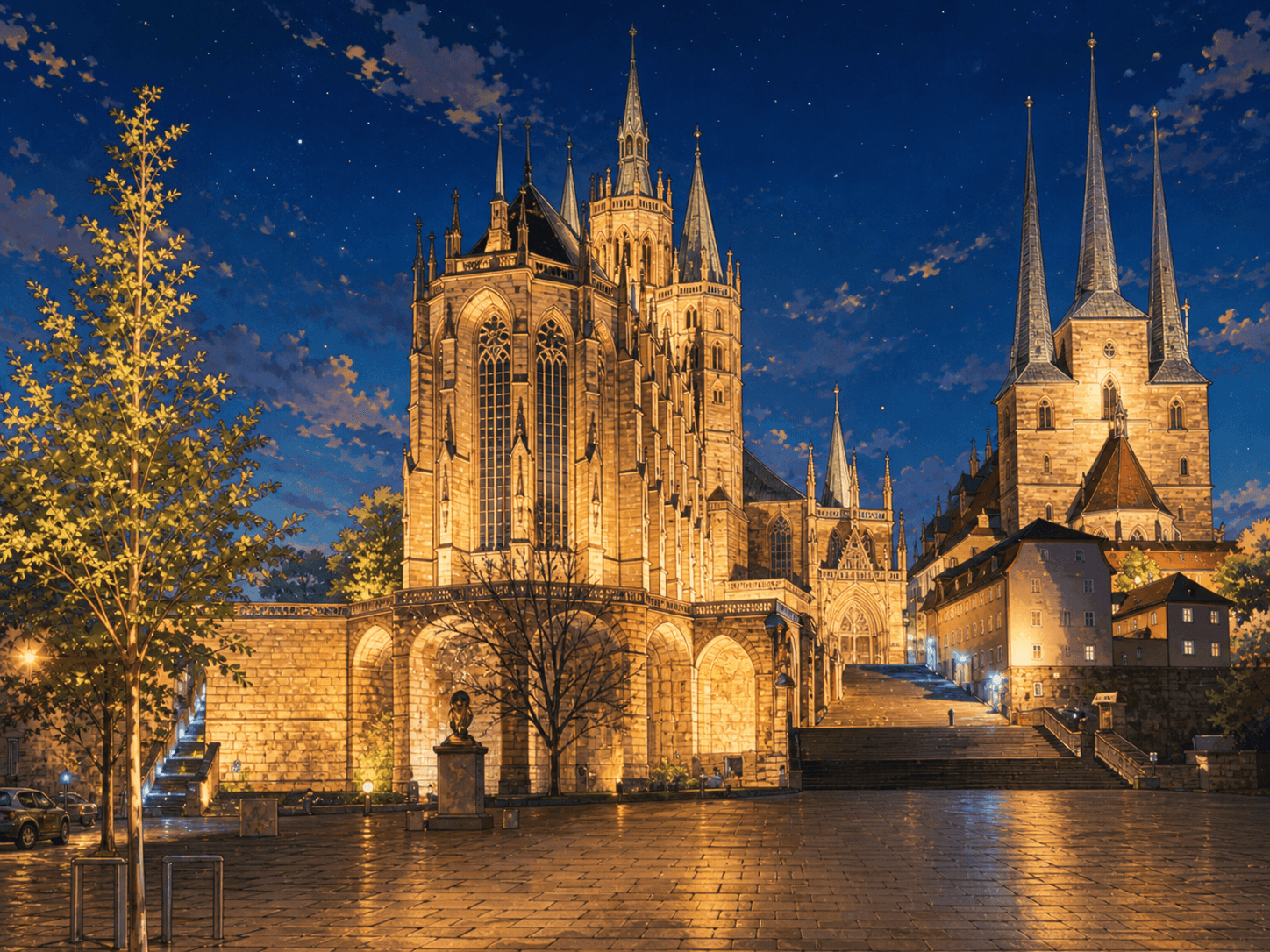
In March 2026, the city of Erfurt made decisive strides in school development. The transformation of two primary and secondary schools into comprehensive schools marks a profound change in the educational landscape. At the same time, pedagogical concepts, structures, and funding plans were discussed to ensure the future of Erfurt's schools.
Education in motion: Erfurt's March 2026 as a turning point
Education policy in Erfurt is undergoing an intense transformation process. In March 2026, several landmark decisions were at the center of attention, which not only change the structure of schools but also redefine the pedagogical orientation. The implementation of comprehensive schools, the integration of inclusive learning models, and the discussions around the funding of digital infrastructure show how complex the challenges and opportunities in education policy are.
From primary and secondary school to comprehensive school
The transformation of the "Thomas Mann" Primary and Secondary School (GS 2 and RS 1) and the Primary and Secondary School at Geraaue (GS 28 and RS 23) into three-track comprehensive schools covering grades 1–10 marks a milestone in Erfurt's education policy. Starting with the school year 2026/27, the new schools will be "State Comprehensive School 12" (Hallesche Straße 18) and "State Comprehensive School 13" (Bukarester Straße 3).
Comprehensive schools are intended to enable smooth transitions between primary and secondary levels and offer a wide range of qualifications – from the lower secondary school certificate to the general higher education entrance qualification. The goal is to strengthen social skills, avoid early selection, and create individualized learning offers.
The upper secondary school (gymnasium) will be offered in the future at other locations (e.g., at State Gymnasium 11 or Comprehensive School 8 "Otto-Lilienthal"). For current 5th graders, there is a conversion right, provided the parents consent.
This reform is not only a structural, but also a pedagogical innovation, which relies on inclusive and differentiated teaching methods. The school development is supported by a pedagogical concept, which has already been recognized by the Thuringian Ministry of Education.
Pedagogical innovations and differentiation strategies
The new comprehensive schools in Erfurt are based on a modern, reform-oriented pedagogical approach. The focus is on differentiation, support in the classroom, block teaching, and interdisciplinary, practical teaching.
Special attention is given to DaZ concepts, foreign language support, and the support of students with a migration background. For example, at the Geraaue School, 30% of the students come from a migration background – here, intensive language support is provided.
Social skills and empathy are an integral part of the pedagogical work. Programs such as IPSY (Interpersonal Social Skills) and Lions Quest promote teamwork, conflict resolution, and emotional intelligence.
School development is also accompanied by teacher training, focusing on relationship-building, communication, and conflict resolution. An "Open-Door Policy" and digital platforms such as Edupage promote transparency and parent involvement.
Funding, digitalization, and infrastructure
The digitalization of Erfurt's schools is another central topic of discussion. The Digital Pact 2.0 aims at comprehensive WLAN coverage of all schools. The city administration is to develop a framework concept for the use of funds, which is to be submitted to the Committee for Education and School Sports by the end of 2026.
There are also challenges in the infrastructure. The Steigerblick Comprehensive School, originally decided in 2017, is only a third completed after nine years. Investment costs have exceeded the planned budget, and subject-specific classrooms, sports hours, and sufficient classrooms are still missing.
The city plans to use funds from the 2026 and 2027 budgets for the third construction phase. At the same time, it is being examined whether the school is adequately sized for 900 students.
Outlook and challenges
The reforms in Erfurt show that education policy is not only about buildings and budgets, but also about pedagogical visions and social integration. The transition to comprehensive schools is an experiment with potential, but it also entails risks – especially in terms of personnel resources and financial security.
The medium-term planning for early childhood education facilities (2026–2030) also emphasizes that education policy must be planned ahead. The birth rate is declining, qualified staff are lacking, and buildings in need of renovation present a challenge.
Erfurt is on the way to creating a modern, inclusive, and differentiated education – a process that requires cooperation, courage, and long-term planning.
NeoSearch analyses public council documents, committee minutes and municipal announcements. Source references appear automatically once verified meeting data is available.
What does this mean for businesses?
Schools, daycare centres and public buildings create early planning and construction opportunities. Following council agendas surfaces tenders for refurbishment, new builds and fit-out months before the official award — from shell construction to specialist planning to furnishing.
Track similar decisions in your region
Set up monitoring for education & public facilities in Thüringen — prefilled from this article.
Set up monitoring →More signals from Erfurt
Erfurt is investing in quality management in communal accommodations – How the city is improving living conditions for refugees
In April 2026, topics such as quality management in communal accommodations and the revision of the integration concept were in focus in Erfurt. The Committee for Social Affairs, Labour Market and Equality discussed concrete measures to improve the integration and quality of life for refugees in the city.
Read more → Education and Public Facilities in Erfurt: Focus on April 2026
In the state capital of Erfurt, several important decisions and planning processes related to educational institutions, local transport planning, and barrier-free infrastructure were in focus in April 2026. The district of Roter Berg engaged with theatrical performances in kindergartens, while the local transport plan for 2026–2030 and the city's heat plan continued to develop. An overview.
Read more → Economic Policy in Erfurt: Focus on Investments, Infrastructure, and Social Standards
In April 2026, Erfurt addressed key economic policy topics: from the future of the Zalando site to fiber optic expansion and the adjustment of board remuneration at Flughafen Erfurt GmbH. Central to these discussions were investments in infrastructure and the integration of social criteria in public procurement.
Read more →