Erfurt in March 2026: Urban Development and Construction Projects in Focus
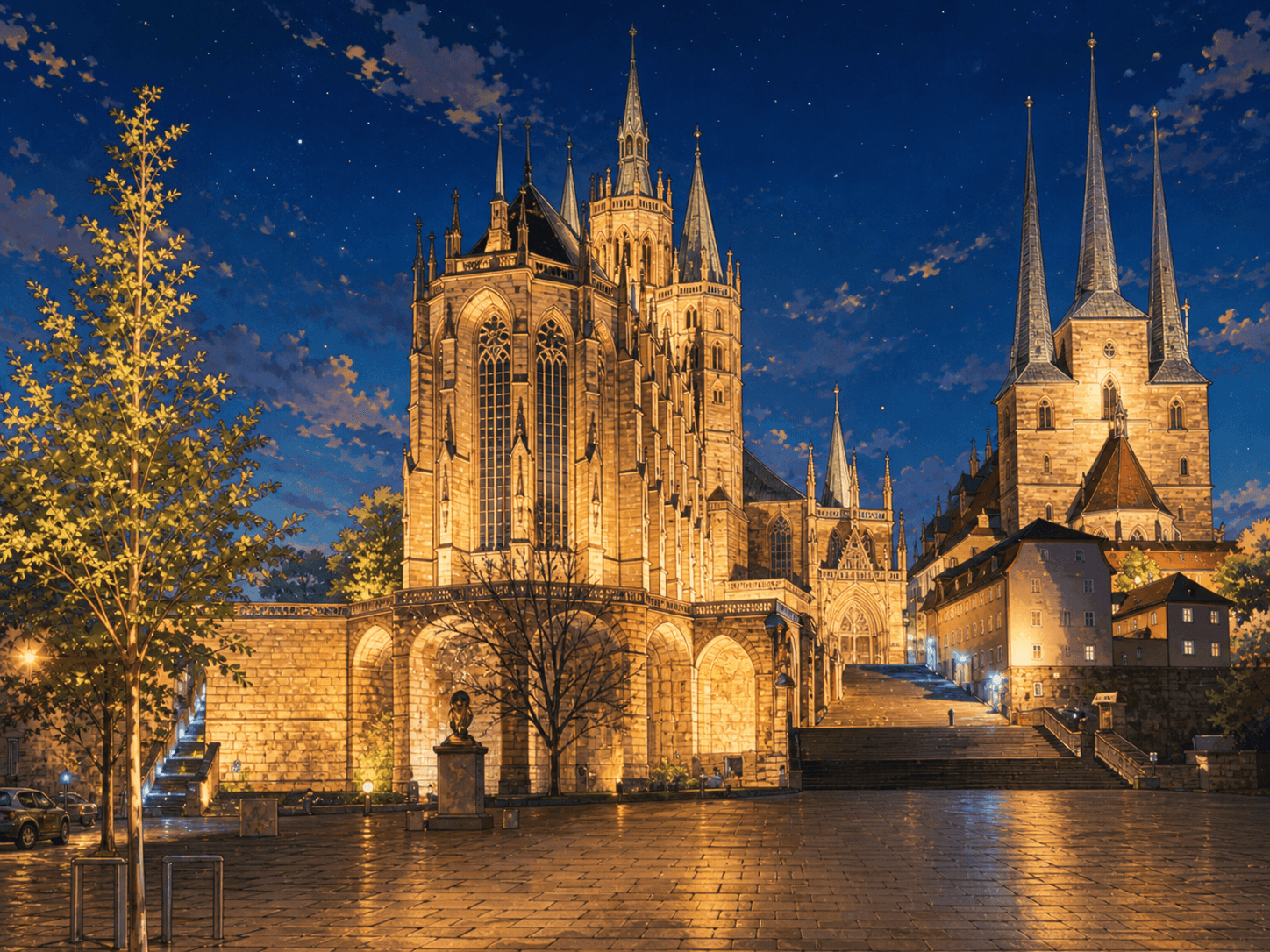
In Erfurt’s urban development meeting in March 2026, major investments, planning changes, and forward-looking projects took center stage. This blog analyzes the most important decisions and their implications for urban development, infrastructure, and the environment.
Large Projects and Renovations Shape Urban Development in Erfurt
Erfurt has established itself in recent years as a model city for sustainable urban development. In March 2026, the Committee for Urban Development, Construction, Environment, Climate Protection, and Transport addressed a wide range of initiatives that are both infrastructurally and ecologically significant. The decided projects range from the renovation of historic buildings through the expansion of charging infrastructure to the renewal of leisure and local service areas.
Mettengasse: A Complex Project with Long-Term Impacts
The Mettengasse will undergo comprehensive renovation starting in 2027. With a total volume of over 3.1 million euros, funded through the asset budget and EU funds (EFRE), the project is a central pillar of inner-city development. In addition to redesigning pedestrian areas and traffic calming, a fountain installation will also be restored. The construction measures also include the renovation of historic walls and the establishment of barrier-free access.
Funding is planned until 2030, with the first 50% of the costs due in 2027. The Stadtwerke and the Thüringer Wasserwirtschaft (ThüWa) are partners in the planning process, demonstrating how closely urban development is integrated with infrastructure and environmental planning.
Expansion of the Sports and Leisure Park: Local Services Meet the Joy of Movement
In the sports and leisure park at Bonhoefferstraße (Roter Berg), a project with a volume of 1.05 million euros is being realized. The leisure park will be expanded to include a grass football field, basketball and beach volleyball courts, a workout park, and a dirt bike park. Funding will be provided through the asset budget in several stages until 2029.
A central topic was the resolution of conflicts between the use of the area as a dog park and a ball games area. The planning process takes into account both the leisure needs of the population and animal welfare. The park is a good example of how Erfurt combines local service functions and sports facilities in a compact space.
Vilniusbrunnen: Climate Adaptation and Barrier-Free Design
The Vilniusbrunnen will be renovated and redesigned in two construction phases. The goal is to make the public space climate-resilient and to increase green areas. The fountain itself remains a central design element, flanked by spray fields, drinking fountains, and benches.
Funding will mainly come from urban development promotion funds, showing how important Erfurt considers climate-friendly design of urban spaces. The barrier-free accessibility and the increased micro-evaporation through vegetation reflect the focus on sustainability and inclusivity.
Electromobility and Road Safety: Erfurt is Building for the Future
The expansion of charging infrastructure is another key topic. Erfurt aims for 1,500 charging points by 2030, significantly exceeding legal requirements. At the same time, it is being examined whether the current offer is sufficient and where investments are needed.
In terms of road safety, the Carl-Zeiß-Straße was particularly discussed. Although the accident rate is low, it is being debated whether further measures are necessary to reduce speed. The city considers the current signage sufficient but is relying on increased traffic monitoring.
Conclusion: Erfurt as a City of the Future
In March 2026, Erfurt has shown itself to be a city with a clear development plan and sustainable strategy. The investments in infrastructure, leisure, and the environment reflect a clear willingness to prepare the city for the future. Although challenges such as funding gaps or planning disputes remain, a clear vision of how Erfurt will look in ten years is emerging: sustainable, inclusive, and vibrant.
NeoSearch analyses public council documents, committee minutes and municipal announcements. Source references appear automatically once verified meeting data is available.
What does this mean for businesses?
Municipal council decisions are early indicators: following the council agenda surfaces projects and tenders months before the official award — before they ever reach the procurement portals.
Track similar decisions in your region
Set up monitoring for Finance and Budget in Thüringen — prefilled from this article.
Set up monitoring →More signals from Erfurt
Erfurt is investing in quality management in communal accommodations – How the city is improving living conditions for refugees
In April 2026, topics such as quality management in communal accommodations and the revision of the integration concept were in focus in Erfurt. The Committee for Social Affairs, Labour Market and Equality discussed concrete measures to improve the integration and quality of life for refugees in the city.
Read more → Education and Public Facilities in Erfurt: Focus on April 2026
In the state capital of Erfurt, several important decisions and planning processes related to educational institutions, local transport planning, and barrier-free infrastructure were in focus in April 2026. The district of Roter Berg engaged with theatrical performances in kindergartens, while the local transport plan for 2026–2030 and the city's heat plan continued to develop. An overview.
Read more → Economic Policy in Erfurt: Focus on Investments, Infrastructure, and Social Standards
In April 2026, Erfurt addressed key economic policy topics: from the future of the Zalando site to fiber optic expansion and the adjustment of board remuneration at Flughafen Erfurt GmbH. Central to these discussions were investments in infrastructure and the integration of social criteria in public procurement.
Read more →