The Eckener House in Flensburg – Future as a Cultural and Meeting Place
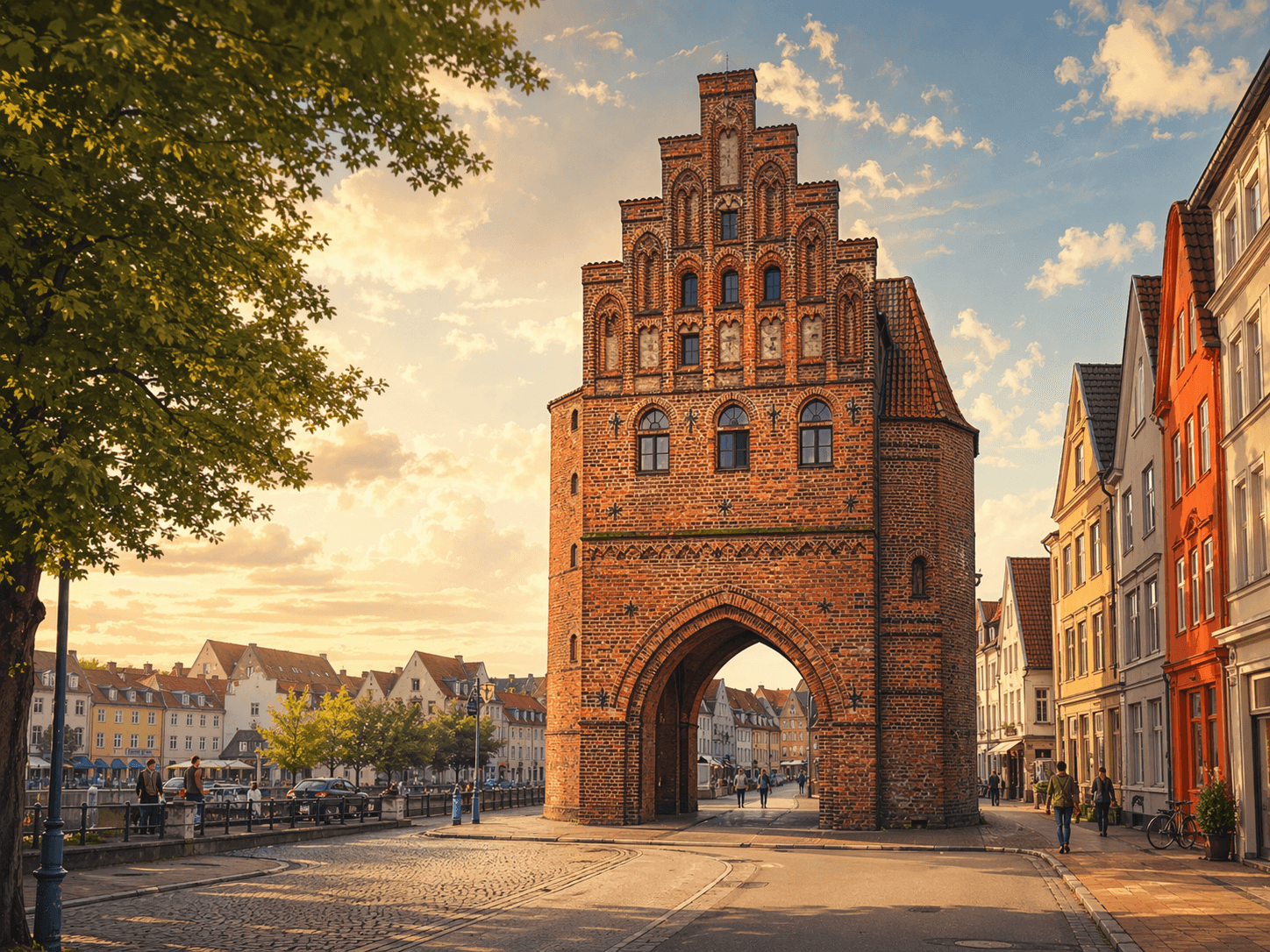
The April meetings of Flensburg’s Cultural Committee focused on the future and renovation of the Eckener House. A deep dive into the political decisions, background, and implications.
Culture in Flensburg: The Eckener House as a Central Discussion Topic
In April 2026, several meetings of Flensburg’s Cultural Committee were centered around the Eckener House. The historic building in the Western Old Town is not only a landmark of the city's history but also a symbolically significant place for cultural and social encounters. In the discussions between politicians, administration, and experts, clear objectives emerged: the renovation of the house as part of urban development, the development of a sustainable usage concept, and the establishment of a non-profit, inclusive cultural and meeting place for all of Flensburg.
Renovation and Financing: Challenges and Opportunities
The renovation of the Eckener House is part of a larger redevelopment area in the Western Old Town. With nearly 10 million euros in urban development funds available until 2028, the modernization of the building is financially secured. However, the renovation is not only a structural project, but also a political one. Critics question whether the funds could be better invested in other projects, especially considering the high maintenance costs after the renovation.
The administration, however, emphasizes that the Eckener House is a historically valuable building that can be revitalized as a "third place" in the city center through careful renovation. The term "third place" here refers to a space beyond home and workplace that promotes encounters, creativity, and community. The city aims to create not only a cultural landmark but also to strengthen social and intergenerational connections through the project.
Usage Concept and Management: How Should the Eckener House Be Operated?
In the Cultural Committee, a usage concept was discussed that defines four central scenarios: Doing and Experimenting, Experiencing and Presenting, Knowledge and Networking, and Celebrating and Receiving. The concept aims at a broad opening of the house – for citizens, artists, associations, tourists, and educational institutions. Cultural, social, and educational offerings are to be combined in an integrative space.
Central is also the question of management. In the meetings, it was clearly signaled that a non-profit structure – be it an association or a foundation – is preferred. Party-political influence or commercial use are to be excluded. While the city of Flensburg does not want to participate directly as a sponsor, it wants to ensure the implementation of cultural goals through committees and steering rights.
Another topic was financial sustainability. The estimated annual operating costs range between 100,000 and 500,000 euros. Revenue sources such as admission fees, room rentals, third-party funds, and donations are to finance the operation. However, several committee members emphasized that professional structures are necessary to manage the organizational tasks – particularly in the areas of program planning, coordination, and public relations.
Political Prioritization and Public Will
The discussions in the Cultural Committee show a clear trend: the Eckener House is not only an architectural project but a political and social undertaking. The city of Flensburg wants to create an offer with the house that is accessible to all population groups – from children and young people to seniors. The wishes of the citizens, such as open spaces for creative participation, free offers, and more visibility for cultural projects, were explicitly included in the concept.
However, the discussion was not without tensions. Critics questioned the prioritization of the project in the context of other municipal tasks. Others asked whether a private management model might not be more efficient. Nevertheless, politics emphasizes that the Eckener House is a symbol of Flensburg's cultural identity and must therefore remain within a non-profit framework.
Outlook: Stage 1 Completed, Stage 2 Approaches
In April 2026, the so-called framework paper was completed, summarizing the political requirements for the future management and operation concept. In the second stage, which begins in the autumn of 2026, a concrete operational model is to be developed. Organizational, financial, and structural prerequisites will be worked out in detail. The city plans to present a feasible model by 2027, which can then be implemented.
The future of the Eckener House is thus not yet finally decided – but the direction has been set. With a clear focus on inclusivity, creativity, and community, the building will become a central place for cultural and social encounters in Flensburg in the coming years.
NeoSearch analyses public council documents, committee minutes and municipal announcements. Source references appear automatically once verified meeting data is available.
What does this mean for businesses?
Municipal council decisions are early indicators: following the council agenda surfaces projects and tenders months before the official award — before they ever reach the procurement portals.
Track similar decisions in your region
Set up monitoring for Culture and Community in Schleswig-Holstein — prefilled from this article.
Set up monitoring →More signals from Flensburg
Flensburg's Open After-School Program: Structural Adjustments and Legal Right of Access from 2026
In April 2026, Flensburg's Education Committee approved significant changes to the framework concept of the Open After-School Program at primary schools and special education centers. The adjustments aim to implement the legal right of access to after-school care, simplify the module structure, and adapt parental contributions. We analyze the background, implications, and future perspectives.
Read more → Social Justice in Flensburg: A Month in Focus on Social and Housing Policy
April 2026 in Flensburg was marked by decisive steps in social and housing policy. From the fee increase in homeless support to the strengthening of queer counseling services – the city is focusing on inclusive structures and long-term perspectives.
Read more → Kindergartens in Flensburg: Support, Catering, and Inclusion in Focus
In April 2026, important decisions and discussions regarding kindergartens (KiTas) were at the center of attention in Flensburg. The Youth Welfare Committee decided on adjustments to the support for KiTas and discussed the future of catering, inclusion, and the impact on socially disadvantaged families. In this blog post, we examine the background, decisions, and their implications for the city of Flensburg.
Read more →