Pirna in March 2026: Urban Development, Culture, and Investments in Focus
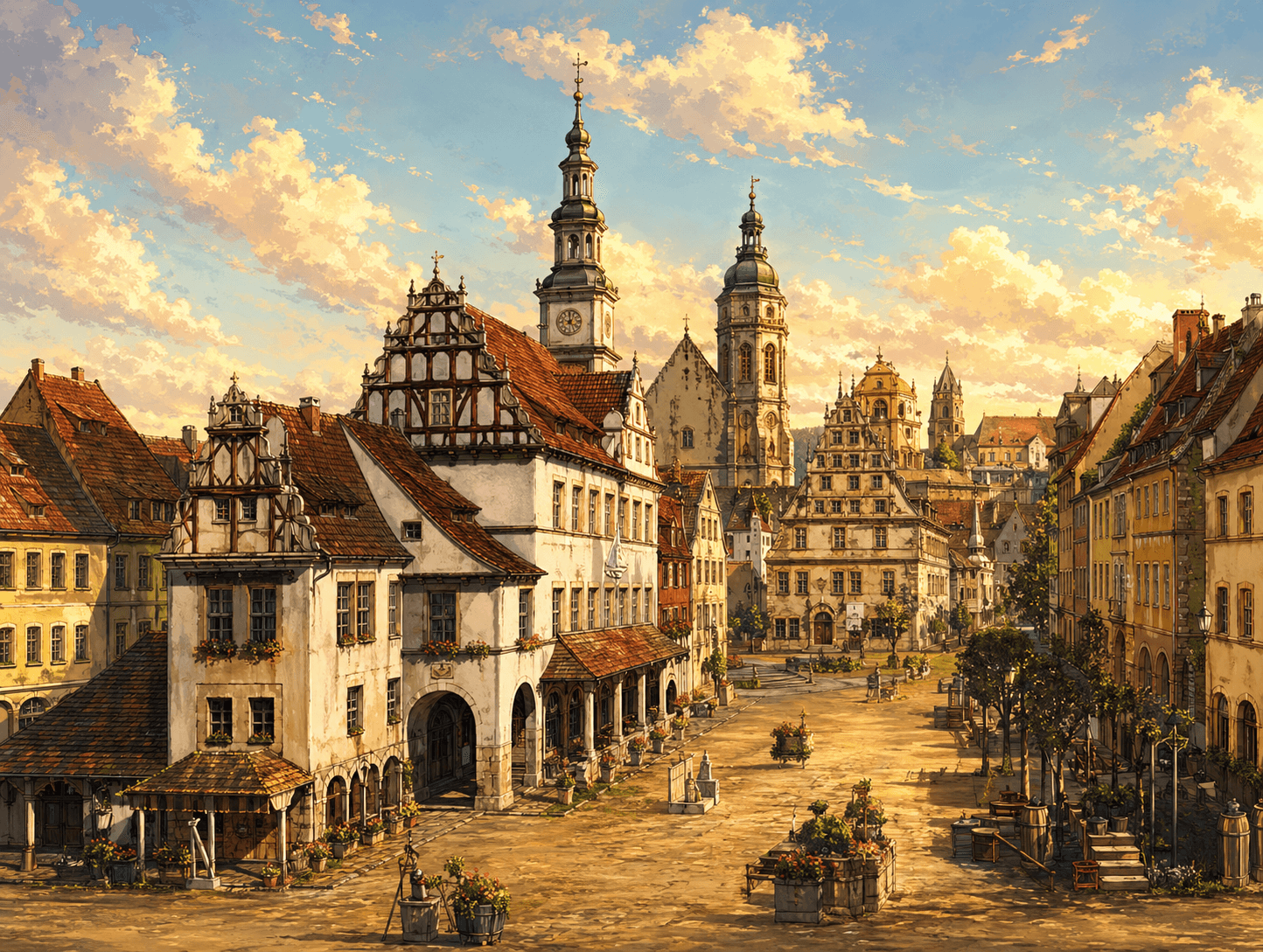
In March 2026, Pirna focused on urban planning, cultural projects, and investments. The City Council, municipal councils, and committees set important impulses for the city's future.
News in Urban Development and Cultural Space
What was important this month
- The State Garden Exhibition is approaching: Pirna starts the feasibility study, a key step in the application process.
- The "Bauturbo" is being implemented: New Building Code instruments aim to accelerate housing construction and redistribute responsibilities.
- Culture is being promoted: The historical hall of the Hotel "Schwarzer Adler" will be used for cultural events in the future.
- Pirna is investing in Education and Sports: Renovations and new constructions, such as at Neundorf Primary School and the Sonnenstein Sports Hall, are underway.
- Child and youth support remains a topic: The City Council addressed grant allocations.
Urban Development and Building Code Instruments: The "Bauturbo" in Action
The City Council and municipal councils have been intensively involved in implementing the new Building Code instruments in recent weeks. The goal is to accelerate housing construction while ensuring urban development quality.
Approval under § 36a Building Code will be divided between the Mayor and the Urban Development Committee depending on the project size. Projects with more than 15 residential units or a land use of at least one hectare will be handled by the Committee, while smaller projects will be managed by the Mayor.
The Land Use Plan remains the essential basis for urban development. The provisions of the Building Code amendment, including § 31 (3), § 34 (3b), § 246e and § 36 Building Code, allow for more flexible regulations, while meeting further legal requirements such as emission protection, heritage protection, and nature conservation.
These changes represent a step toward a faster and more targeted urban development in Pirna – especially in a year with increasing demand for housing.
Culture in the Heart of Pirna: The Schwarzer Adler and More
The city of Pirna has made a guiding decision on the use of the historical hall in the Hotel "Schwarzer Adler". With an annual rent of 138,000 EUR and a funding requirement of 120,000 EUR, the hall will be used for 46 events per year, each at a cost of 3,000 EUR net including operating costs.
Additionally, an event concept was approved to make the city’s cultural offerings more diverse and stronger. The involvement of retail, gastronomy, and educational institutions is a central aspect.
Another cultural highlight is the grant to the Sächsische Schweiz Music School e.V. in the amount of 90,000 EUR, which was awarded as voluntary support for musical education in Pirna.
Investments in Education, Sports, and Infrastructure
Pirna is making significant investments in educational institutions and sports facilities. The Neundorf Primary School will receive a new gymnasium, equipped with appropriate high-power and FMI installations. The work will be carried out by Elektro-Noack GmbH.
In the Sonnenstein Sports Hall, the indoor floor will be renewed and the impact wall will be restored. The work is made possible by the contract awarded to EGO GmbH and Heizungsbau W. Symank GmbH. Additionally, a barrier-free staircase will be built to the Nature Park in Sonnenstein – another step toward a more accessible city.
Public infrastructure is also being improved: Street drainage systems will be maintained over the next 14 months through cleaning services. However, the corresponding contract was not accepted as planned, so the implementation is still in planning.
Child and Youth Work: Funding Remains Controversial
In a special session of the City Council, the grant allocation for youth and child work in 2026 was discussed. With a total funding of 36,372 EUR, distributed across 12 projects, Pirna is setting impulses for youth and social work in the city.
A point of contention remained the grant to the Aktion Zivilcourage e.V. association in the amount of 9,000 EUR, which was struck by several factions. A document access request was submitted to examine the participation of council members in previous meetings.
The State Garden Exhibition: A Long-Term Project with Future Potential
Pirna has initiated the feasibility study for the State Garden Exhibition. With a total cost of 39,000 EUR, funded from the budget item 55411 – State Garden Exhibition, the city has now started the first planning steps. The goal is to strengthen Pirna’s city image and tourist appeal and at the same time set new urban development impulses.
The planning services for "Stage 2" have been awarded to the Office of Ulrich Krüger Landscape Architects, which has already been active in other projects in the region. The study will examine the ecological, cultural, and infrastructural aspects of a possible State Garden Exhibition in Pirna.
Overall Trends: Urban Development and Participation
In March 2026, Pirna focused more on future-oriented planning and participation. The implementation of the Bauturbo, the promotion of cultural institutions, and the investments in education and sports show how the city is responding to challenges such as housing shortages, sustainability, and social inclusion.
At the same time, political disagreements – especially regarding grant allocations for youth and child work – remained visible. These debates show that dialogue and transparency continue to be central elements of municipal politics in Pirna.
Final Conclusion with Outlook
March 2026 was marked in Pirna by clear decisions in the areas of urban development, culture, and education. With the preparation of the State Garden Exhibition, the implementation of the Bauturbo, and the investment in cultural and sports infrastructure, the city has achieved important milestones.
In the future, it will be necessary to consistently advance planning and implementation and to strengthen cooperation with institutions, associations, and companies. The involvement of citizens remains a central aspect – because Pirna is not only the city of politics, but also of its citizens.
NeoSearch analyses public council documents, committee minutes and municipal announcements. Source references appear automatically once verified meeting data is available.
What does this mean for businesses?
Urban development, zoning plans and commercial settlements create early construction and supply opportunities. Following council decisions reveals projects before they go to tender.
Track similar decisions in your region
Set up monitoring for economic development in Sachsen — prefilled from this article.
Set up monitoring →More signals from Pirna
Urban Development in Pirna: An Overview of April 2026
Urban development and construction policy in Pirna in April 2026 focused on renovations, green space maintenance, and school supplies. The Urban Development Committee approved several significant projects that will shape the city's future.
Read more → Governance Decisions in Pirna: April 2026 in the Spotlight
In April 2026, numerous decisions in the areas of governance and administration were in the focus in Pirna. The city emphasized transparency, citizen-oriented structures, and precise regulations—particularly in the main charter. Additionally, important contracts for the maintenance of green spaces and civic projects were approved. This blog post analyzes the background, consequences, and relevance of these decisions.
Read more → Pirna's Financial Policy in April 2026: Budget Planning, Fees and Donations
The April 2026 session in Pirna and the municipality of Dohma focused on key financial policy topics. In addition to the 2027 budget planning, changes to fire department regulations and the acceptance of donations were discussed. These decisions reflect the challenges and priorities of municipal financial administration.
Read more →