Urban Development in Mainz – April 2026: Key Projects, Challenges, and Future Prospects
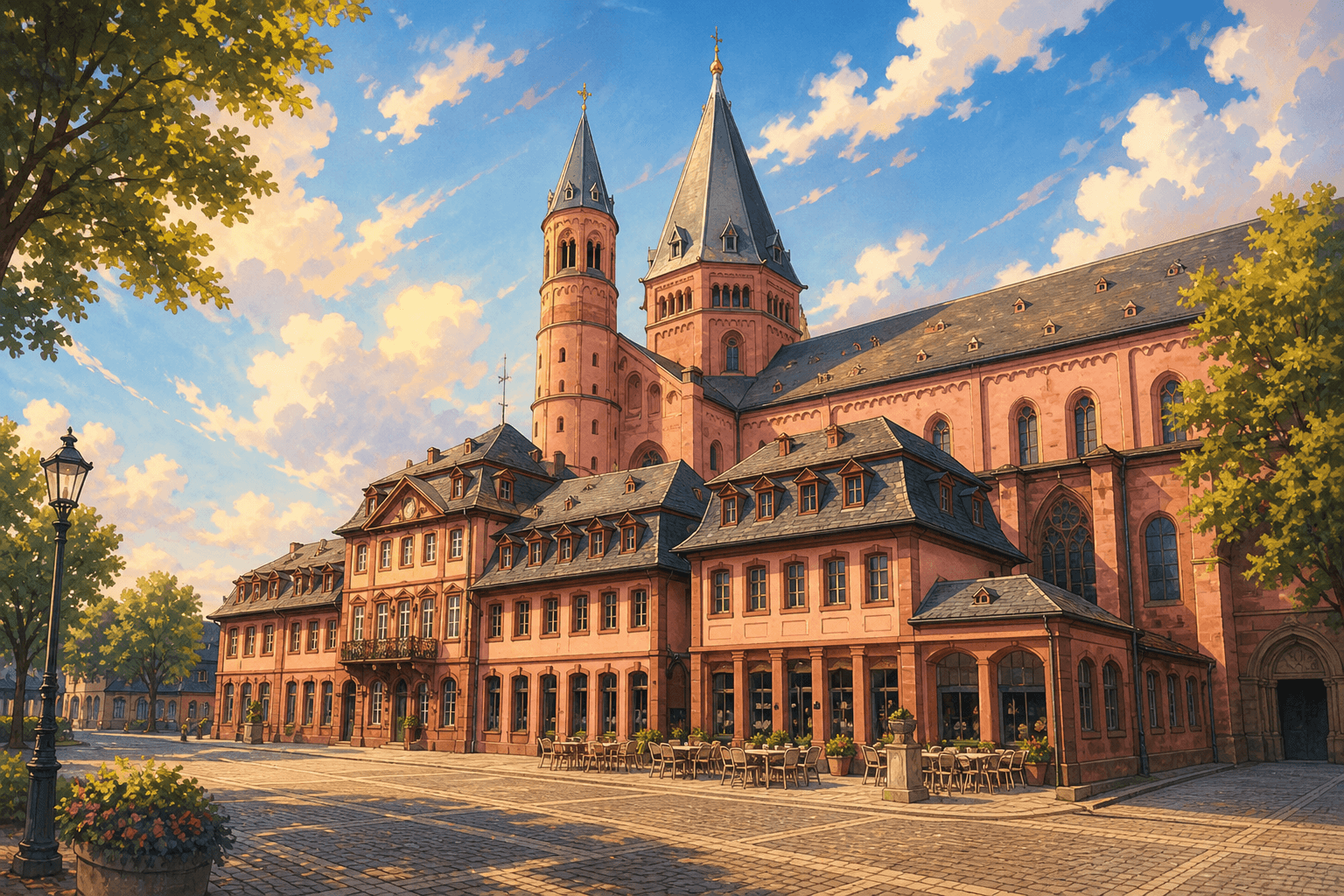
In April 2026, urban development was at the center of attention in Mainz: from barrier-free mobility measures to zoning procedures and urban green spaces. The month brought not only decisions, but also debates on planning transparency, environmental compatibility, and the protection of historical structures.
Urban Development in Mainz: April 2026 in Focus
The city of Mainz has positioned itself as a pioneer in urban innovation in recent years. In April 2026, urban development was at the center of several political discussions and decision-making processes. Topics such as barrier-free access, zoning procedures, nature conservation, and infrastructure were in the spotlight – just as were critical debates on communication, transparency, and social compatibility.
Construction Projects and Zoning: Structure, Law, and Contradictions
A central project discussed in April 2026 was the zoning plan "Stadtquartier Görresstraße / Windthorststraße (O 73)." Developed as a land-use plan for the Oberstadt district, this plan regulates building density, floor area ratios (FAR), height restrictions, and usage. The goal is to preserve the urban structure of the Ketteler-Siedlung garden city model while also examining the possibility of sustainable densification.
However, the planning process has met resistance. Critics point to legal contradictions: For instance, the designation of "family homes" as a characteristic worth protecting for the residential area is juxtaposed with the approval of several building plots for multi-family houses. Moreover, it is criticized that the planning does not sufficiently consider existing housing conditions and tree protection.
The FAR provisions vary between 0.25 and 0.8, with some areas allowing for exceedances. In WA 1 and WA 2, open-building construction ("o") is planned, while in WA 5 and WA 6, closed-building construction ("a2") is required. The plan also considers roof forms, height restrictions, and building boundaries – yet these provisions are criticized as outdated and inflexible.
Traffic Planning and Barrier-Free Access: Safety for All
Another important topic in urban development is safety and barrier-free access in traffic. In April 2026, several measures were discussed to improve the situation for people with mobility impairments. For example, a proposal for a barrier-free redesign of the pedestrian crossing at the intersection of Rheinallee and Kaisertor was the subject of debate. The goal is to make the crossing safer – especially for seniors, parents with strollers, and wheelchair users.
In addition, measures for curb cuts at bus stops were discussed. The SPD faction asked about the implementation date and the reasons for delays. In some cases, initial measures have already been implemented, yet the debate on 30 km/h zones and the creation of safe walkways remains current.
Environment and Climate Protection: From Trees to Noise Pollution
Mainz has committed itself to climate protection, and this is evident in April 2026 as well. In several projects, climate protection measures were emphasized: for instance, green roof and façade requirements were established, permeable paving was promoted, and CO₂ neutrality was set as a goal.
Special attention was given to tree protection. In total, 404 individual trees within the scope of the zoning plan O 73 were recorded, 268 of which are protected. Some of these trees have high species protection relevance, such as through cavities or nesting sites. In addition, protective measures such as root protection zones and species-appropriate lighting were proposed.
At the same time, concerns were raised about noise pollution due to the densification of construction. There are fears that the underground parking garage and additional traffic will increase noise pollution, especially in the immediate vicinity. In addition, the sound absorption provided by greenery and façade construction is mentioned.
Communication and Citizen Participation: Criticism and Improvement Proposals
A recurring topic in the meetings was the communication between the municipal administration and residents. In several cases, it was criticized that the administration had not named clear points of contact or provided sufficient information about ongoing construction projects. This was particularly perceived as a problem in the Wallaustraße: Here, the asphalt resurfacing of the road was carried out as a temporary measure, but there were no clear explanations about when the original cobblestones would be restored.
The SPD faction asked about the durability of the measure and the involvement of the residents. The administration did respond to inquiries, but there was no direct involvement at the political level. The criticism of insufficient public participation is a central issue in several zoning procedures – and an indication that Mainz still needs to improve in this area.
Conclusion: Urban Development as a Process
Urban development in Mainz is not a static state, but a dynamic process that constantly requires adjustments and debates. The projects and discussions of April 2026 show that the city remains active on several levels: from the planning of new residential districts to ensuring barrier-free access, from tree protection to improving communication with citizens.
In the future, it will depend on how the city deals with criticism, how it makes its planning more transparent, and how it finds the balance between urban growth and ecological protection. Only then can Mainz remain a livable, sustainable, and inclusive city.
NeoSearch analyses public council documents, committee minutes and municipal announcements. Source references appear automatically once verified meeting data is available.
What does this mean for businesses?
Municipal council decisions are early indicators: following the council agenda surfaces projects and tenders months before the official award — before they ever reach the procurement portals.
Track similar decisions in your region
Set up monitoring for kommunale Projekte in Rheinland-Pfalz — prefilled from this article.
Set up monitoring →More signals from Mainz
Housing Crisis in Mainz: Challenges, Deficits, and Strategies for 2026
The housing deficit in Mainz is continuing to rise while subsidized housing is declining. The city faces the challenge of creating affordable housing for all population groups – especially for senior citizens, single parents, and low-income households. A deep dive into the current situation, causes, and possible courses of action.
Read more → Youth Policy in Mainz: Playgrounds, Media Protection, and Youth Participation in April 2026
In April 2026, Mainz intensifies its focus on youth policy, emphasizing the modernization of playgrounds, strengthening media protection, and promoting youth participation in political bodies. The Youth Welfare Committee plays a central role in these efforts.
Read more → Mobility Development in Mainz – April 2026 in Focus
In Mainz, the administration is actively addressing the future of mobility. April 2026 brought numerous decisions regarding tram infrastructure, traffic calming, public transport improvements, and the development of green infrastructure. This blog post analyzes the most important developments and their impact on urban mobility.
Read more →