Urban Development in Paderborn: Plan Changes, Wind Turbines, and School Renovations in Focus
In February 2026, significant changes in urban planning in Paderborn came to the forefront – from the repeal of old zoning plans to the designation of new wind energy areas and the repurposing of a community center. This deep dive explores the backgrounds, decisions, and implications.
Urban Development in Paderborn: Changes in February 2026
Urban development and construction planning in Paderborn were at the center of numerous decisions in February 2026, with legal, social, and ecological consequences. The discussions in the Committee for Urban Development and Construction reflected the city's approach to resource management, usage concepts, and future visions. Below, the most important developments are analyzed.
Revocation and Reintroduction: Zoning Plan Renovation
The revocation of Zoning Plan No. 64 "Rohrbachweg" marks a fundamental step in the planning transformation. This plan, which had been ineffective since various amendments in the decade, was revoked for legal reasons. As a result, many previously valid provisions are now no longer in force, including sight triangles and driving bans. The area in the northeast of the city center, covering approximately 22 hectares, will now largely be assessed according to the general rules of the Building Code (BauGB). However, the Zoning Plan 37 A will apply in certain areas in the future.
At the same time, the new Zoning Plan No. 373 "Detmolder Straße / Steubenstraße" was introduced. The goal of this measure is to secure central supply areas, particularly retail. The procedure follows the simplified process of § 13 BauGB, enabling a quick implementation. Public participation is explicitly recommended, and no negative environmental consequences are expected. The Steubenstraße remains a focus: the avenue running through it is registered as a protected avenue in the avenue register.
Wind Energy: New Areas, New Challenges
Another central decision concerned the 167th amendment to the land use plan. Here, new wind energy areas were designated in Altensenne. Up to four wind turbines are to be erected there, with a minimum distance of 500 meters from residential buildings. The planning follows strict principles, including the "Rotor-out" and "Rotor-in" procedures to optimize the arrangement. The amendment is based on the Wind Energy Act (WindBG) and the Building Code (BauGB). The Mayor recommended the drafting decision, indicating broad political support.
Repurposing: From Church to School
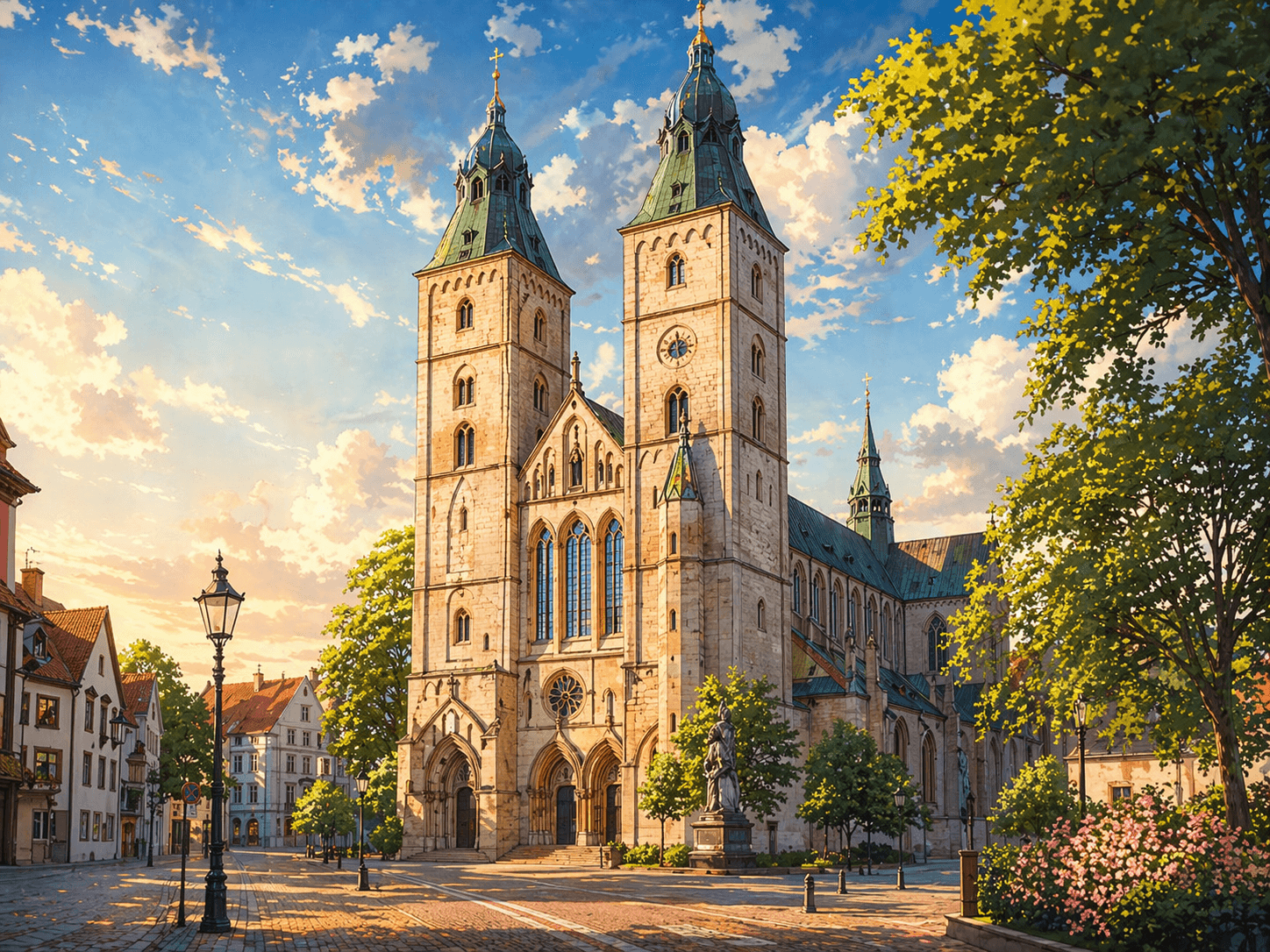
Alongside the planning for wind energy and zoning plan changes, the repurposing of the Martin-Luther-Community Center was also in focus. The building is to be converted into a three-track primary school, including the construction of a new sports hall. The location is well-connected and already accessible. The area, which includes more than 1,500 m² of schoolyard, offers space for comprehensive outdoor area planning. The repurposing is part of a broader educational policy that plans the expansion of primary school infrastructure in Paderborn.
"Construction Turbo": Accelerating the Construction Process
A politically controversial issue was the decision in principle to introduce the "Construction Turbo" procedure. The aim is to meet the housing construction demand through accelerated approval processes. The regulations are based on § 31, 34, 246e, and 36a BauGB. However, the "Construction Turbo" only applies within the inner area and is subject to conditions such as prior coordination with the city planning office. The Greens submitted an amendment proposal focusing on greater transparency and control. In addition, the decision was extended to include political consultation obligations.
Environment and Climate: Integration into Planning
Environmental and climate protection assessments played a role in several procedures. Species protection assessments, storm water protection, and climate factors were considered. It was determined that no significant interventions into the habitats of endangered species would take place. At the same time, measures for roof greening, insect-friendly lighting, and bird-protected façades were planned. Compliance with legal pruning times for shrubs during the breeding season is also mandatory.
Outlook: A City in Transition
The decisions of February 2026 show how multifaceted urban development is in Paderborn. They reflect both the challenges of the present – such as housing shortages and climate change – and the ambitions of the future. The repeal of old plans, the designation of new wind energy areas, and the repurposing of church buildings are not only technical processes but also political and social statements. In the coming months, it will depend on how these plans are implemented – and whether they meet the expectations of the citizens.
NeoSearch analyses public council documents, committee minutes and municipal announcements. Source references appear automatically once verified meeting data is available.
What does this mean for businesses?
Urban development, zoning plans and commercial settlements create early construction and supply opportunities. Following council decisions reveals projects before they go to tender.
Track similar decisions in your region
Set up monitoring for economic development in Nordrhein-Westfalen — prefilled from this article.
Set up monitoring →More signals from Paderborn
Youth Policy in Paderborn: Focus on Participation and the Future
In April 2026, youth policy initiatives and decisions were at the center of attention in Paderborn. The City Youth Council met to discuss a central topic – how young people can be actively involved in urban development. An overview of the current situation, decisions, and challenges.
Read more → Education Policy in Paderborn: Focus on Sustainability, Full-Day Schools, and Language Support
In April 2026, several central topics of education policy were in focus in Paderborn. In addition to progress in the climate protection project at municipal schools, the future of full-day schools and the introduction of ABC classes were also discussed.
Read more → Paderborn April 2026: Focus on Education, Finances, and Energy
In April 2026, Paderborn prioritized decisions in the education sector, budget consultations, and energy development. The School Committee set climate protection incentives and meal allowances, the Main and Finance Committee discussed the 2026 budget ordinance, and the GMP presented energy reports. Here are the key developments at a glance.
Read more →