Economic Development in Düsseldorf: Site Consolidation, Investor Strategies, and Future Perspectives
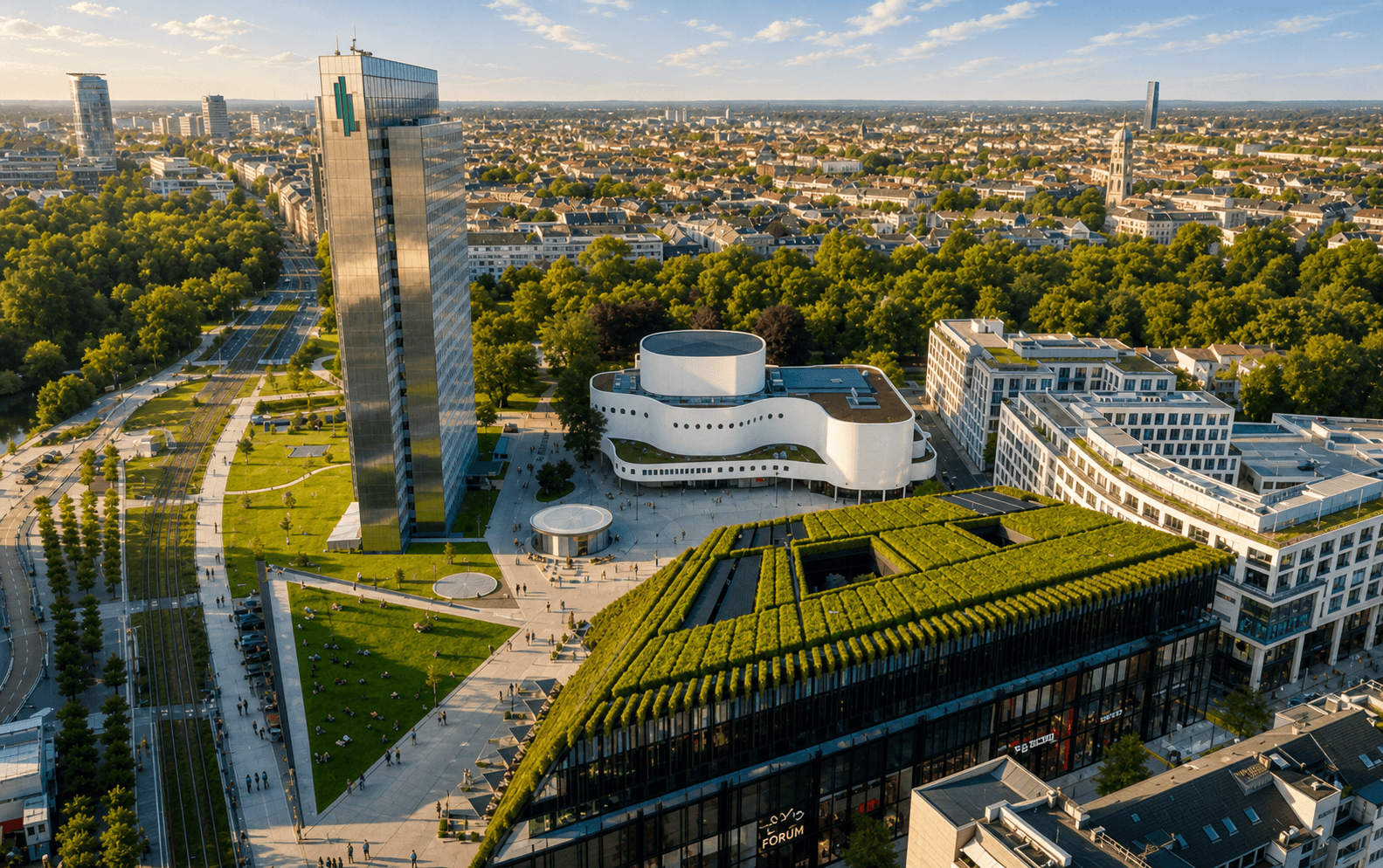
In April 2026, Düsseldorf's economic development initiatives and decisions took center stage. From the expansion of industrial core zones to communication with European cities – the blog provides an overview of the central topics, decisions, and their implications.
Economic Development in Düsseldorf: Site Consolidation, Investor Strategies, and Future Perspectives
Düsseldorf has established itself as a dynamic business location in recent years. April 2026 brought numerous decisions and initiatives that demonstrate how the city is shaping its economic future. From the protection of industrial areas to investor strategies and the promotion of socially responsible businesses – the topics are diverse and show the municipality's strategic direction.
1. Industrial and Commercial Core Zones: Securing Production Areas
A central topic in economic development is the security and further development of industrial and commercial core zones. The land use strategy adopted in 2018 has proven to be a successful model. It provides planning certainty and supports the establishment and development of production and craft-based businesses.
In April 2026, it was decided to evaluate and revise the land use strategy. In two phases – evaluation and revision – the division of core zones will be revised to better align with current requirements such as climate adaptation and land use efficiency. In addition, it is being examined whether the industrial and commercial core zone east of Niederrheinstraße can be extended to the area of Niederrheinstraße 98 to 126. The goal is to enable small and medium-sized businesses to settle and counteract land use displacement by residential construction.
2. Investor Strategies and Land Allocation
The city is pursuing strategic land allocations to attract investors and at the same time strengthen economic diversity. An example is the investor selection process for the Luisen-Gymnasium site (Bastionstraße 24). With a minimum bid of 27.5 million euros and an evaluation of concepts and purchase prices (80 points for purchase price, 20 for concept), the former school grounds will be redeveloped for retail, culture, services, office use, and possibly residential use.
In addition, several plots are currently in contract negotiations, including the Nagelshof and the site on Friedrich-von-Spee-Straße. These projects consider not only economic benefits but also social and sustainable aspects. For example, subsidized housing for fire department personnel is being planned.
3. Municipal Economic Offensive: From Application to Rejection
The FDP Council faction submitted a proposal at the end of March 2026 for a municipal economic offensive aimed at strengthening Düsseldorf as a business location. The offensive was to include, among other things, reducing bureaucracy, supporting start-ups, and improving the retail climate. Although the proposal was rejected by a majority, it still shows the political discussions taking place. The rejection underlines the complexity of gaining political approval for comprehensive economic strategies, particularly when additional resources or coordination are required.
4. Networking at the European Level
Düsseldorf is not only regionally, but also internationally connected. In April 2026, the Economic Development Committee decided to appoint delegates for the RGRE (Regional Group of European Cities) to the annual conferences of the city network EUROCITIES. The goal is to deepen European networking and represent Düsseldorf's interests at the European level. This decision shows how much the city relies on global and regional cooperation to strengthen its economic position.
Conclusion: Stability and Innovation in the Business Location Düsseldorf
April 2026 has shown that Düsseldorf is focusing both on securing existing economic structures and developing new investment strategies. Whether through the land use strategy for industrial core zones, communication with European cities, or targeted land allocation – the city is working on a long-term, sustainable economic development.
In the future, it will be crucial to further develop these strategies and adapt them to new challenges such as climate change, digitalization, and demographic change. Düsseldorf has the prerequisites for this – now it is a matter of consistently implementing them.
NeoSearch analyses public council documents, committee minutes and municipal announcements. Source references appear automatically once verified meeting data is available.
What does this mean for businesses?
Urban development, zoning plans and commercial settlements create early construction and supply opportunities. Following council decisions reveals projects before they go to tender.
Track similar decisions in your region
Set up monitoring for economic development in Nordrhein-Westfalen — prefilled from this article.
Set up monitoring →More signals from Duesseldorf
Educational Policy in Düsseldorf: Safety, Capacity, and Innovation in Focus
In April 2026, educational policy in Düsseldorf focused on safety issues, capacity expansion at special needs schools, and innovative projects to prevent school avoidance. The School Committee addressed central challenges and reform approaches that will shape the future of the educational system in the state capital.
Read more → Youth Policy in Düsseldorf: Focus on Psychosocial Support, Democracy, and Poverty Reduction in April 2026
In April 2026, Düsseldorf has taken several key steps in youth policy. From psychosocial support for young people to the implementation of democracy projects and the fight against child poverty: The Youth Welfare Committee is setting impulses for a resilient and livable city for young people.
Read more → Düsseldorf's Integration and Housing Policy in April 2026: Focus on Participation, Antiracism, and Legal Security
In an intense April 2026, Düsseldorf took decisive steps in integration and social policy. The focus was on issues such as antiracism, linguistic and social integration, legal security in homeless shelters, and the strengthening of migrant organizations. The Committee for Equal Opportunities and Integration made key decisions that will shape future policy.
Read more →