Climate and Environmental Policy in Düsseldorf: Focus on Mobility, Trees, and Climate Protection 2026
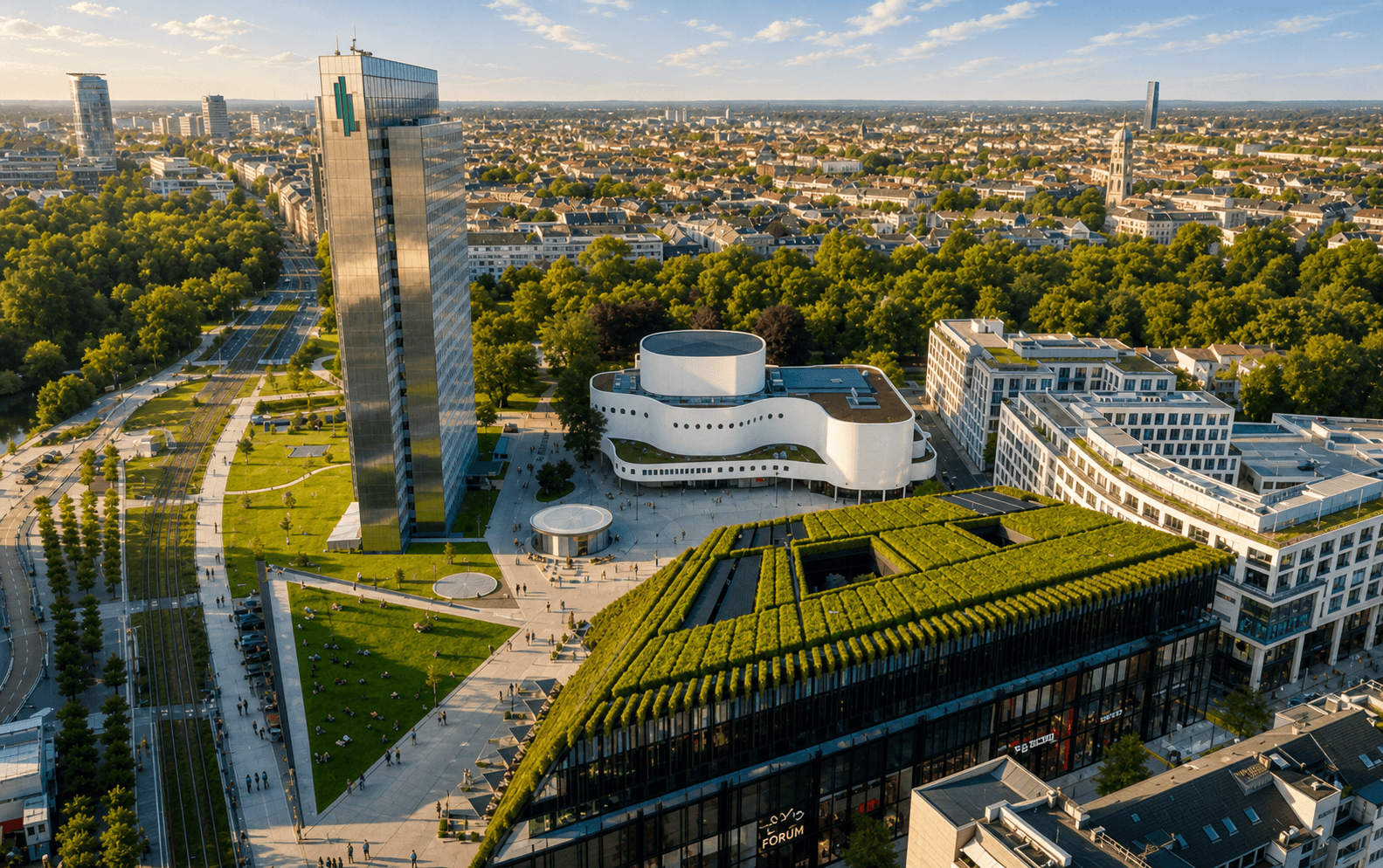
In February 2026, Düsseldorf focused intensively on climate protection, green infrastructure, and traffic policy. This blog analyzes the most important decisions and developments in the city's environmental and climate policy in February 2026.
Climate Protection, Green Infrastructure, and Traffic Policy in Düsseldorf: The Focus of February 2026
In February 2026, Düsseldorf intensified its efforts to improve climate and environmental conditions. The city is pursuing a broad range of green investments, construction projects, and political decisions aimed at sustainability and climate protection. Particularly notable developments are observed in the areas of mobility, tree care, and climate protection programs. Below is an analysis of the most important topics.
Electric Mobility and Charging Infrastructure: A Central Climate Protection Measure
Düsseldorf has set itself the goal of becoming climate-neutral by 2035. A central pillar of this strategy is the expansion of charging infrastructure for electric vehicles. In February 2026, several new charging stations were installed in district 7 and Gerresheim, including at Keldenichstraße, Unter den Eichen, Benderstraße, and Kölner Tor.
The administration emphasizes that the utilization rate of existing charging stations is high, making a denser infrastructure necessary. Statistical evaluations of usage times are planned to assess the effectiveness of the measures. The authority responsible for installation is the Office for Traffic Management, demonstrating that the city is pursuing a coordinated approach.
Climate Protection Program 2035: Criticism of Budget Cuts
During the 2026 budget discussions, there was strong criticism of the cuts to the Climate Protection Program 2035. The parliamentary group DIE LINKE. called for the reversal of the cuts, which, according to their own assessment, affect investments in the renovation of municipal buildings and watercourse restoration.
The criticism also targeted the lack of funds to meet the World Health Organization’s air quality guidelines starting in 2030. While Düsseldorf has set itself the goal of becoming climate-neutral by 2035, the current financing is considered insufficient. A study by the Federal Ministry for Economic Affairs and Climate Action (BMWK) also warns that climate change could cost Germany up to 900 billion euros – a figure that must continue to sensitize political decision-makers.
Green Spaces and Trees: Protection and Renewal
In February 2026, trees and green infrastructure were also in the spotlight. In district 7, six trees were cut down due to fungal infestation or lack of structural stability. The felling was carried out after checking for nesting hollows, and replanting is planned.
Another project is the relocation of the youth pavilion in the park "Alter Gerresheimer Friedhof," which will be planted with a willow tree. The pavilion lacks visual privacy and is hardly used by young people. The initiative is supported by the Participation Office and the Evangelical Church.
Even in construction projects such as the establishment of a production kitchen at the LVR Hospital or new buildings for trainees and students, replacement planting is being considered. The city emphasizes that green infrastructure is not only ecologically but also socially valuable.
Traffic Policy: Safety and Sustainability in Conflict
Traffic policy in Düsseldorf in February 2026 was marked by conflicts between safety and sustainability. A no-parking zone was approved at Marthastraße/Ecke B 7 to improve traffic conditions. The measure is intended to ensure compliance with the road traffic regulations, especially during ongoing construction work on the Bergische Landstraße.
In district 7, measures to improve conditions for cyclists are also planned: a cycle ford on Morper Straße, pictogram lanes on Bertastraße and in Zamenhofweg, and the restoration of Dernbuschweg. The latter was severely damaged by heavy rain and has been included in the state's reconstruction plan.
At the same time, technical limitations are evident: due to insufficient road widths, for example, cyclist zones at traffic lights cannot be established. The administration is therefore examining alternative solutions and plans to await the results of a test phase for pictogram lanes in Wittlaer.
Conclusion: Sustainability as a Central Future Topic
February 2026 shows that Düsseldorf is dealing with climate and environmental issues with strong and comprehensive commitment. Whether it is electric mobility, green infrastructure, or climate protection programs – the city is pursuing a wide range of measures aimed at sustainability and climate protection. At the same time, it becomes clear that political compromises and technical limitations often stand in the way.
The future viability of Düsseldorf depends strongly on how well the city can balance growth, safety, and climate protection in the coming years. February 2026 is a step in the right direction, but the challenges remain significant.
NeoSearch analyses public council documents, committee minutes and municipal announcements. Source references appear automatically once verified meeting data is available.
What does this mean for businesses?
Municipal heat planning, photovoltaics and climate measures create early project indicators. Following council decisions surfaces sites and tenders before they are publicly advertised.
Track similar decisions in your region
Set up monitoring for environment & climate in Nordrhein-Westfalen — prefilled from this article.
Set up monitoring →More signals from Duesseldorf
Educational Policy in Düsseldorf: Safety, Capacity, and Innovation in Focus
In April 2026, educational policy in Düsseldorf focused on safety issues, capacity expansion at special needs schools, and innovative projects to prevent school avoidance. The School Committee addressed central challenges and reform approaches that will shape the future of the educational system in the state capital.
Read more → Youth Policy in Düsseldorf: Focus on Psychosocial Support, Democracy, and Poverty Reduction in April 2026
In April 2026, Düsseldorf has taken several key steps in youth policy. From psychosocial support for young people to the implementation of democracy projects and the fight against child poverty: The Youth Welfare Committee is setting impulses for a resilient and livable city for young people.
Read more → Düsseldorf's Integration and Housing Policy in April 2026: Focus on Participation, Antiracism, and Legal Security
In an intense April 2026, Düsseldorf took decisive steps in integration and social policy. The focus was on issues such as antiracism, linguistic and social integration, legal security in homeless shelters, and the strengthening of migrant organizations. The Committee for Equal Opportunities and Integration made key decisions that will shape future policy.
Read more →