Düsseldorf's Urban Development in April 2026: Housing, Mobility, and Sustainable Urban Planning
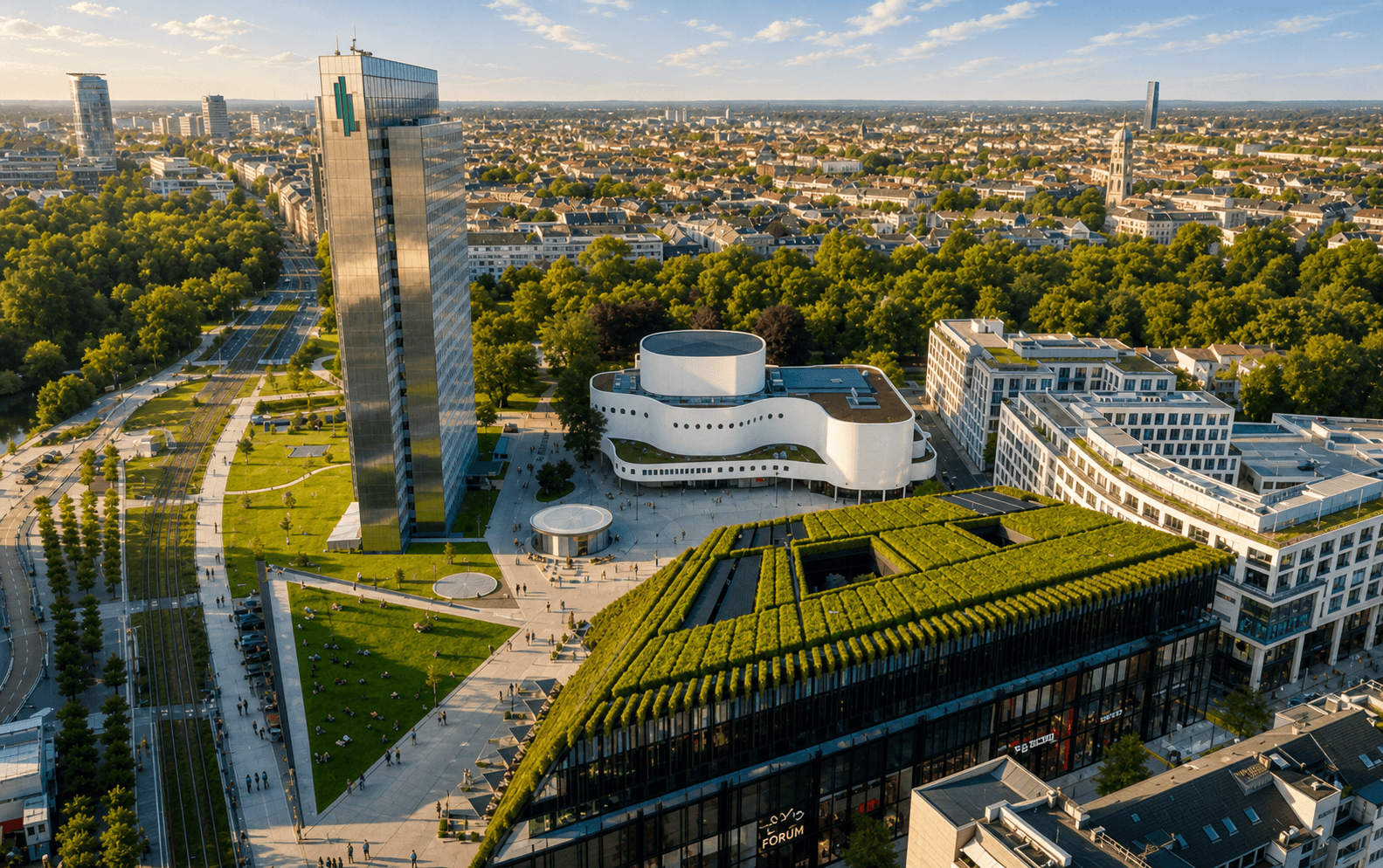
In April 2026, the city of Düsseldorf initiated significant steps toward sustainable urban development in several districts. From bike lanes and social preservation regulations to green infrastructure measures – the decisions illustrate how the state capital is addressing its urban challenges.
Düsseldorf's Urban Development in April 2026 – Analysis of Key Topics
Düsseldorf has once again proven itself to be an active shaper of its urban future in April 2026. A wide range of measures were approved in the district committees and councils, addressing both mobility and the social and ecological aspects of urban development. In the following, we analyze the central themes that were significantly shaped in April 2026.
1. Bicycle-Friendly Mobility Policy – From Reallocations to Düsselbike Stations
Düsseldorf is making clear strides in its bicycle policy. For example, in District Committee 6, the Wilhelm-Raabe-Straße was redesignated as a bicycle street, enabling a significant relief of main traffic roads and improving the connectivity of cycling corridors. In addition, a footpath in the area of Mörsenbroicher Weg was opened to cyclists in both directions, significantly improving accessibility to the Alten Kaserne area.
Furthermore, Düsselbike stations were planned in District 2, offering cyclists not only rental vehicles but also repair and information services. The establishment of such mobility stations is a step toward multimodal transport solutions and strengthens Düsseldorf's goal of becoming a climate-neutral city by 2030.
2. Social Urban Development – Preservation Ordinances and Affordable Housing
Another central topic was the social preservation ordinance for the Neuwerker Straße in Heerdt. The proposal by BÜNDNIS 90/Die Grünen aims to cushion displacement processes caused by rising rents and property prices. Such ordinances are an important tool for preserving social diversity in urban districts and ensuring access to affordable housing.
In addition, several building applications for multi-family homes, including subsidized housing units, were approved. For instance, a new construction with 11 apartments was realized at Wilseder Weg 7, offering covered bicycle parking and barrier-free access. These measures show how Düsseldorf is responding to the growing demand for affordable and barrier-free housing.
3. Green Spaces and Ecological Compensation Measures – From Pocket Parks to Unsealed Surfaces
The city is increasingly recognizing the importance of green infrastructure. For example, a pocket park along the Kalkumer Straße was included in the planning, aiming to improve the quality of public space and serve as an ecological compensation measure. Additionally, a proposal for the unsealing of public areas was adopted to reduce heat islands and improve rainwater management.
Another important project was the tree planting in Niederkasseler Straße, which not only enhances the quality of the public space but will also serve as a climate compensation measure. Such initiatives are a key component of Düsseldorf's climate protection strategy and demonstrate how the city is taking responsibility for nature.
4. Citizen Participation and Transparency – Live Broadcasts and Symbolic Naming
To strengthen democratic participation, a proposal for the live broadcast of meetings on the city's website and YouTube was approved in District Committee 6. This allows for greater participation, especially for those with disabilities or who cannot attend in person.
Another symbolic project was the naming of a nameless square in Unterrath after the former mayor Marie Luise Smeets. Such initiatives not only contribute to remembrance culture but also strengthen local awareness of historical figures.
Conclusion: A City in Transition – Sustainable, Social, and Transparent
In April 2026, Düsseldorf has shown that it is ready to actively and forward-lookingly shape its urban development. From strengthening bicycle infrastructure and expanding social housing support to green and participatory solutions – the decisions reflect a city looking toward its future.
The challenges remain significant, particularly in terms of affordable housing and climate protection. Yet with the approved projects and initiatives, Düsseldorf has chosen a clear course: a city that is there for everyone, operates sustainably, and remains transparent.
NeoSearch analyses public council documents, committee minutes and municipal announcements. Source references appear automatically once verified meeting data is available.
What does this mean for businesses?
Municipal council decisions are early indicators: following the council agenda surfaces projects and tenders months before the official award — before they ever reach the procurement portals.
Track similar decisions in your region
Set up monitoring for kommunale Projekte in Nordrhein-Westfalen — prefilled from this article.
Set up monitoring →More signals from Duesseldorf
Educational Policy in Düsseldorf: Safety, Capacity, and Innovation in Focus
In April 2026, educational policy in Düsseldorf focused on safety issues, capacity expansion at special needs schools, and innovative projects to prevent school avoidance. The School Committee addressed central challenges and reform approaches that will shape the future of the educational system in the state capital.
Read more → Youth Policy in Düsseldorf: Focus on Psychosocial Support, Democracy, and Poverty Reduction in April 2026
In April 2026, Düsseldorf has taken several key steps in youth policy. From psychosocial support for young people to the implementation of democracy projects and the fight against child poverty: The Youth Welfare Committee is setting impulses for a resilient and livable city for young people.
Read more → Düsseldorf's Integration and Housing Policy in April 2026: Focus on Participation, Antiracism, and Legal Security
In an intense April 2026, Düsseldorf took decisive steps in integration and social policy. The focus was on issues such as antiracism, linguistic and social integration, legal security in homeless shelters, and the strengthening of migrant organizations. The Committee for Equal Opportunities and Integration made key decisions that will shape future policy.
Read more →