Düsseldorf's Energy and Supply Policy in January 2026: Sustainability in Focus
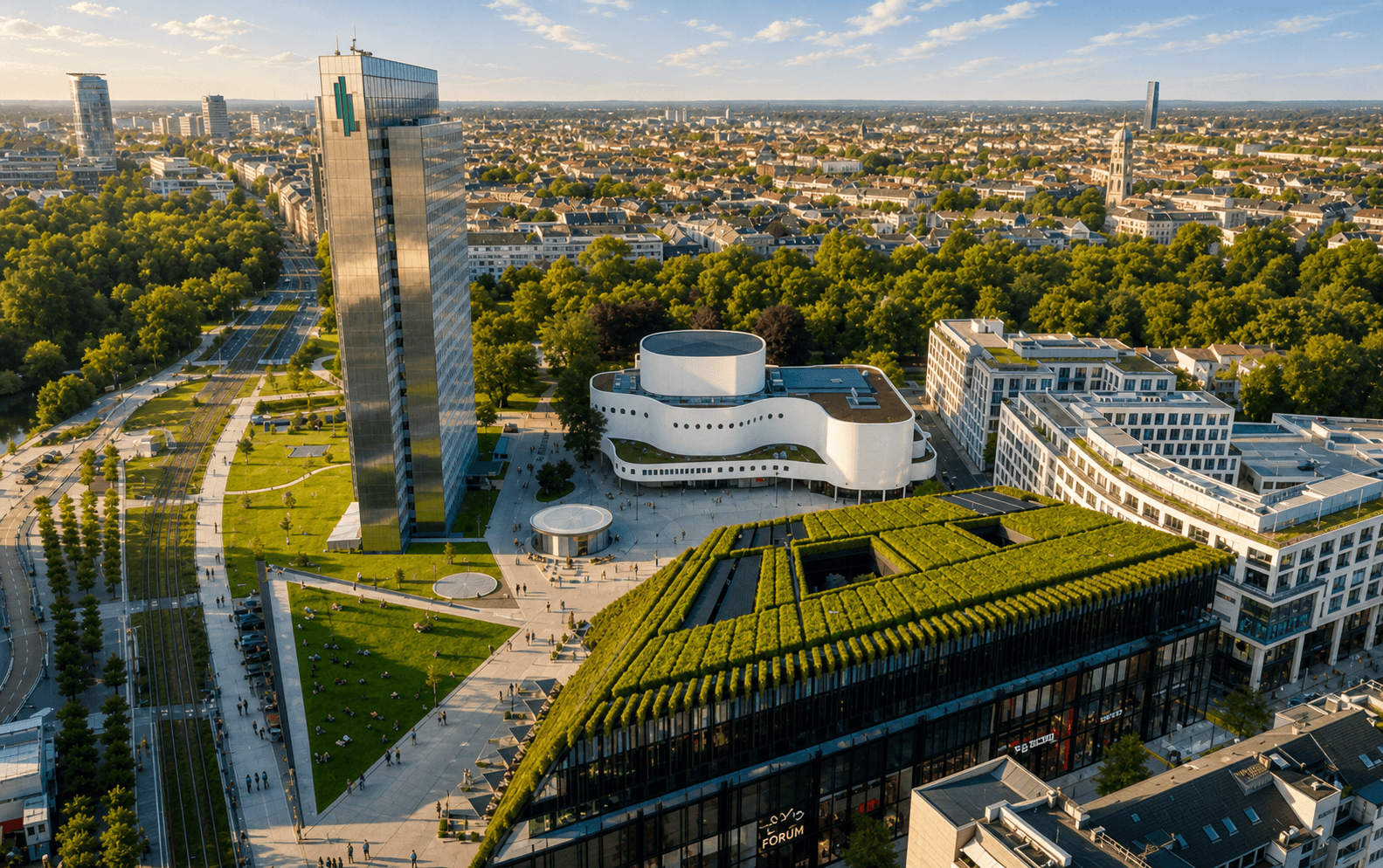
In January 2026, the city of Düsseldorf took decisive steps in its energy and supply policy toward climate neutrality and sustainable infrastructure. From the construction of new energy-efficient buildings to the renewal of sewage treatment plants – the city policy demonstrates a clear commitment to innovation and environmental responsibility.
Climate Neutrality as a Building Block for Urban Development
Energy and supply policy in Düsseldorf has become increasingly important in recent years, particularly against the backdrop of the federal republic's climate targets and the local climate protection strategy. In January 2026, several projects and decisions were made that pave the way for sustainable and energy-efficient urban development. The topics range from the renovation of historical buildings and the modernization of sewage treatment plants to investments in renewable energy.
Sustainable Construction Concepts: Green Roofs, PV Systems, and Heat Pumps
A central project is the planning and construction implementation of energy-efficient new buildings and renovations. A new building is being constructed with extensive green roofs and photovoltaic systems, allowing the roofs to serve not only as an energy source but also to contribute to biodiversity. The PV system has a capacity of 108 kWp and is part of cost group 1000 (Other Costs), supported by the Climate Protection Budget and the KfW Bank.
Heat generation is achieved through an air-to-water heat pump using refrigerant R32, enabling a complete shift away from fossil fuels. The lighting in the building and the surrounding area has been fully converted to LED technology, supplemented by presence detectors and daylight-dependent control. In addition, a floor heating system is being used, which has a lower energy demand compared to conventional systems.
The planning also emphasizes the use of mineral insulation materials to avoid environmental burdens caused by organic insulation materials such as polystyrene. Circular building materials and solid construction methods contribute to sustainability. The DGNB Gold certification underlines the quality and sustainability of the new buildings.
Cost Development and Financing: Challenges and Solutions
Despite the clear goals for sustainability and climate protection, several projects faced financial challenges. In a project with total costs of 53.145 million euros, costs increased by 45% compared to the implementation and financing decision of 2020. The main causes were price increases, construction delays, and contractor cancellations in the heating, cooling, and sanitary sectors.
The additional costs were partially covered by reallocating maintenance funds (800,000 EUR) and operational surpluses (600,000 EUR). The remainder was financed from unplanned funds. In the field of technical building equipment (TGA), additional costs of about 200,000 EUR arose, mainly due to faulty installations and legal advisory costs.
This financing strategy shows how the city of Düsseldorf deals with unexpected costs – through flexible reallocation of funds and clear prioritization of climate protection measures.
Modernization of Sewage Treatment Plants and Water Infrastructure
In addition to construction measures, investments in water and wastewater infrastructure were also decided. The renewal of the process control technology at the sewage treatment plants, water supply at the North Sewage Treatment Plant, and the assessment of the operating water supply at the South Sewage Treatment Plant are examples of technological progress in the city's water supply. In addition, a project for the flood protection wall in Kaiserswerth was approved, serving as a protection measure against heavy rain events.
Another highlight is the lecture on the topic of "Energy Neutrality of Sewage Treatment Plants," which was offered in January and emphasizes the importance of energy-independent wastewater treatment. The Düsseldorf Municipal Sewerage Company (SEBD) has also approved its 2024 annual report and released the operations director, demonstrating the company's financial and operational stability.
Outlook: A City in Transition
The energy and supply policy in Düsseldorf in January 2026 marks another step toward climate neutrality and sustainable infrastructure. The combination of energy-efficient construction concepts, investments in renewable energy sources, and the modernization of water infrastructure shows how a city can respond to the challenges of climate change.
In the future, it will be particularly important to implement the planned measures in practice and to keep cost developments under control. At the same time, the KfW funding and the Climate Protection Budget offer further financial flexibility to achieve ambitious climate protection goals.
NeoSearch analyses public council documents, committee minutes and municipal announcements. Source references appear automatically once verified meeting data is available.
What does this mean for businesses?
Municipal council decisions are early indicators: following the council agenda surfaces projects and tenders months before the official award — before they ever reach the procurement portals.
Track similar decisions in your region
Set up monitoring for Energy and Utilities in Nordrhein-Westfalen — prefilled from this article.
Set up monitoring →More signals from Duesseldorf
Educational Policy in Düsseldorf: Safety, Capacity, and Innovation in Focus
In April 2026, educational policy in Düsseldorf focused on safety issues, capacity expansion at special needs schools, and innovative projects to prevent school avoidance. The School Committee addressed central challenges and reform approaches that will shape the future of the educational system in the state capital.
Read more → Youth Policy in Düsseldorf: Focus on Psychosocial Support, Democracy, and Poverty Reduction in April 2026
In April 2026, Düsseldorf has taken several key steps in youth policy. From psychosocial support for young people to the implementation of democracy projects and the fight against child poverty: The Youth Welfare Committee is setting impulses for a resilient and livable city for young people.
Read more → Düsseldorf's Integration and Housing Policy in April 2026: Focus on Participation, Antiracism, and Legal Security
In an intense April 2026, Düsseldorf took decisive steps in integration and social policy. The focus was on issues such as antiracism, linguistic and social integration, legal security in homeless shelters, and the strengthening of migrant organizations. The Committee for Equal Opportunities and Integration made key decisions that will shape future policy.
Read more →