Housing in Transition: Salzhausen's Urban Development in February 2026
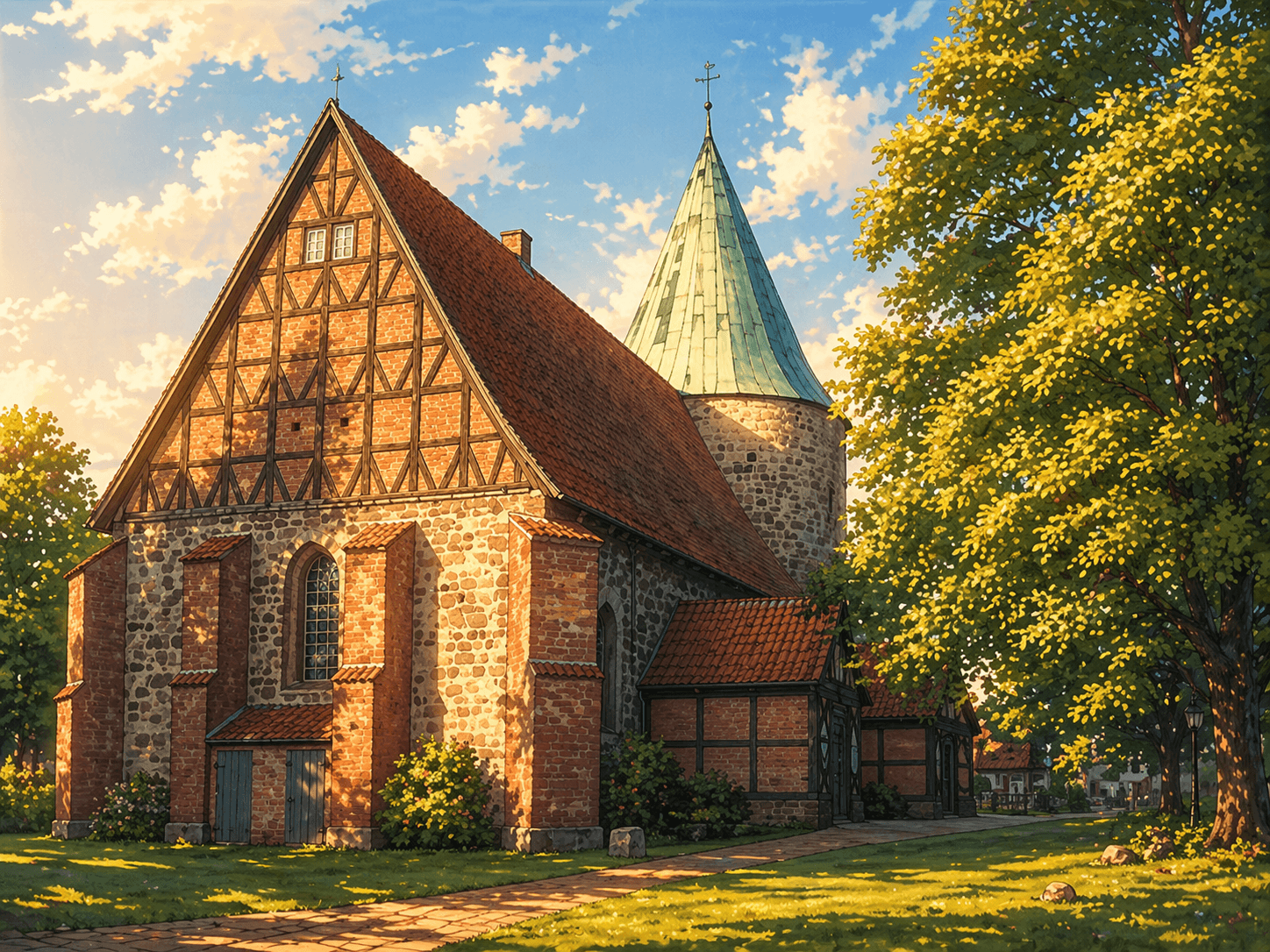
In February 2026, the municipality of Salzhausen set several milestones in urban development. The adopted zoning plans, climate protection measures, and traffic adjustments show a clear focus on sustainable, affordable, and future-oriented urban planning.
Housing in Transition: Salzhausen's Urban Development in February 2026
Urban development in Salzhausen has clearly accelerated in recent months. In February 2026, important meetings of the Planning and Building Committee were held, in which several zoning plans were significantly advanced. The municipality is pursuing a clear goal: the creation of affordable housing, the integration of renewable energies, and the assurance of a livable environment for all residents. These developments are reflected in the adopted plans.
Compact Development and Climate Protection: Kampweg-Ost as a Model Project
Zoning Plan No. 44 "Kampweg-Ost" marks one of the central decisions of the month. Covering an area of 1.31 hectares, a new residential area is being created on the eastern edge of Oelstorf. The development is limited to single and twin-family homes, with roof pitches ranging between 30 and 60 degrees. A central requirement of the plan is the mandatory installation of photovoltaic systems on all new buildings. In addition, a compensation area is being established in Putensen to take nature conservation into account. This measure is planned for spring 2026 and underscores Salzhausen's commitment to sustainable development.
Housing for the Future: Bauturbo Initiative Accelerates Construction
Another focus was the Bauturbo Initiative, which was adopted in accordance with § 246e of the German Building Code (BauGB). The goal is to accelerate new housing construction in strategically important areas such as Lüneburger Straße, Winsener Straße, Bahnhofstraße, and Oelstorfer Landstraße. The ratio between residential units and plot size is being abolished to allow for greater flexibility in densification. The initiative was approved with 5 votes in favor and 2 abstentions, showing that the municipality is ready to take innovative steps to meet the growing housing demand.
Mixed-Use Areas and Business: Zoning Plan Lüneburger Straße is Revised
Zoning Plan No. 13 "Lüneburger Straße" was adopted in its 7th amendment. The goal is the careful densification of the mixed-use area. The floor area ratio (GRZ) has been adjusted in the MI zones, with a maximum GRZ of 0.7 allowed for commercial properties. The densification is in line with the state spatial planning guidelines, with the preservation of existing craft businesses also in focus. In addition, the municipal housing company (KWG) plans to build a multi-family house with approximately 15 residential units to strengthen the housing supply in Salzhausen.
Infrastructure and Traffic: Accessibility and Noise Protection in Focus
In addition to housing planning, infrastructure issues were also in the foreground. The expansion of the fiber-optic network posed challenges for sidewalks and streets, while the 30 km/h initiative on Lüneburger Straße was discussed. In addition, a roundabout was planned, the approval of which is still pending. The suggestion to install speed cameras in the town center shows an awareness of the safety of residents. Snow removal and responsibilities between the municipality and property owners were also discussed.
Outlook: Sustainability and Flexibility as Key
The decisions of February 2026 show a clear trend in Salzhausen's urban development: sustainability, flexibility, and resident orientation. The municipality is relying on modern building regulations that combine climate protection and energy efficiency and integrates social and ecological aspects into its planning. The Bauturbo Initiative and the densification of mixed-use areas are milestones that pave the way for future-oriented urban planning. With these measures, Salzhausen is positioning itself not only as a pioneer in the rural area but also as a model for sustainable housing planning in Lower Saxony.
NeoSearch analyses public council documents, committee minutes and municipal announcements. Source references appear automatically once verified meeting data is available.
What does this mean for businesses?
Urban development, zoning plans and commercial settlements create early construction and supply opportunities. Following council decisions reveals projects before they go to tender.
Track similar decisions in your region
Set up monitoring for economic development in Niedersachsen — prefilled from this article.
Set up monitoring →More signals from Salzhausen
Budget Planning in Salzhausen: Extra and Unplanned Expenditures in Focus
In April 2026, important decisions regarding the 2024 budget were at the forefront in Salzhausen. The Council of the municipality of Toppenstedt, part of the city of Salzhausen, approved extra and unplanned expenditures amounting to over 100,000 euros. We analyze the background, structure, and implications of these decisions.
Read more → Mobility in Salzhausen: New Developments in Public Transport
In April 2026, important decisions and reports on mobility were central to discussions in Salzhausen. The Committee for Order, Social Affairs, and Mobility addressed the development of the HVV Hop Elbe-Heide, the Heideshuttle Rings 5 and 6, and other transportation projects.
Read more → Governance and Administration in Salzhausen: A Key Appointment
In April 2026, the municipal administration of Salzhausen faced an important decision: the appointment of a new temporary civil servant as General Substitute for the Mayor of the Samtgemeinde. This in-depth blog explores the background, process, and significance of the decision for local governance.
Read more →