Bicycle Policy in Lüneburg: How the City is Positioning Itself for Climate-Friendly Mobility
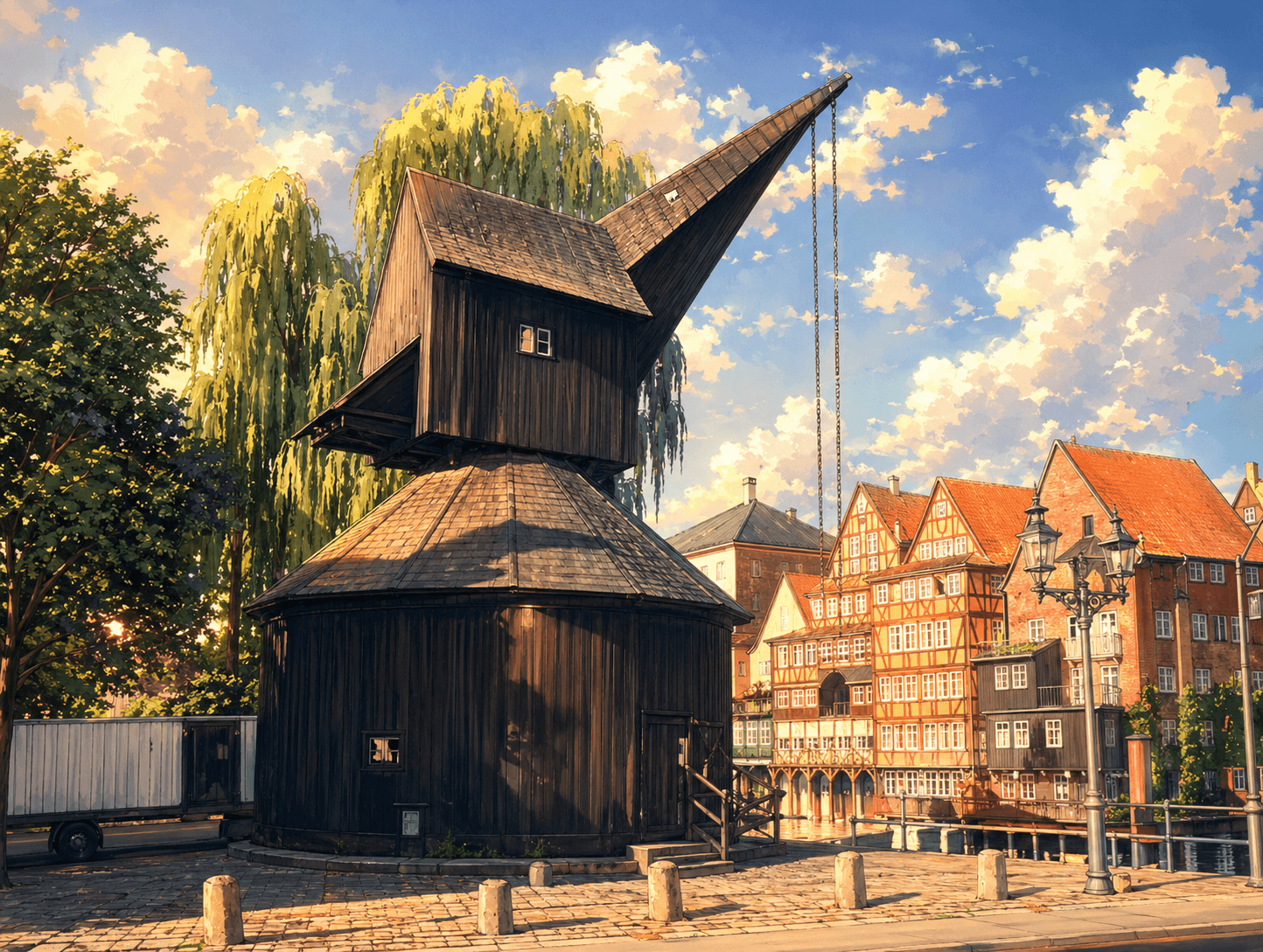
In March 2026, Lüneburg took decisive steps toward environmentally friendly and barrier-free mobility. The expansion of the bicycle ring, funding from federal resources, and the integration of modal filters and barrier-free solutions demonstrate how the city is concretely implementing its mobility strategy.
Bicycle Ring Lüneburg: A Key Measure for Climate-Friendly Mobility
Lüneburg has established itself in recent years as a pioneer in environmentally friendly transportation policy. A central pillar of these developments is the expansion of the Lüneburg Bicycle Ring. In March 2026, key planning steps were decided that will advance the development of cycling infrastructure across the board.
The sections Marienplatz – Am Ochsenmarkt including Bardowicker Straße and Altenbrückertorstraße/Ilmenaustraße are particularly noteworthy in this context. In these areas, new bicycle traffic facilities are being created that not only increase safety but also improve barrier-free accessibility and the quality of public spaces. The administration has been tasked with advancing the planning process up to performance phase 6 in accordance with § 47 HOAI, while preserving historical elements such as tree rows and planting islands.
Funding and Support: How Lüneburg is Financing the Expansion
The bicycle ring is associated with a total volume of 3.23 million euros. The financial implementation is closely linked to federal funding: 2.64 million euros come from the "Climate Protection through Cycling" program, which runs until 2029. The remaining funds are provided from the city's budget plans: several hundred thousand euros each in 2025, 2026, and 2027 for underground infrastructure and additional investments in street barriers.
This funding is not self-executing. It requires that the city implement the measures within the funding period and carry out planning steps in a timely manner. The investment number 541-516 is a central planning focus here, and it also plays a role in the budget reports for the years 2025–2027.
Mobility Strategy 2035: The City's Vision
Lüneburg has set clear goals for itself in its Cycling Mobility Strategy 2035: a safe, affordable, and barrier-free mobility system that combats climate change and improves quality of life. This vision is closely linked to the Sustainable Urban Mobility Plan (NUMP), which is aligned to 2040.
Core topics of the strategy include:
- City of Short Distances: Through a dense cycling infrastructure, commuters should no longer be dependent on cars.
- Climate-Friendly Transport: The expansion of cycling infrastructure is a key component in reducing the share of motorized individual transport (MIV).
- Barrier-Free Accessibility and Safety: All measures take into account barrier-free pathways, safe crossings, and protection from accidents.
Implementing this strategy is not only a political goal but also a technical and financial challenge. It requires close cooperation between the administration, planners, funding providers, and the population.
Communication and Public Participation: How Lüneburg Stays on Course
Implementing the mobility strategy is not only a technical project but also a communication process. Lüneburg is relying on public participation and transparency to ensure acceptance of the changes. In March 2026, information events were held in which the plans for the bicycle ring were presented.
In addition, part of the planning was to have the proposals discussed early on in the Mobility Committee and the Working Group on Traffic. These processes are crucial to identifying potential conflicts early and finding solutions. Communication with the population remains a central factor for the long-term acceptance of the measures.
Conclusion: A City in Transition
Lüneburg is demonstrating through the expansion of the bicycle ring, funding from federal resources, and the integration of barrier-free solutions how a modern city can commit itself to climate-friendly mobility. The measures are not only a step toward sustainability but also a sign of the city's willingness to take responsibility for the future.
In the coming years, it will depend on whether the planning steps are implemented in a timely manner and whether the population perceives the changes as a gain. With the Mobility Strategy 2035 and the NUMP, Lüneburg has set a clear course – now it is about consistently following this course.
NeoSearch analyses public council documents, committee minutes and municipal announcements. Source references appear automatically once verified meeting data is available.
What does this mean for businesses?
Urban development, zoning plans and commercial settlements create early construction and supply opportunities. Following council decisions reveals projects before they go to tender.
Track similar decisions in your region
Set up monitoring for economic development in Niedersachsen — prefilled from this article.
Set up monitoring →More signals from Lueneburg
Lüneburg's Path into the Future of Care – April 2026
In April 2026, Lüneburg sets key impulses for a forward-looking design of care. The Hospital St. Nikolaihof Foundation presents the Senior and Care Support Center (SPN) and provides insights into the implementation of funding applications. An overview of current developments in the field of health and public health.
Read more → Lüneburg's Urban Development: Between Renovation, New Construction, and Climate Protection
In April 2026, Lüneburg has taken decisive steps in urban development and construction planning – from the renovation of the IGS Kreideberg to the redesign of the Wagenplatz in the northwest of the city. An overview of the most important topics, backgrounds, and consequences.
Read more → Education Policy in Lüneburg: School Development and Full-Day Schools in April 2026
In April 2026, Lüneburg made significant progress in education policy. The joint school development process of the Hanseatic city and the district, as well as the implementation of the legal entitlement to full-day care at primary schools, were central topics. These measures demonstrate how Lüneburg is responding to future challenges in education.
Read more →