Wiesbaden in Focus: Monthly Review February 2026
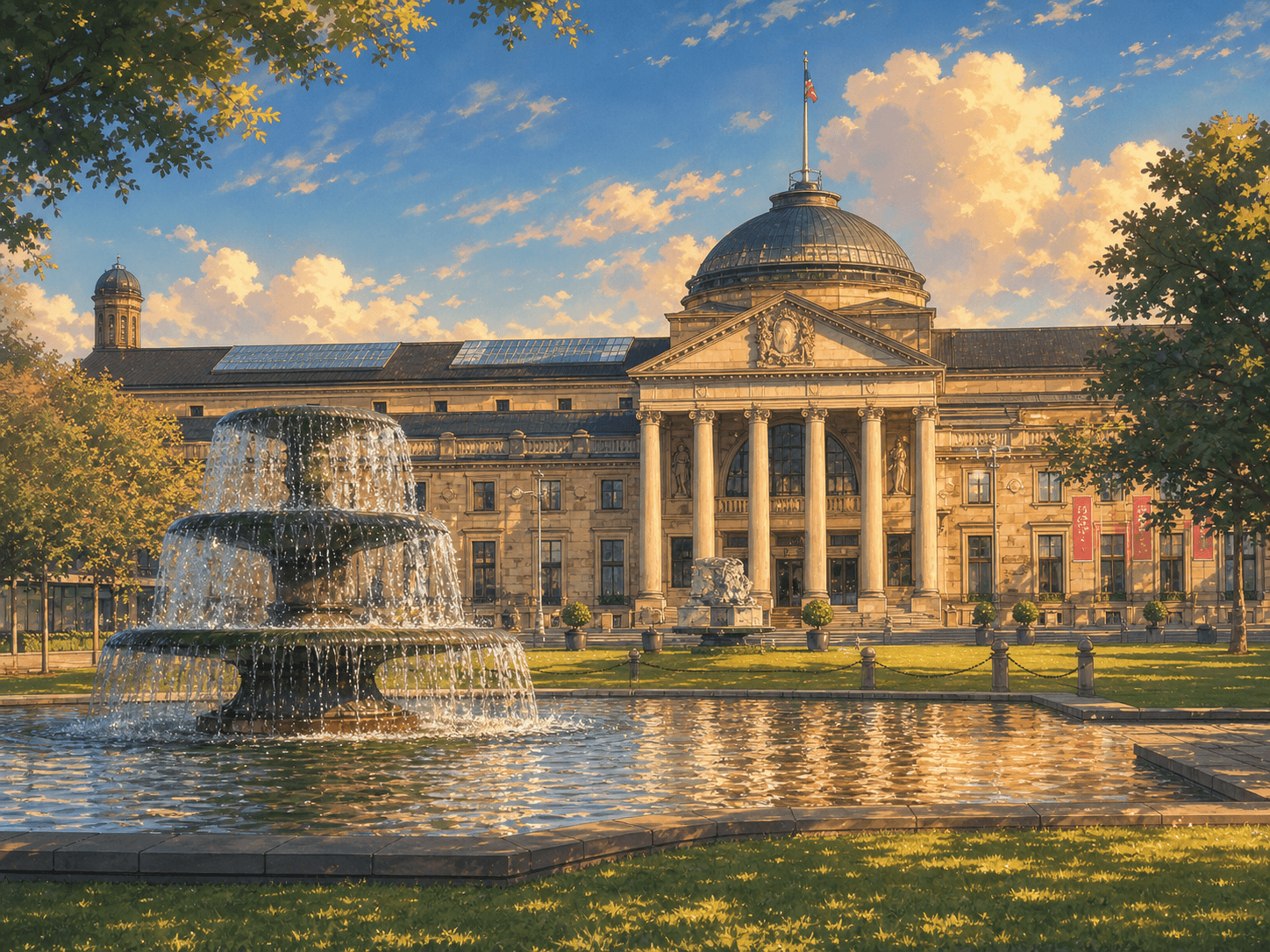
What moved Wiesbaden in February 2026 – from budget decisions and climate protection to cultural projects.
Important Decisions for Wiesbaden – February 2026
What was important this month
- Finance and Budget: Key decisions were made regarding the transfer of cost shortfalls, the parking regulation, and the cultural budget.
- Urban Development: The Westfeld Plan was realigned to strengthen climate protection.
- Mobility: The cycle superhighway between Wiesbaden and Mainz and improvements at the Theodor-Heuss-Ring are being planned.
- Culture & Education: The 2026 May Festival is being supported, and a new youth parliament concept is in the works.
- Climate & Environment: Climate adaptation measures and renovation plans for the Walhalla were central.
Budget and Finance: Stability and Investments
February 2026 brought several decisions to secure Wiesbaden’s financial future. It was decided not to carry over the cost shortfall from street cleaning into the next calculation period – a sign of budget discipline. At the same time, the parking regulation was revised in several districts to adapt to current requirements.
The cultural budget for 2025 amounted to 52.1 million EUR. The 2026 May Festival will receive a municipal grant of 800,000 EUR, showing how strongly Wiesbaden supports cultural events. The Zero-Based Budgeting (ZBB) process is being continued to ensure transparent and efficient budget planning.
Urban Development: Climate Protection in Focus
In terms of urban development, Wiesbaden made it clear: climate protection is a priority. The Westfeld Plan has been realigned, designating the area no longer for settlement and industry, but for special climate functions. This is a milestone in the city’s climate protection strategy.
In addition, the land use plan amendment for the Bierstadt-Nord school campus was confirmed, with climate protection and public participation at the forefront. The South Hesse Regional Plan is also being revised, with a stronger focus on transport networks and environmentally friendly mobility.
Mobility and Traffic: Steps Toward the Future
In the field of traffic, Wiesbaden is investing in cycling infrastructure. The first construction phase of the Wiesbaden–Mainz cycle superhighway will be funded with 900,000 EUR. In addition, the redesign of the Theodor-Heuss-Ring is planned to better protect cyclists.
Progress is also being made in the area of electric charging infrastructure: new charging points are being planned in Heßloch and Westend, underlining the expansion of the climate protection strategy. In Igstadt and Westend, traffic regulations such as traffic light controls and structural measures were approved to increase safety.
Culture and Education: Impulses for the Future
The Cultural Advisory Board advocated for digital voting procedures starting in 2026 and secured funding for the 2026 May Festival with 800,000 EUR. Wiesbaden will also host the Hessian Theatre Days 2026, emphasizing the city’s cultural significance.
In the education sector, structural measures for barrier-free access at schools were approved, and the youth parliament regulations were updated to involve young people more in decision-making processes. In addition, grants were awarded to associations to support cultural and social projects – a sign of a vibrant, participatory city society.
Climate and Environment: Renovation and Adaptation
In the field of climate and environment, climate adaptation measures were central. In Igstadt and Frauenstein, corresponding measures were acknowledged, and the renovation planning for the Walhalla was finalized – with a total cost estimate of 70 million EUR.
Discussions also took place regarding the fiber optic expansion route, as open construction sites and trip hazards were raised. Nevertheless, Wiesbaden is committed to modern infrastructure that combines environment and technology.
Outlook: A City in Transition
February 2026 shows: Wiesbaden is on a course that combines climate protection, budget transparency, modern mobility, and cultural diversity. The decisions show a city that not only fulfills its duties, but also boldly looks to the future.
With new projects, digital processes, and strong civic participation, Wiesbaden has shown that politics and society must work hand in hand – for a vibrant, sustainable future.
NeoSearch analyses public council documents, committee minutes and municipal announcements. Source references appear automatically once verified meeting data is available.
What does this mean for businesses?
Municipal council decisions are early indicators: following the council agenda surfaces projects and tenders months before the official award — before they ever reach the procurement portals.
Track similar decisions in your region
Set up monitoring for Finance and Budget in Hessen — prefilled from this article.
Set up monitoring →More signals from Wiesbaden
Wiesbaden Builds New Kindergartens – Focus on Medenbach and Erbenheim
In April 2026, Wiesbaden will see an intensive expansion of municipal childcare. In Medenbach, the replacement of a dilapidated kindergarten is planned, while a new, modern facility will be built in the district of Erbenheim. This blog explores the background, costs, and impacts.
Read more → Youth Participation in Wiesbaden: Recent Developments and Perspectives
In April 2026, Wiesbaden took important steps in youth participation. With the election of the chairperson and the establishment of representatives, the Youth Parliament will systematically begin its work. We analyze the developments, backgrounds, and implications.
Read more → Sports Promotion in Wiesbaden: An Analysis of the April 2026 Decisions
In April 2026, Wiesbaden sent a clear signal of support for local sports clubs, particularly in the district of Frauenstein. The local council approved a significant grant for a youth tournament visit by a club. This article explores the background, decision-making process, and potential impacts on the city's sports infrastructure.
Read more →